Quantum Computer Creates Most Complex Time Crystal Ever Made
Scientists used a quantum computer with 144 qubits to create the most complex time crystal ever made, marking a breakthrough that could revolutionize how we design new materials. This achievement shows quantum computers are becoming powerful tools for scientific discovery.
Scientists just created the most complex time crystal ever made, and it could change how we discover new materials.
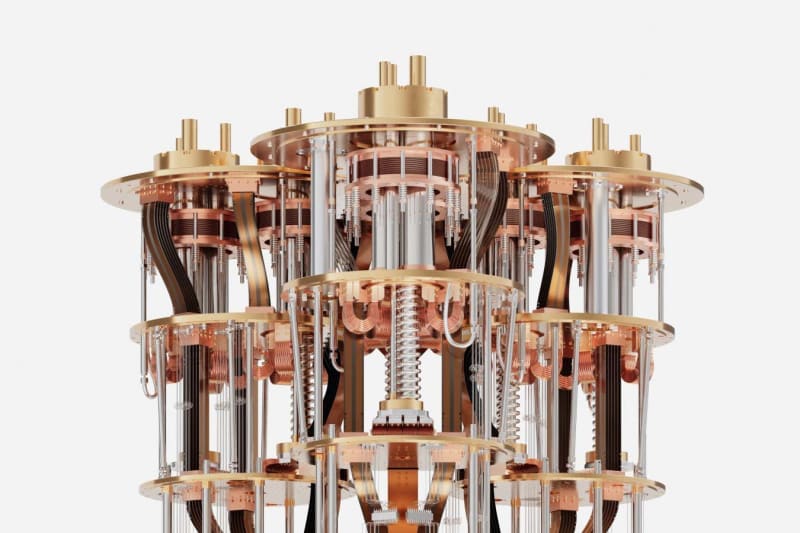
Researchers at Donostia International Physics Center in Spain partnered with IBM to build an unprecedented two-dimensional time crystal inside a quantum computer. Unlike previous attempts that resembled neat lines of atoms, this version used 144 superconducting qubits arranged like a honeycomb.
Time crystals sound like science fiction, but they're real quantum objects. While regular crystals have atoms arranged in patterns through space, time crystals cycle through the same patterns over and over in time. Think of it like a clock that keeps ticking indefinitely without needing batteries.
When scientists first proposed time crystals, they seemed to break the laws of physics. But over the past decade, researchers have successfully created several of them in labs. This new version is different because of its complexity and what it allows scientists to do.
The team didn't just create a time crystal. They started mapping out its "phase diagram," which is like creating a complete instruction manual for all the different states the system can take. Just like a phase diagram for water tells you when it's ice, liquid, or steam, this map reveals all possible properties of quantum materials.
Here's why that matters. The equations needed to understand this time crystal are too complicated for regular computers to solve without making approximations. But quantum computers can work with them directly, even though they make some errors. By combining both approaches, scientists are developing better tools to understand complex materials.
The Ripple Effect
This breakthrough opens doors for designing entirely new materials. Jamie Garcia at IBM says this experiment could be the first of many steps toward using quantum computers to engineer materials with properties we've never seen before.
The implications extend beyond time crystals. Two-dimensional quantum systems like this one are notoriously difficult to simulate on regular computers. Having a working quantum computer experiment with over 100 qubits gives researchers an anchor point for future studies. Biao Huang at the University of Chinese Academy of Sciences notes this could help connect time crystals to similar states used in quantum sensors.
The back-and-forth between quantum computers and conventional methods is creating a feedback loop that sharpens our understanding of quantum matter. Each time crystal experiment teaches us something new about what's possible in the quantum world.
What seemed impossible a decade ago is now becoming a tool for discovery, bringing us closer to materials and technologies we haven't even imagined yet.
More Images



Based on reporting by New Scientist
This story was written by BrightWire based on verified news reports.
Spread the positivity!
Share this good news with someone who needs it