Swiss Scientists Create Unbreakable Random Encryption
Researchers at ETH Zurich have developed a quantum system that generates truly random encryption codes that even future quantum computers can't crack. This breakthrough could protect our passwords, bank accounts, and personal data for decades to come.
Your online security just got a major upgrade thanks to a team of Swiss scientists who figured out how to create perfect randomness.
Researchers at ETH Zurich developed a quantum computing system that generates encryption codes so random, they're mathematically impossible to predict or crack. Even the most powerful quantum computers of the future wouldn't stand a chance against them.
Here's the problem they solved: every computer, smartphone, and electronic device today generates "random" numbers using predictable patterns. These patterns are invisible to current technology, but future quantum computers could spot them instantly and crack our passwords, bank details, and encrypted messages.
"Any conventional electronic device like a phone or a computer is completely deterministic, so it's actually very difficult for a computer to generate a random value," explains physics professor Renato Renner, who led the research team. Traditional computers can't truly toss a coin because everything they do follows predictable rules.
The solution lives in the weird world of quantum physics. Renner's team used qubits, which exist in infinite possible states until measured, unlike regular computer bits that are simply ones or zeros. They entangled two qubits at opposite ends of a 30-meter tube kept near absolute zero temperature.
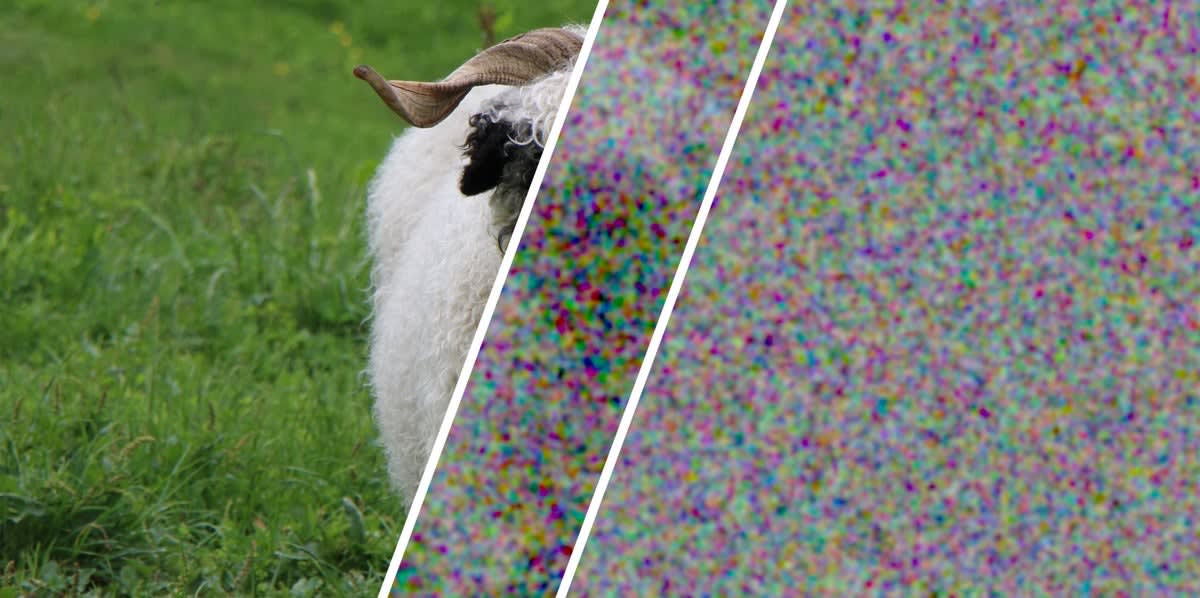
When they tested the system with a photo of a sheep, the image became an impossible scramble of colors and splotches. The researchers confirmed no quantum computer could ever reassemble it.
To verify their results, the team ran 1.5 billion tests checking whether any hidden patterns existed. None did. Adding a second qubit as a verification tool makes this approach more trustworthy than previous attempts at quantum randomness.
The Bright Side
This isn't just theoretical science for some distant future. Imperfect randomness has already caused real security breaches. There's an entire Wikipedia page documenting hacks that succeeded only because encryption randomness had tiny flaws.
"This is the problem we solve, which is a current problem, not only a problem in the post-quantum-cryptography era," Renner notes. As quantum computers become more powerful, the need for unbreakable encryption becomes urgent.
The technology protects everything from your online banking to medical records to private messages. While commercial quantum computers remain years away, the encryption methods developed today will shield our data well into that quantum future.
Good randomness means good security, and good security means we can trust the digital systems that run modern life.
More Images



Based on reporting by Scientific American
This story was written by BrightWire based on verified news reports.
Spread the positivity!
Share this good news with someone who needs it