Rare Moon-Mercury Show Tonight Visible Across North America
Millions of people across North America can witness a rare celestial event tonight as the Moon passes directly in front of Mercury, with the best views in decades for those watching from Mexico and the southwestern United States. Even if you miss the full occultation, the pairing of a bright crescent Moon with Mercury creates a stunning sight worth stepping outside to see.
Tonight offers a front-row seat to one of the sky's rarest shows, and you don't need any special equipment to enjoy it.
On February 18, the Moon will pass directly in front of Mercury in an event called an occultation. People across Mexico, Arizona, and parts of Central America will see Mercury completely disappear behind the Moon's dark side before emerging up to an hour later. Western parts of Florida, Georgia, and Alabama will catch the disappearance before the pair sets below the horizon.
This isn't just another astronomical event that gets astronomers excited. The timing makes this occultation exceptionally special because Mercury reaches its furthest point from the Sun on February 19, meaning the planet is easier to spot than usual.
Most occultations happen during daylight or when planets are too close to the Sun to see clearly. That makes tonight's alignment about as perfect as it gets for viewing the innermost planet playing hide and seek with the Moon.
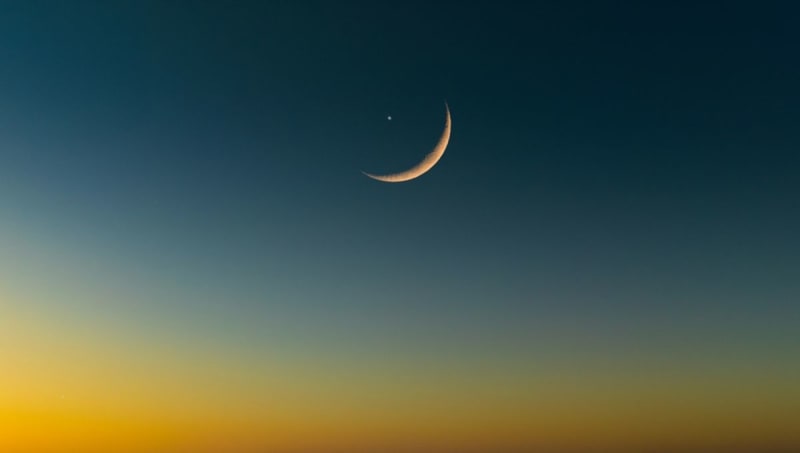
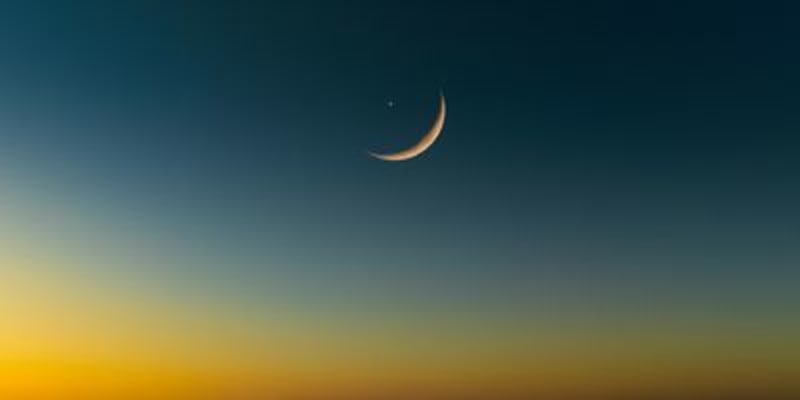
Even if you live outside the prime viewing zone, the show is still worth catching. Most North Americans can see Mercury shining brightly next to a delicate crescent Moon, with only 2 percent of the lunar surface illuminated. The thin crescent also offers a chance to witness Earthshine, where sunlight reflected off Earth gently lights up the rest of the Moon's surface.
Saturn will appear about a handspan above the Moon and Mercury pairing, adding another layer of beauty to the celestial arrangement. Anyone with a small telescope can use Saturn as a guide to spot Neptune, which sits just one degree away.
Why This Inspires
The next time Mercury will be this visible during an occultation won't happen until 2030, and that one will only be viewable from northern Russia. Tonight's event reminds us that some of nature's most spectacular shows are completely free and accessible to millions of people at once.
These rare alignments happen because the orbital planes of planets and the Moon don't match up perfectly. If they did, we'd see the Moon pass in front of planets every month and the novelty would fade. Instead, nature delivers these moments sparingly, making each one feel like a gift.
The beauty of tonight's event is its accessibility. No telescope required, no special filters needed, just clear skies and a view toward the western horizon as the Sun sets. Families can step outside together, neighbors can gather on porches, and strangers might share the same moment of wonder while looking up at the same sky.
Tomorrow night, the Moon continues its journey past Saturn and Neptune, offering another chance to explore our solar system's neighborhood with just your eyes and a sense of curiosity.
More Images


Based on reporting by Google News - Science
This story was written by BrightWire based on verified news reports.
Spread the positivity!
Share this good news with someone who needs it