Rare White-Beaked Dolphin Rescued Alive in Netherlands
Beach walkers discovered a rare white-beaked dolphin struggling in the surf at a Dutch beach and immediately called marine rescuers, who are now caring for the animal at their rehabilitation center. The dolphin showed no visible injuries and is receiving expert care while specialists determine if it can safely return to the ocean.
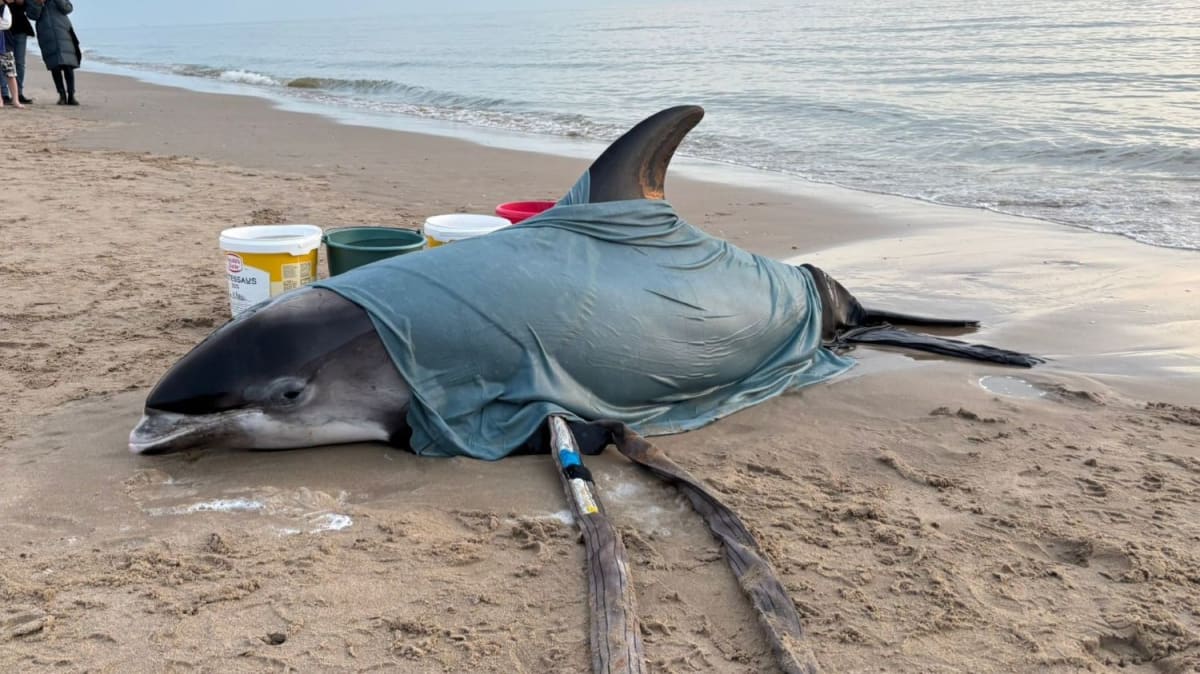
A rare white-beaked dolphin got a second chance at life after beach walkers spotted it struggling in the surf at Egmond aan Zee, Netherlands, and called for help on Sunday evening.
Marine rescue charity SOS Dolfijn quickly transported the dolphin to their rehabilitation facility in Anna Paulowna, where veterinarians conducted initial health checks. The good news? No visible injuries were found.
Rescuers wrapped the animal in wet cloth to regulate its body temperature while assessing its condition. Rather than immediately returning it to the sea, they chose the safer path of observation and care.
"If we push it back there's a chance it strands again, and then the stress is much worse," SOS Dolfijn spokesperson Snijders explained to broadcaster NOS. The team's careful approach prioritizes the dolphin's long-term survival over a quick fix.
White-beaked dolphins rarely appear in Dutch waters. These magnificent creatures grow up to three meters long, sport distinctive high dorsal fins, and typically call the deep waters of the north Atlantic home.
The rescue highlights how quick action from everyday people can save wildlife. The beach walkers who spotted the dolphin didn't hesitate to alert experts, creating a chain of care that gave this rare visitor a fighting chance.
The Bright Side
This successful rescue stands out during a challenging period for marine life along the Dutch coast. Recent weeks saw less fortunate outcomes, including a dead Risso's dolphin washing up in Zeeland for the first time in over 50 years and a 16-meter sperm whale beaching at Renesse.
Marine specialists believe shifting currents are carrying deep-water species from the English Channel into the shallow North Sea, where navigation becomes difficult. Understanding these patterns helps rescue teams prepare for future strandings.
The same stretch of coast near Egmond attracted crowds in January when a rare beluga whale appeared offshore. These unusual sightings remind us that our oceans still hold wonders worth protecting.
Every successful marine rescue builds knowledge that helps save future lives, turning each stranding into a learning opportunity for scientists and caregivers alike.
Based on reporting by Dutch News
This story was written by BrightWire based on verified news reports.
Spread the positivity!
Share this good news with someone who needs it