Rethinking Airplane Seating Could Cut Emissions in Half
A groundbreaking study reveals that simply redesigning how airlines configure their cabins could slash aviation emissions by up to 50%. The solution doesn't require new technology—just smarter use of the planes already in the sky.
Imagine cutting airplane emissions in half without waiting decades for electric planes or new fuel technology.
That's exactly what researchers discovered when they analyzed every commercial flight route in 2023. The secret isn't fancy engineering. It's something surprisingly simple: using airplane space more efficiently.
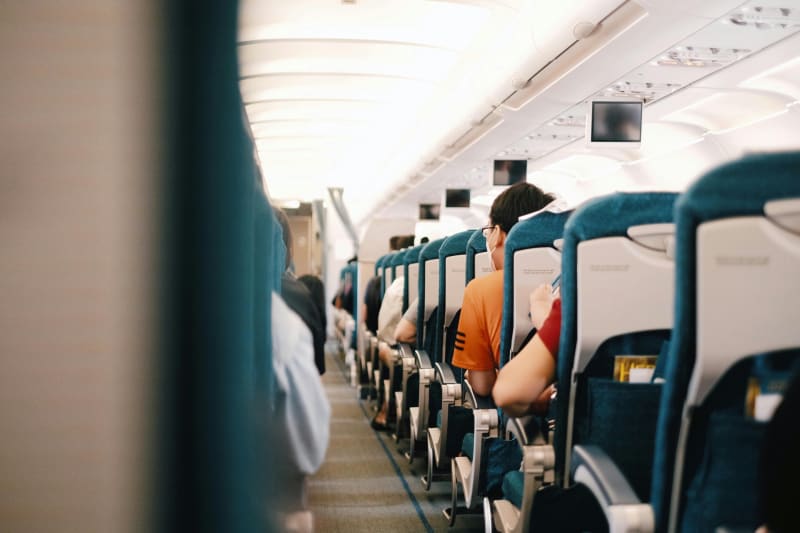
The study, led by climate scientist Milan Klöwer, found that operational changes like filling more seats and rethinking cabin layouts could dramatically reduce aviation's climate impact. Right now, spacious business and first class sections mean fewer passengers per flight, which means more flights needed overall.
Here's the thing about planes: the aircraft and its fuel account for nearly all the weight and emissions. Adding more passengers barely changes that equation. So a half-empty plane creates almost as much pollution as a full one.
Budget airlines already figured this out. By maximizing seats and skipping luxurious layouts, they emit far less per passenger. Flights in Brazil, India, and southeast Asia showed the best efficiency numbers, often below 100 grams of CO₂ per passenger-kilometer.
The researchers tested three scenarios to show what's possible. First, increasing occupied seats from 80% to 95% would cut emissions by 16%. Second, replacing older aircraft with the most efficient existing models like the Boeing 787 Dreamliner could save another 27% to 34%.
The Bright Side
Aviation accounts for 4% of global warming when all factors are considered. That's significant, but it also means improvements here make a real dent in climate progress.
What makes this research so hopeful is that it doesn't rely on technology that doesn't exist yet. The most efficient aircraft are already flying. Airlines already want to fill seats because empty ones cost money. The solutions are sitting right in front of us.
Some of the least efficient flights start or land in the US, Germany, and Japan, often from smaller airports. But that variability means huge room for improvement. When researchers looked at the gap between the most and least efficient routes, they found some flights emitting over 800 grams per passenger-kilometer while others stayed below 50.
The study suggests that simple policy changes could accelerate progress. Emissions-based airport charges or fuel taxes would give airlines extra incentive to maximize efficiency. And as older planes retire naturally over their 25-year service lives, replacing them with newer, more efficient models becomes easier.
The beauty of this approach is that it works with market forces, not against them. Airlines save money when they fill seats and use efficient aircraft. Passengers still get where they're going. And the planet gets a break from emissions that seemed impossible to reduce.
Flying might never be as clean as electric rail, but it doesn't have to stay stuck at current emission levels while we wait for breakthrough technology that may never arrive.
More Images

Based on reporting by Phys.org - Earth
This story was written by BrightWire based on verified news reports.
Spread the positivity!
Share this good news with someone who needs it