Robot Dog Explores Mars Lab 3X Faster Than Humans
A four-legged robot just completed Mars exploration missions in 12 minutes instead of the 41 minutes humans need. Swiss researchers believe this robotic dog could revolutionize how we search for ancient life on other planets.
A robot dog named ANYmal is proving it can hunt for signs of life on Mars three times faster than human-guided rovers.
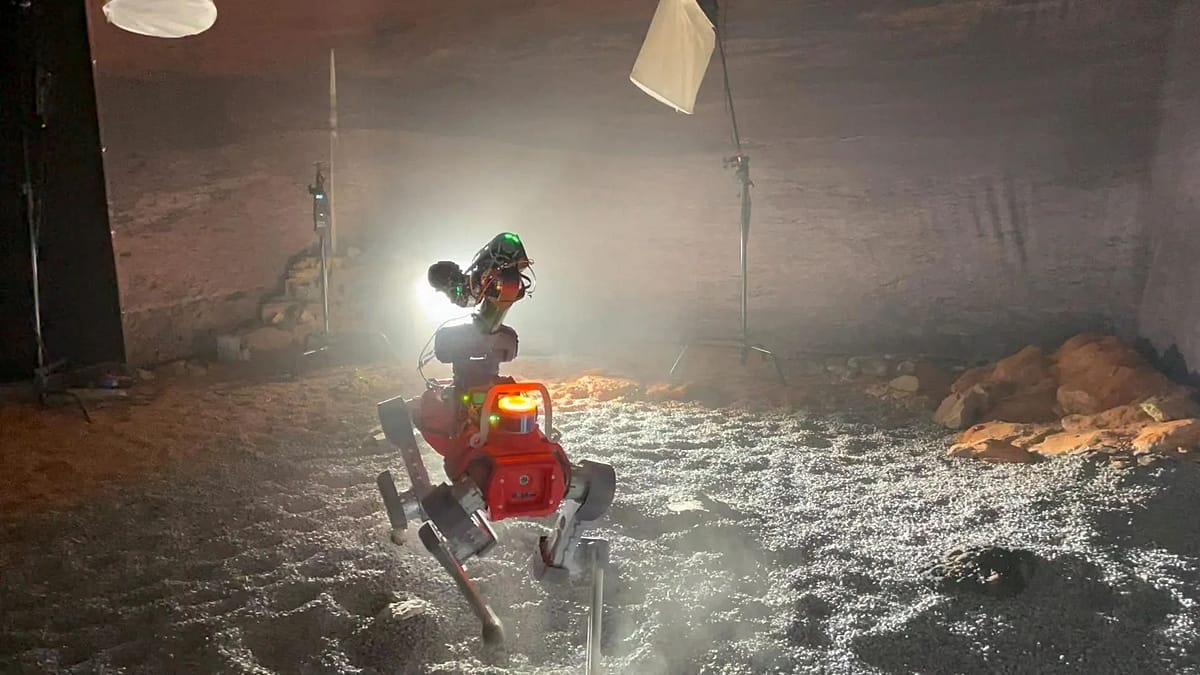
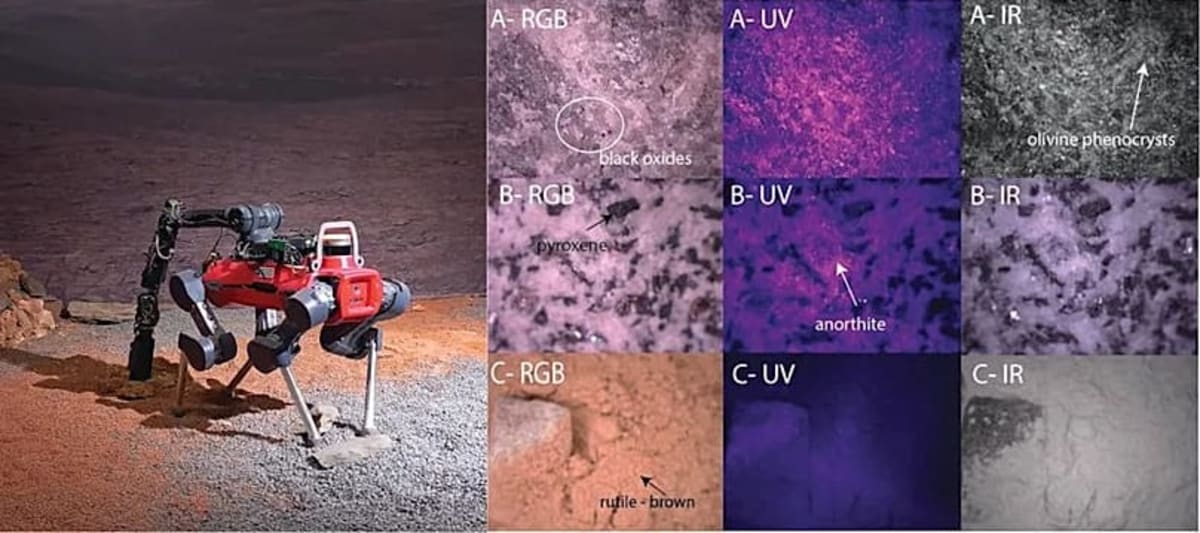
Swiss researchers at the University of Basel have been testing the four-legged explorer in their "Marslabor," a facility designed to mimic the dusty, rocky terrain of Mars and the Moon. Unlike traditional wheeled rovers, ANYmal walks on four legs and carries a robotic arm equipped with a microscopic camera and a chemical scanner that can read the fingerprint of rocks.
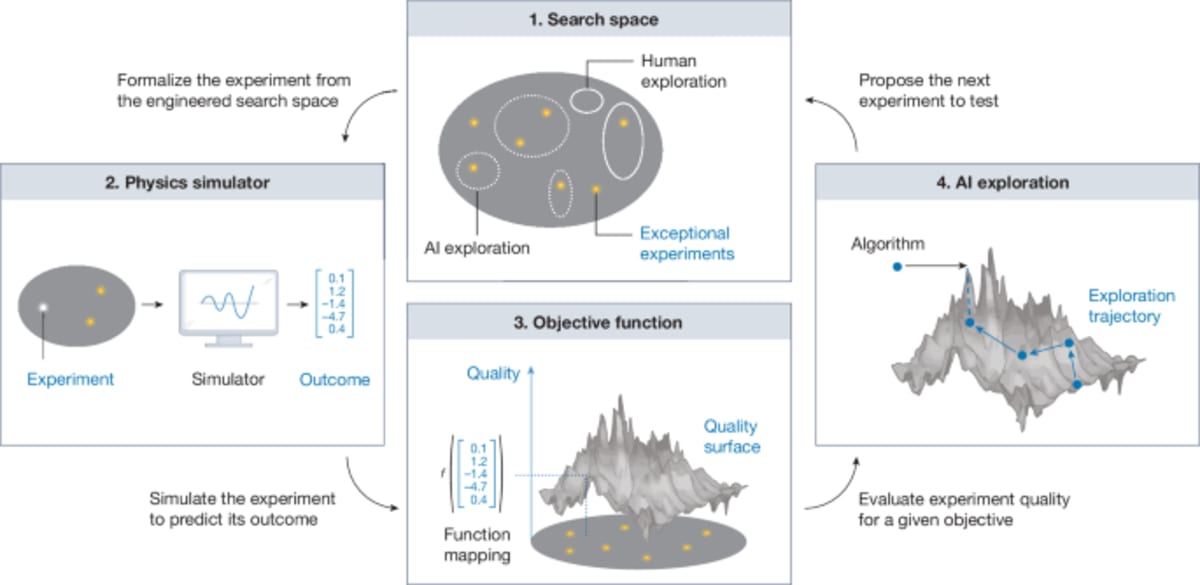
The robot's mission was simple but groundbreaking: navigate on its own, find interesting rocks, analyze them, and send back results without waiting for instructions from Earth. ANYmal crushed it, completing full exploration missions in just 12 to 23 minutes compared to 41 minutes for human operators.
During the trials, the robotic dog successfully identified multiple rock types including gypsum, carbonates, and basalts. It even analyzed lunar materials like dunite and anorthosite, moving from target to target without human guidance.
Current Mars rovers crawl across the planet at an agonizingly slow pace, covering only a few hundred meters per day because they need constant supervision from Earth. Every decision requires communication delays of up to 22 minutes each way.
The Ripple Effect
This breakthrough could transform how we explore not just Mars, but distant moons and exoplanets. Robots that make their own scientific decisions could cover more ground in days than current rovers manage in months.
ANYmal's legs give it another advantage: it can step over obstacles and navigate terrain that would stop wheeled rovers in their tracks. This means reaching scientifically valuable areas like crater walls, canyon edges, and rocky outcrops where evidence of ancient water or microbial life might hide.
The research team acknowledges that human operators still achieve slightly more detailed analysis and marginally higher accuracy. But speed matters when you're racing to answer one of humanity's biggest questions: are we alone in the universe?
These robotic explorers aren't meant to replace human judgment but to act as independent scientific partners, capable of hunting for biosignatures and chemical traces that could indicate ancient life while scientists on Earth focus on the most promising discoveries.
The future of space exploration is walking on four legs, making its own choices, and moving fast.
More Images


Based on reporting by Euronews
This story was written by BrightWire based on verified news reports.
Spread the positivity!
Share this good news with someone who needs it