Europe Powers Artemis II's Safe Return to Earth
The European-built life support and propulsion system performed flawlessly during the historic Artemis II mission, marking a new era of international collaboration in space exploration. Four astronauts are now heading home thanks to engineering built in the Netherlands and Germany.
While four astronauts journey back from the Moon aboard the Artemis II spacecraft, their safe return depends entirely on technology built thousands of miles from NASA's headquarters.
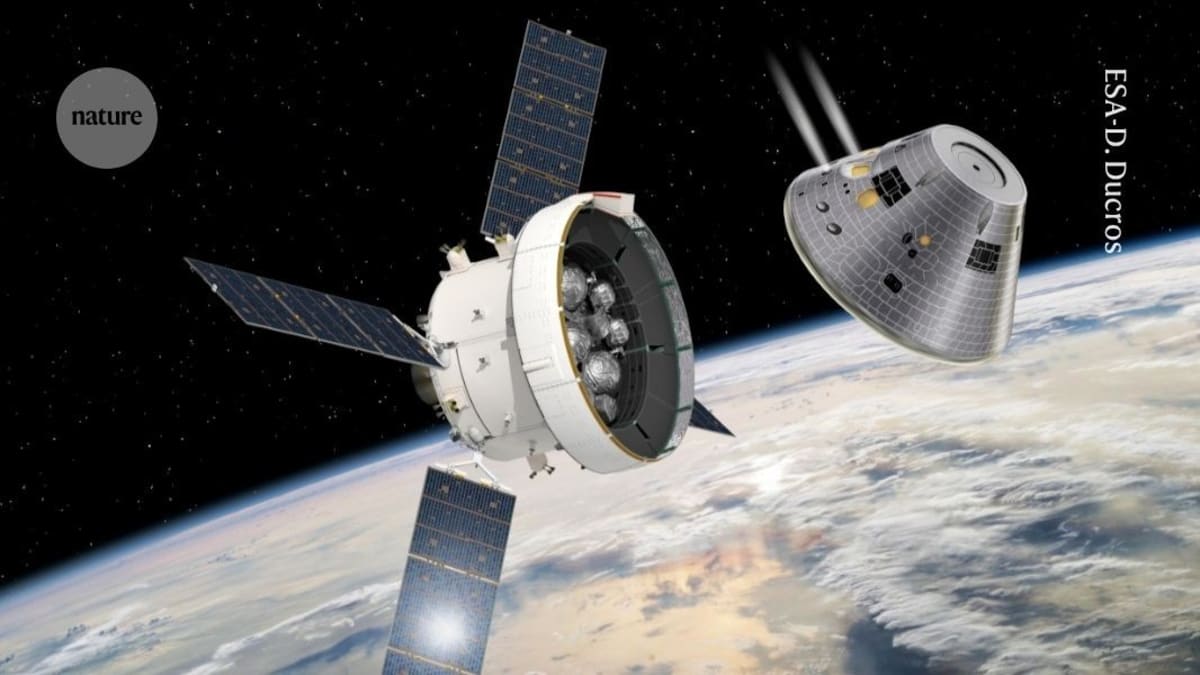
The European Service Module, designed and constructed by aerospace company Airbus in the Netherlands on behalf of the European Space Agency, provides all the propulsion and life support keeping three NASA astronauts and one Canadian Space Agency crew member alive. The module supplies water, air, temperature control, and power through four solar wings.
"NASA usually doesn't want to be dependent on anybody for something so critical," says Didier Schmitt, who heads the European Space Agency's future preparation team in Germany. The trust represents a major milestone for European space engineering.
The module's first critical test came during a nearly six-minute engine burn that pushed the spacecraft out of Earth's orbit toward the Moon. "It happened perfectly to plan," says Siân Cleaver, industrial engineer for the module at Airbus Defence and Space in Bremen, Germany.
That precision eliminated the need for multiple course corrections later in the mission. The module has performed flawlessly throughout the journey, according to mission reports.
The Ripple Effect
This success builds on decades of European space expertise, from the Spacelab missions of the 1980s and 1990s to the Columbus laboratory on the International Space Station. "We couldn't have done this without those previous projects," Cleaver notes.
Airbus has already delivered four modules total, including those for the upcoming Artemis III and IV missions. Two more are currently under construction in Germany.
The collaboration stands out during a time when international partnerships face pressure. While the United States has stepped back from some global organizations, NASA has maintained its international space commitments.
"The European Service Module is almost a holdover from a more internationalist approach," says Jonathan McDowell, a retired astrophysicist based in London. The partnership also includes plans for European astronauts to visit the planned lunar Gateway space station.
Unlike the original Space Race between the United States and Soviet Union, the Artemis program was designed for international cooperation from the start. "Going to the Moon is an opportunity for us as humanity to do things right this time," Cleaver says.
The successful performance of European technology on this historic mission proves that collaborative space exploration works.
More Images



Based on reporting by Google News - Science
This story was written by BrightWire based on verified news reports.
Spread the positivity!
Share this good news with someone who needs it