Artemis II Crew Returns With Moon Stories Never Told Before
Four astronauts are heading home after traveling farther from Earth than any human in history, bringing back photos and stories from the Moon's hidden far side. They're scheduled to splash down in the Pacific Ocean on Friday evening after their historic lunar flyby.
The Artemis II crew is racing back to Earth with what pilot Victor Glover calls "all the good stuff" from their record-breaking journey around the Moon.
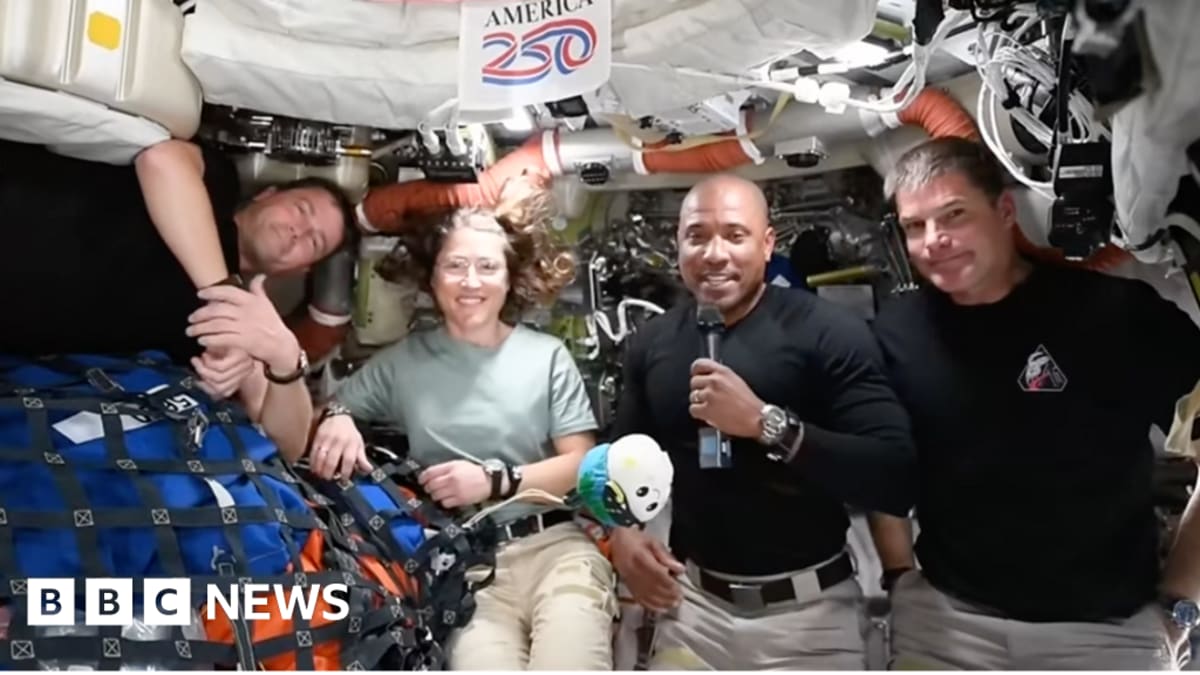
The four astronauts spoke to media from their Orion spacecraft on Wednesday, sharing their excitement about the photos, data, and experiences they're bringing home. They traveled 248,655 miles from Earth, breaking a 55-year-old record set by Apollo 13 in 1970.
Commander Reid Wiseman revealed one of the mission's most emotional moments happened during the 40 minutes when the crew lost contact with Earth while passing behind the Moon's far side. The team named a lunar crater after Wiseman's late wife Carroll, who died of cancer in 2020.
"When Jeremy spelled Carroll's name, I was overwhelmed with emotion and Christina was crying," Wiseman said. "That was the pinnacle moment of the mission for me."
The crew became the first humans to see parts of the Moon's far side with their own eyes, witnessing vast craters and lava plains that satellites have only photographed. They shared maple cookies brought by crew member Jeremy Hansen while taking in views no human has ever experienced before.
Glover called watching a lunar eclipse from beyond the far side of the Moon the "greatest gift" of the mission. Christina Koch said the crew camaraderie made every challenge worth it.
Why This Inspires
Space exploration requires sacrifice, risk, and days away from loved ones. But Koch reminded us why it matters: "We can't explore deeper unless we're doing a few things that are inconvenient, unless we're making a few sacrifices, unless we're taking a few risks. And those things are all worth it."
The crew still faces their final test: plunging through Earth's atmosphere at nearly 25,000 mph before a parachute landing in the Pacific Ocean off San Diego. They're expected to splash down around 8:00 PM EST on Friday.
Glover said he'll be "thinking about and talking about all of these things for the rest of my life." With two more days in space before landing, the crew is still processing what they've accomplished while humanity waits eagerly for the stories and images they're bringing home.
Their journey proves that exploration's greatest rewards aren't just the data we collect, but the deeply human moments of wonder, connection, and remembrance that happen along the way.
Based on reporting by BBC Science
This story was written by BrightWire based on verified news reports.
Spread the positivity!
Share this good news with someone who needs it