Robots Now Growing Plants 100x Faster at Oak Ridge Lab
Scientists at Oak Ridge National Laboratory created a robotic system that automates the painstaking work of growing genetically modified plants, making it 100 times more efficient. The breakthrough could speed up development of crops that fight climate change, feed more people, and produce sustainable materials.
Growing better crops just got a massive technological upgrade, and it could help solve some of our biggest challenges around food, energy, and climate.
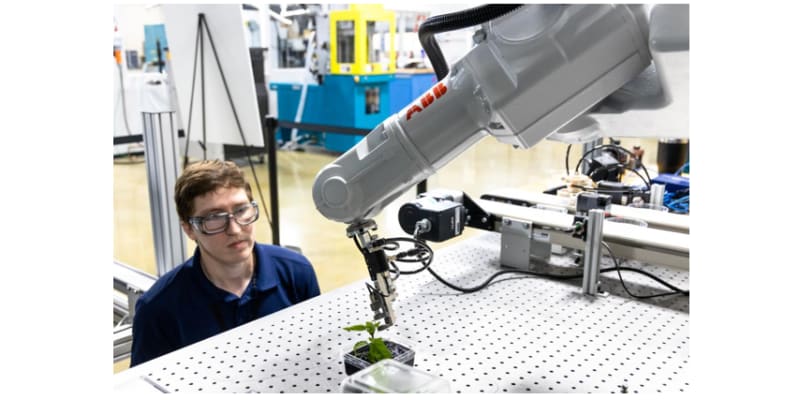
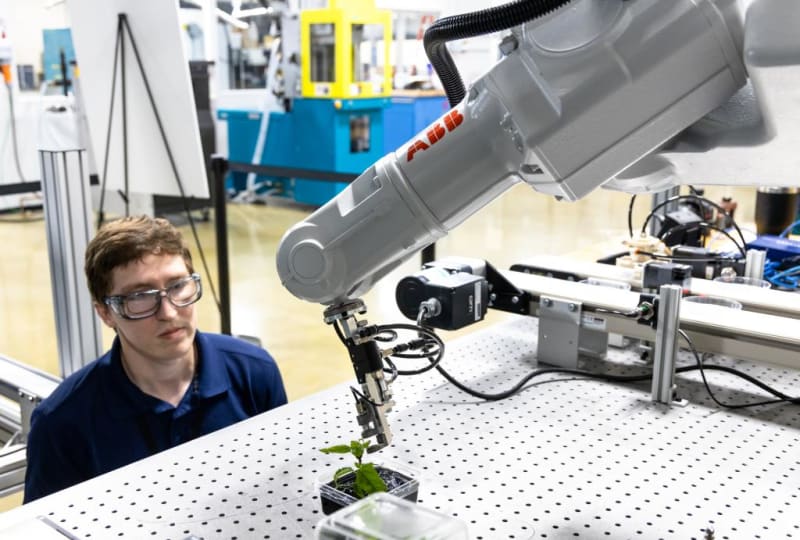
Scientists at Oak Ridge National Laboratory in Tennessee have developed SMART Plant 1.0, a robotic system that uses computer vision and automation to create new plant varieties. The system can identify and collect tiny tissue samples from live plants, treat them to trigger growth, and place them on special nutrients to develop new plants, all without human hands touching a single leaf.
The traditional method involves technicians hunching over plants with hole punches and scissors for hours, manually recording data by hand over weeks of work. It's slow, inconsistent, and limits how many experiments researchers can run.
The new robotic system changes everything. It can increase plant transformation efficiency by a hundredfold, but the real breakthrough goes beyond speed.
"It is also about collecting massive amounts of data that can be processed with artificial intelligence to help us validate gene-to-trait linkages faster," said project lead Udaya Kalluri. The system gathers the quality data needed to train AI models that can predict which genetic changes will produce the best results.
Alex Walters, who led the engineering work, explained that automation eliminates human inconsistencies in how tissue is selected and handled. The result is more reliable experiments and better science.
The Ripple Effect
The technology opens doors to plants that can survive droughts, grow in poor soil, and thrive in a changing climate. These hardy plants could become better sources of biofuels, sustainable chemicals, and materials. Some could even help recover critical minerals or boost food security in challenging growing conditions.
The team is already building SMART Plant 2.0, which will create an entire automated laboratory for producing transgenic plants. This next version will use agentic AI, systems that automatically adjust experiments based on what they learn, accelerating the entire process even further.
The new facility will connect with Oak Ridge's Advanced Plant Phenotyping Laboratory, where robots move plants through imaging systems that track growth and function. Together, these facilities will join a nationwide network of plant biotechnology labs across Department of Energy sites, all working to speed up agricultural innovation.
The research represents a fundamental shift in how we develop new crops, combining cutting-edge robotics, computer vision, and artificial intelligence to tackle global challenges.
One robotic system today could mean drought-resistant corn fields, sustainable biofuel production, and food security for millions tomorrow.
More Images
Based on reporting by Google: scientific discovery
This story was written by BrightWire based on verified news reports.
Spread the positivity!
Share this good news with someone who needs it