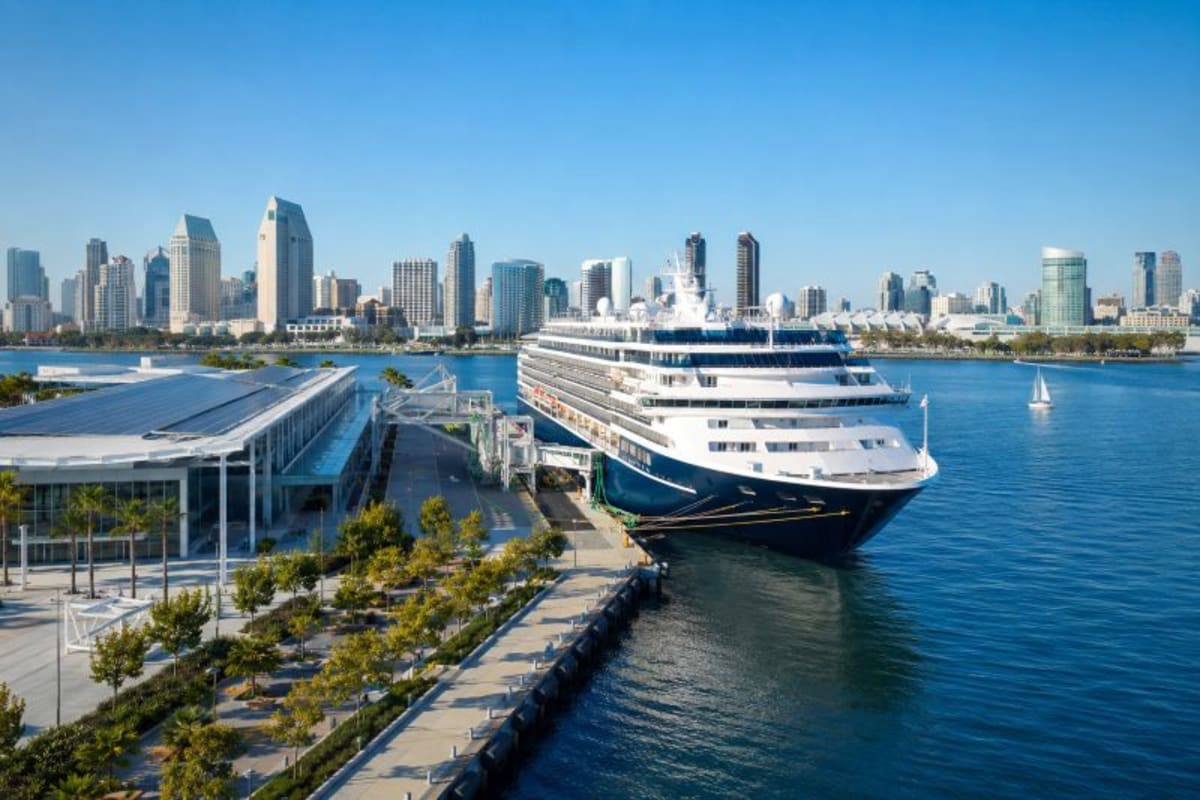
San Diego Ships Slash 6,500 Tons of Emissions in 2025
Twenty-four shipping and cruise companies voluntarily slowed their vessels near San Diego Bay, cutting greenhouse gas emissions by 6,500 metric tons in a single year. The program proves environmental wins are possible when ports and maritime companies work together.
Ships approaching San Diego Bay are hitting the brakes, and the air is getting cleaner because of it.
The Port of San Diego just honored 24 cruise and shipping companies for participating in its Vessel Speed Reduction Program, a voluntary initiative that asks ships to slow down by about 15 knots in designated zones around the bay. By easing off the throttle, these vessels burn less fuel and release fewer pollutants into the air that port workers, residents, and visitors breathe every day.
The results speak for themselves. In 2025, participating ships achieved 94 percent compliance within 20 nautical miles of the bay and 81 percent compliance within 40 nautical miles. That cooperation translated into 6,500 metric tons of avoided greenhouse gas emissions, plus major reductions in nitrogen oxides and particulate matter that can harm human health.
Big names in cruising signed on enthusiastically. Princess Cruises, Holland America Line, Disney Cruise Line, Viking, and Silversea all reduced speeds during their arrivals and departures. Major cargo carriers like MOL, NYK Line, Pacific Basin, and Dole joined them, proving that global shipping giants can prioritize environmental responsibility without sacrificing operational efficiency.
The program works because it's voluntary, giving companies flexibility while still achieving measurable environmental progress. Ships that slow down use less fuel, which saves money while protecting the planet. It's a rare win-win that demonstrates what's possible when businesses and communities align their values.
The Ripple Effect
The benefits extend far beyond emissions numbers on a spreadsheet. Slower ships create less noise pollution, making life quieter for both coastal communities and marine mammals navigating these waters. Reduced speeds also lower the risk of ship strikes for whales and dolphins, protecting vulnerable wildlife populations.
The success in San Diego is setting a benchmark for ports worldwide. When one of America's busiest maritime hubs proves that voluntary environmental programs can work at scale, other ports take notice. The companies participating here operate globally, meaning the sustainable practices they're developing in San Diego Bay could spread to ports across the Pacific and beyond.
For the neighborhoods surrounding the bay, cleaner air means healthier families. Kids playing outside, workers on the docks, and retirees enjoying waterfront walks all benefit from every ton of pollution that never enters their lungs.
The program shows that protecting our planet doesn't require choosing between economic activity and environmental health—sometimes we can have both when good people decide to work together.
Based on reporting by Google: emissions reduction
This story was written by BrightWire based on verified news reports.
Spread the positivity!
Share this good news with someone who needs it