Satellites Could Dodge Collisions Using Magnetic Fields
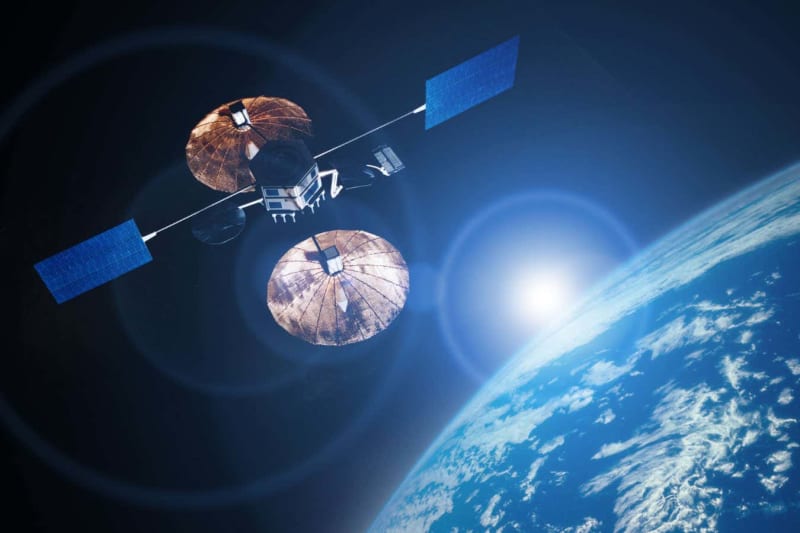
Scientists have cracked a major puzzle in satellite control, using magnetic fields instead of fuel to move spacecraft. This breakthrough could keep space missions running longer and prevent dangerous collisions in orbit.
Space missions might never run out of gas again, thanks to a clever new way to move satellites using magnets instead of fuel.
Researchers at the University of Kentucky have solved a tricky problem that's been stumping scientists for years. They figured out how to use magnetic fields to control multiple satellites at once without the spacecraft interfering with each other.
Here's why this matters. Right now, most satellites have expiration dates because they rely on propellant fuel to move around in space. When the fuel runs out, the mission ends, even if the satellite still works perfectly.
The new approach is called Alternating Magnetic Field Forces, or AMFF. It works by powering electromagnetic coils on satellites using renewable energy from solar panels. These coils create magnetic fields that push and pull on nearby satellites, moving them without burning any fuel.
The old version of this technology, called Electromagnetic Formation Flying, had a big weakness. When one satellite turned on its magnetic field, it affected every nearby satellite at once, making precise control almost impossible with more than two spacecraft.
The Kentucky team solved this by giving each pair of satellites its own unique frequency to communicate on. Think of it like having separate radio channels. Two satellites can coordinate their movements on one frequency while chatting with other satellites on different frequencies, all at the same time.
The researchers tested their idea on Earth using three satellites placed on special rails filled with high-pressure air to mimic the low-friction environment of space. The satellites moved to exact positions the team set for them, proving the concept works.
Alvar Saenz Otero from the University of Washington, who wasn't involved in the study, called it a genuine step forward. He pointed out that controlling three units is way more complex than controlling just two, and the team pulled it off.
The Bright Side
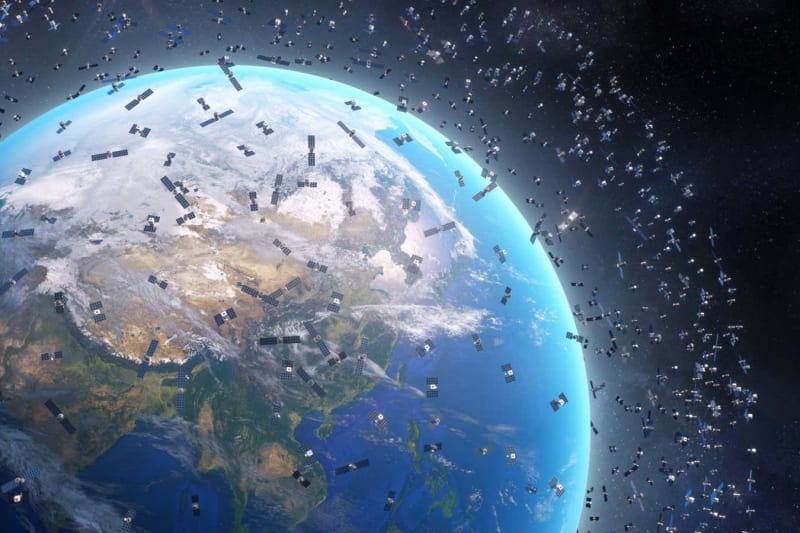
This breakthrough could transform how we explore deep space. Missions to distant planets or asteroids could last years longer without worrying about fuel supplies. Satellites could adjust their positions to avoid collisions, making space safer for everyone.
The technology isn't quite ready for the thousands of satellites in mega constellations like Starlink. Earth's atmosphere, the moon, and the sun create interference at the magnetic frequencies. And scaling up from three satellites to thousands presents a whole new challenge.
Ray Sedwick at the University of Maryland notes that superconducting magnetic coils could dramatically increase the range, though those come with their own technical hurdles to overcome.
Still, for deep space missions where satellites need to work together for years, this magnetic approach opens doors that fuel-based systems simply can't.
More Images


Based on reporting by New Scientist
This story was written by BrightWire based on verified news reports.
Spread the positivity!
Share this good news with someone who needs it