Scientist Builds Fire Nozzle That Saves 67% More Water
After wildfires threatened his family in California, a nanotechnology researcher invented fire equipment that's 300% more effective while using two-thirds less water. Now his smart devices are creating a data network that could prevent fire departments from running out of water during emergencies.
When Sunny Sethi's wife called him during California's 2019 wildfire evacuations, home alone with their three-year-old and no help nearby, she had one message: "Dude, you need to fix this, otherwise you're not a real scientist."
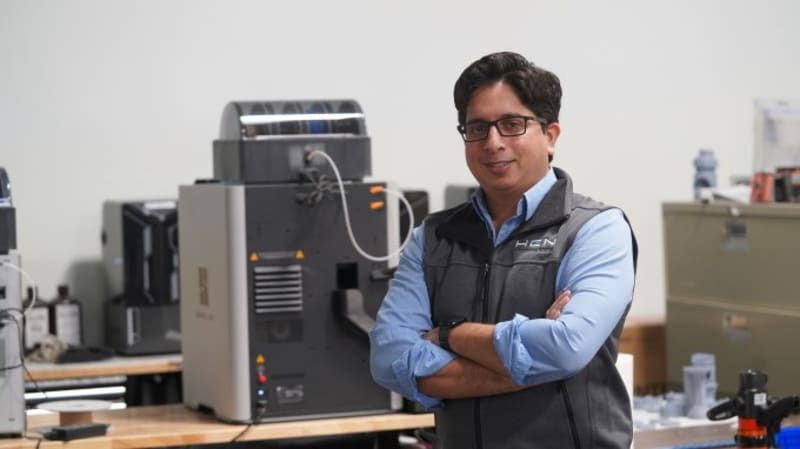
So he did. In June 2020, Sethi founded HEN Technologies in Hayward, California, and started applying his PhD background in nanotechnology and materials science to a problem that hadn't changed since the 1960s.
His first breakthrough was a fire nozzle that controls water droplet size and velocity with precision. The result? Fires get extinguished up to 300% faster while conserving 67% of water compared to traditional equipment.
Sethi tested his designs using computational fluid dynamics research funded by the National Science Foundation. In side-by-side videos, the difference is striking: HEN's nozzles keep water streams coherent and targeted while traditional nozzles scatter and disperse.
But Sethi didn't stop at better nozzles. He realized the real problem was something fire departments have struggled with for decades: they don't know when they're about to run out of water.
It happened during the recent Palisades Fire in Los Angeles. It happened in Oakland's devastating fire years earlier. When two fire engines connect to one hydrant, pressure drops can suddenly leave one crew with nothing as flames continue spreading.
HEN's solution turns every piece of firefighting equipment into a smart device. Each nozzle, valve, monitor, and sprinkler now contains custom circuit boards with sensors that track exactly how much water flows, at what pressure, and for how long.
The system creates a live data network. Fire captains can see which trucks are running low on water. Incident commanders get alerts when wind shifts threaten their crews. Water utilities can optimize resource allocation in real time.
The Ripple Effect
The Department of Homeland Security has been asking for exactly this kind of predictive system through its NERIS program. But accurate predictions require quality data, and quality data requires smart hardware on the ground.
HEN has filed 20 patent applications with six already granted. The company has expanded from nozzles to monitors, valves, overhead sprinklers, and pressure devices, with new flow-control systems launching this year.
Right now, Sethi is focused on getting devices into as many fire departments as possible, building what he calls "data nodes" across the country. The platform integrates weather data and GPS tracking into a cloud system with different access levels for everyone from firefighters to battalion chiefs.
Next year, HEN will start commercializing the application layers built on top of this data infrastructure. Sethi compares it to Adobe's transformation into cloud services: individual systems customized for different users, all powered by shared data.
What started as one scientist's promise to his worried wife has become a nationwide network that could fundamentally change how America fights fires. From nanotechnology to solar to automotive manufacturing, Sethi's diverse background made him, as he puts it, "bias free and flexible" enough to see solutions others missed.
Sometimes the best innovations come from outsiders who simply refuse to accept that dangerous problems can't be solved.
More Images


Based on reporting by TechCrunch
This story was written by BrightWire based on verified news reports.
Spread the positivity!
Share this good news with someone who needs it