Scientist Develops At-Home Pregnancy Test for Birth Defects
A startup founded by plant science researchers is creating the world's first at-home test to detect chromosomal abnormalities as early as six weeks into pregnancy. The India-based company just won top honors at a major tech summit, bringing affordable prenatal care to families worldwide.
Scientists who spent years studying plant metabolism are now using that knowledge to transform prenatal care for families around the world.
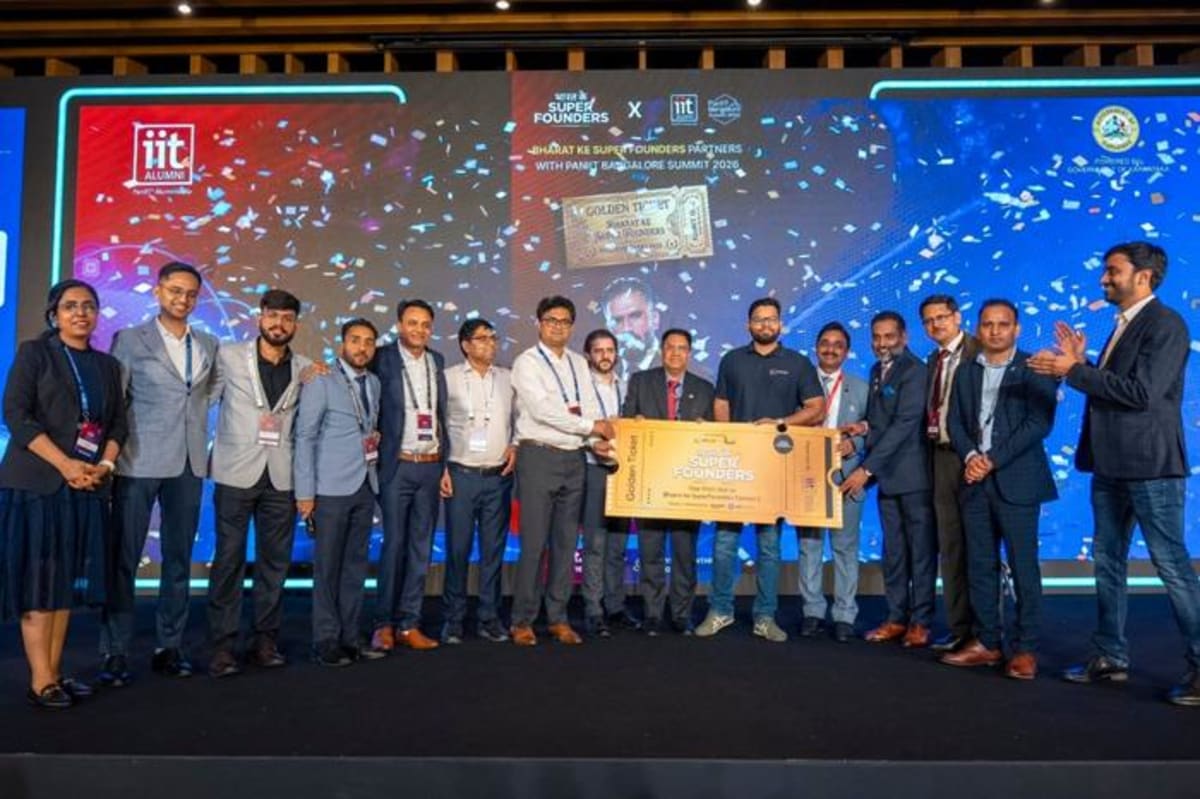
PrecizionIQ, a health technology startup co-founded by Pedro Rodrigues, recently won the coveted "Golden Ticket" at the PanIIT Bangalore Summit 2026. The award earned them a spot on Bharat Ke Super Founders, an Amazon series showcasing India's leading deep-tech startups.
But the real story started years earlier at the Boyce Thompson Institute in New York, where Rodrigues worked as a postdoctoral researcher. The skills he gained studying tiny molecules in plants became the foundation for something completely different: detecting birth defects through a simple blood or urine sample.
"We're building the world's first at-home pregnancy risk test," said Rodrigues. "Every line of code, every lab iteration, every late call comes back to that single image: someone, somewhere, getting answers earlier."
The technology uses advanced mass spectrometry and artificial intelligence to spot subtle changes in maternal metabolism that signal chromosomal abnormalities. The test can detect conditions like Down syndrome, Edwards syndrome, and Turner syndrome as early as six weeks into pregnancy.
Current prenatal testing presents tough choices for families. Early screening methods can be imprecise, leading to anxiety and uncertainty. More accurate diagnostic tests like amniocentesis are invasive and carry small risks. Many families in rural or low-resource areas have no access to reliable testing at all.
Why This Inspires
What makes this story remarkable is how scientific curiosity planted in one field blossomed into innovation in another. The team behind PrecizionIQ includes former plant scientists who applied their expertise in metabolomics and biomarker discovery to human health.
Daniel Klessig, who served as president of the Boyce Thompson Institute from 2000 to 2004, is now advising the startup. "This company reflects the kind of interdisciplinary problem-solving and entrepreneurial spirit that institutions like BTI help nurture," said fellow advisor Murli Manohar, also a former BTI researcher.
The company's mission goes beyond science. "Families often face anxiety from unclear results," PrecizionIQ states on its website. "We believe science should bring clarity and peace of mind."
By making the test affordable and non-invasive, PrecizionIQ aims to reach families in both urban hospitals and rural clinics across India and eventually worldwide. The platform is designed to scale across different healthcare systems, bringing earlier detection to communities that need it most.
The company expects to launch its first product in 2027, potentially giving millions of families earlier answers and greater peace of mind during pregnancy.
More Images
Based on reporting by Google: scientific discovery
This story was written by BrightWire based on verified news reports.
Spread the positivity!
Share this good news with someone who needs it