Scientists Build Plastic Motor That Runs Without Magnets
Researchers in Tokyo just proved that an overlooked sideways force in electricity can spin motors made entirely of plastic, no magnets required. This breakthrough could make future devices lighter, cheaper, and safer.
A team at the Institute of Science Tokyo just turned a 100-year-old theory into a working motor that defies everything we thought we knew about how things move with electricity.
For decades, scientists dismissed a peculiar sideways pushing force in electrical fields as "too weak to matter." But Professor Suzushi Nishimura and his team discovered something remarkable: when applied to a special liquid called ferroelectric fluid, this force becomes surprisingly powerful.
The breakthrough came when they placed the fluid between two electrodes just millimeters apart. When they applied voltage, the liquid pushed sideways nearly 10 centimeters, even fighting against gravity. Regular liquids didn't budge.
What makes this discovery truly exciting is how the force scales. In typical materials, cranking up the voltage barely increases the pushing power. With ferroelectric fluid, even small voltage increases create proportional jumps in force.
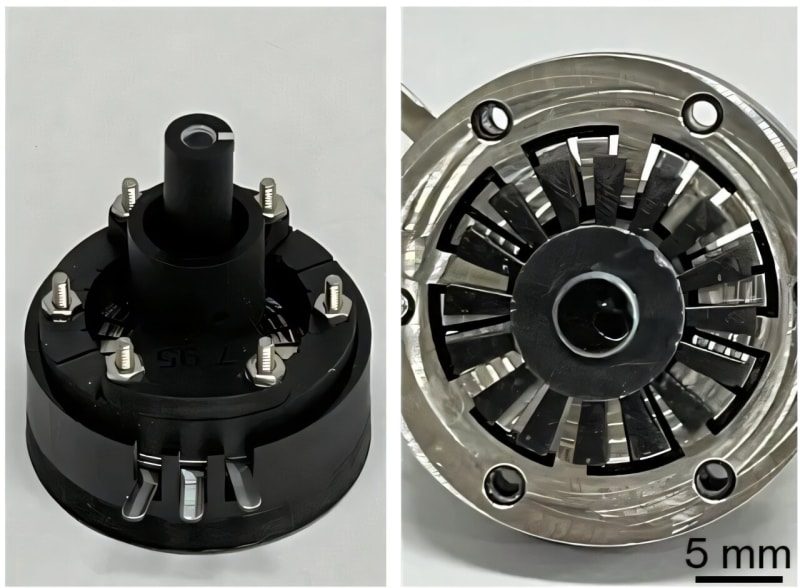
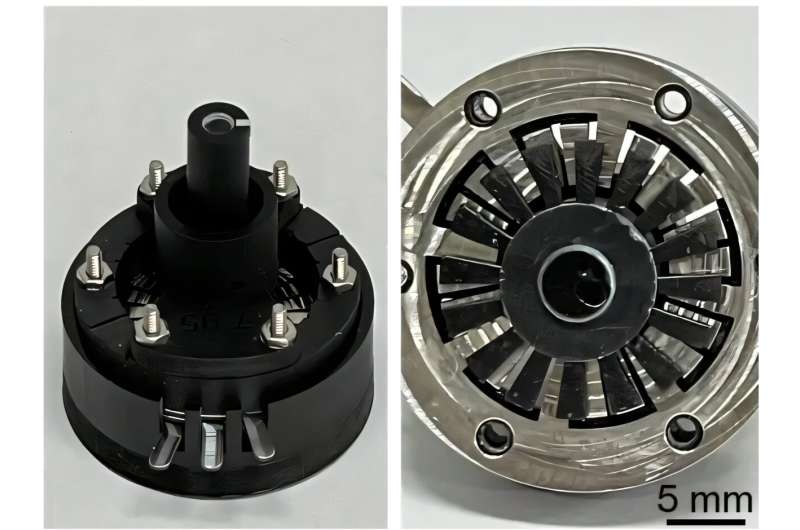
The team realized something profound: if this force could push, maybe it could also rotate. So they built a prototype motor with a rotor made entirely of plastic resin instead of metal.
It worked. The plastic rotor spun using only this newly harnessed sideways force.
The Ripple Effect
This isn't just about building a better motor. It's about reimagining what's possible when resources are scarce.
Today's electric motors need magnets made from rare earth metals, which are expensive and environmentally costly to mine. They also require copper coils and heavy metal parts. This new approach needs none of that.
Because the rotating parts can be plastic instead of metal, devices become lighter and faster to respond. That's a game changer for robotics, medical equipment, and precision instruments.
The motor also operates at much lower voltages than traditional electrostatic devices, making it safer for everyday use. And because it doesn't create magnetic fields, it could work in sensitive environments where magnetic interference causes problems, like inside MRI machines or near data storage systems.
"Our experiments suggested that a motor rotor might no longer need to be made of metal," Nishimura explained. "It sounded hard to believe at first. But when we trusted the data and built a rotor made entirely of plastic, it really did rotate."
Perhaps most thrilling: this force was predicted over a century ago, but nobody had ever actually seen it work with their own eyes until now.
The research, published in Communications Engineering, opens a new chapter in how we think about motion and electricity. In a world increasingly aware of resource limits and environmental costs, finding ways to build essential technology without rare materials isn't just clever engineering.
It's hope in motion.
More Images



Based on reporting by Phys.org - Technology
This story was written by BrightWire based on verified news reports.
Spread the positivity!
Share this good news with someone who needs it