Scientists Celebrate 50 Years Finding Universe's Missing Piece
After five decades of searching, physicists discovered the Higgs particle in 2012, proving that scientific breakthroughs require patience and intelligent failures. The journey involved three massive colliders and countless "null results" that ultimately pointed researchers in the right direction. #
A cow named Veronika just taught scientists something unexpected about patience and discovery.
Researchers in Austria watched this remarkable cow use both ends of a broom to scratch different parts of her body. This marked the first known case of multipurpose tool use outside of chimpanzees, but finding her required observing millions of ordinary cows first.
That's exactly how groundbreaking science works, and particle physicists know it better than anyone.
In July 2012, scientists at CERN's Large Hadron Collider announced they had found the Higgs particle, what The New York Times called "the key to the universe." This tiny particle explains why everything in existence has mass, from stars to planets to the atoms that make up your body.
The discovery made headlines worldwide. What didn't make headlines were the 50 years of failures that came before it.
Physicists first predicted the Higgs particle in the 1960s. Early theorists were so daunted by the challenge they wrote: "We apologize to experimentalists for having no idea what is the mass of the Higgs boson. For these reasons we do not want to encourage big experimental searches for it."
Scientists ignored that advice and started searching anyway.
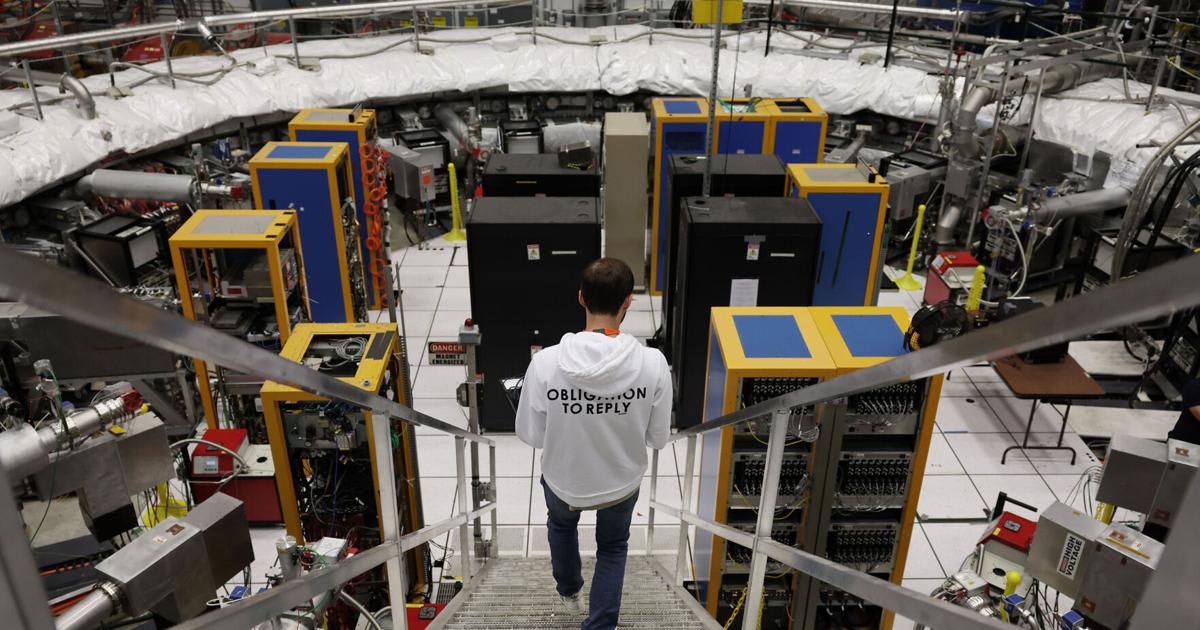
The Large Electron-Positron Collider at CERN spent 11 years hunting for the Higgs before shutting down in 2000 without finding it. The Tevatron collider at Fermilab in Illinois followed with its own search but closed in 2011, also empty-handed.
These weren't failures, though. Each "null result" eliminated possibilities and narrowed the search area. By the time the Large Hadron Collider switched on, theorists knew exactly where to look.
The infrastructure built during this long search created unexpected benefits too. CERN developed the World Wide Web as a tool to help scientists share data across institutions, changing how billions of people communicate today.
Why This Inspires
Scientific discovery demands humility and persistence in equal measure. Particle physics breakthroughs take decades, not years, because scientists are literally trying to decode how the universe works.
Some researchers now worry the field is stagnating after recent searches yielded more null results. A recent article in Quanta Magazine asked: "Is Particle Physics Dead, Dying, or Just Hard?"
It's just hard, and that's perfectly fine.
Stephen Hawking famously bet $100 against ever finding the Higgs particle. He lost, but his willingness to be wrong exemplifies the scientific spirit.
Every dead end teaches scientists something valuable. Every null result eliminates wrong answers and points toward right ones. The cost of not trying isn't just missing discoveries, it's accepting we'll never have those answers.
How many ordinary cows did researchers observe before finding Veronika? Probably millions. How many failed experiments led to discovering the Higgs? Decades worth. Both required the same ingredients: time, dedication, curiosity, and luck.
The next breakthrough in particle physics might take another 50 years, and that's worth celebrating because asking hard questions about our universe matters more than quick answers.
#
More Images

Based on reporting by Google: scientific discovery
This story was written by BrightWire based on verified news reports.
Spread the positivity!
Share this good news with someone who needs it