Scientists Confirm Exoplanets Have Magnetic Fields Like Earth
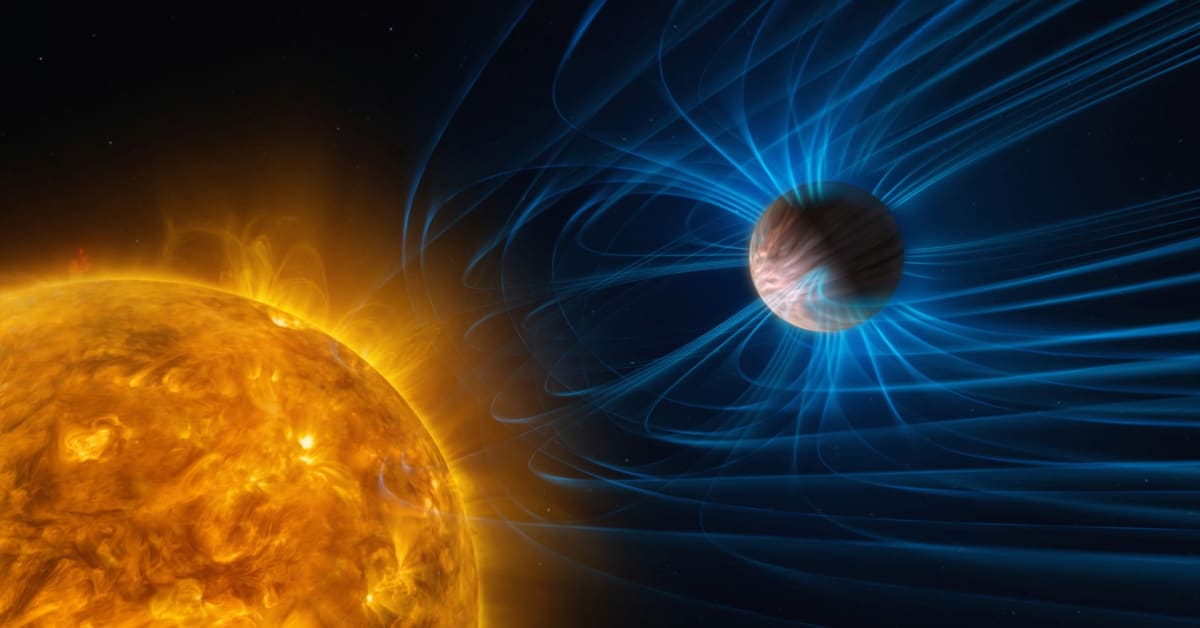
Astronomers just found the strongest proof yet that planets beyond our solar system have magnetic fields, a key ingredient that might help rocky worlds support life. By studying unusual wind patterns on seven distant gas giants, they uncovered evidence of invisible force fields similar to what protects Earth.
Scientists just cracked a longstanding mystery about distant worlds, and it could reshape our understanding of what makes planets livable.
Astronomers discovered the strongest evidence yet that planets beyond our solar system possess magnetic fields, just like Earth does. The finding came from studying seven large, scorching hot gas planets orbiting close to their stars.
The discovery happened when researchers noticed something strange. The hottest of these planets had the weakest winds, which contradicts everything scientists know about how atmospheres work.
Normally, hotter temperatures create stronger winds. But on these seven planets, the opposite was true.
Lead researcher Julia Seidel from France's Observatoire de la Côte d'Azur realized only one force could explain this backwards pattern: magnetic fields. The invisible force fields were slowing down the atmospheric winds, which race at speeds up to 15,500 miles per hour.
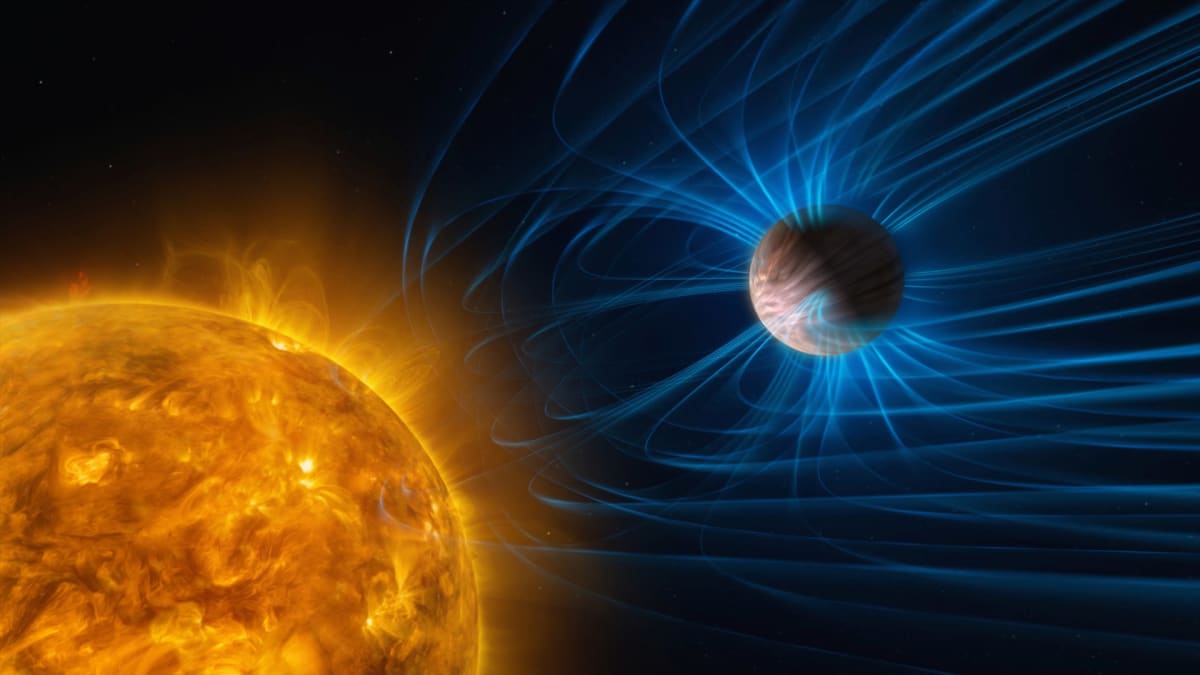
The planets, called "hot Jupiters," are massive gas giants locked in tight orbits around their stars. One side perpetually bakes in starlight while the other freezes in darkness, creating perfect conditions for scientists to observe how magnetic fields interact with powerful winds.
The magnetic fields on these seven planets compare in strength to those generated by planets in our own solar system. Six of our eight planets, including Earth, create their own magnetic fields through molten metal cores spinning deep inside.
Why This Inspires
This discovery matters far beyond these seven gas giants. Magnetic fields play a crucial role in whether a planet can maintain its atmosphere over billions of years.
Earth's magnetic field shields our atmosphere from being stripped away by solar wind. Mars once had a magnetic field too, but lost it billions ago when its core cooled, leaving behind only a thin atmosphere and barren landscape.
While the seven planets studied are too hot to host life, understanding magnetic fields helps scientists identify which distant rocky planets might be habitable. Life as we know it needs an atmosphere to regulate temperature, maintain surface pressure, and allow liquid water to exist.
Astronomer Bibiana Prinoth explained that magnetic fields help determine how planets evolve over time. An atmosphere is essential for life, and magnetic fields help planets keep their atmospheres.
The research, published in Nature Astronomy, represents a breakthrough because scientists previously struggled to find convincing proof that exoplanets generate magnetic fields. Instead of studying just one planet, the team looked at seven together and spotted a clear pattern.
The discovery opens doors to understanding thousands of planets beyond our solar system, bringing scientists closer to answering whether Earth-like worlds with protective magnetic shields exist among the stars.
More Images
Based on reporting by Google News - Science
This story was written by BrightWire based on verified news reports.
Spread the positivity!
Share this good news with someone who needs it