Scientists Spot Planet Keeping Its Atmosphere Against All Odds
A rocky planet 50 light-years away is losing helium but keeping heavier gases, giving scientists hope it might still have a breathable atmosphere after billions of years. This discovery helps us understand how planets like Earth hold onto their air.
Scientists just watched a distant planet fight to keep its atmosphere, and what they learned could change how we search for worlds that might support life.
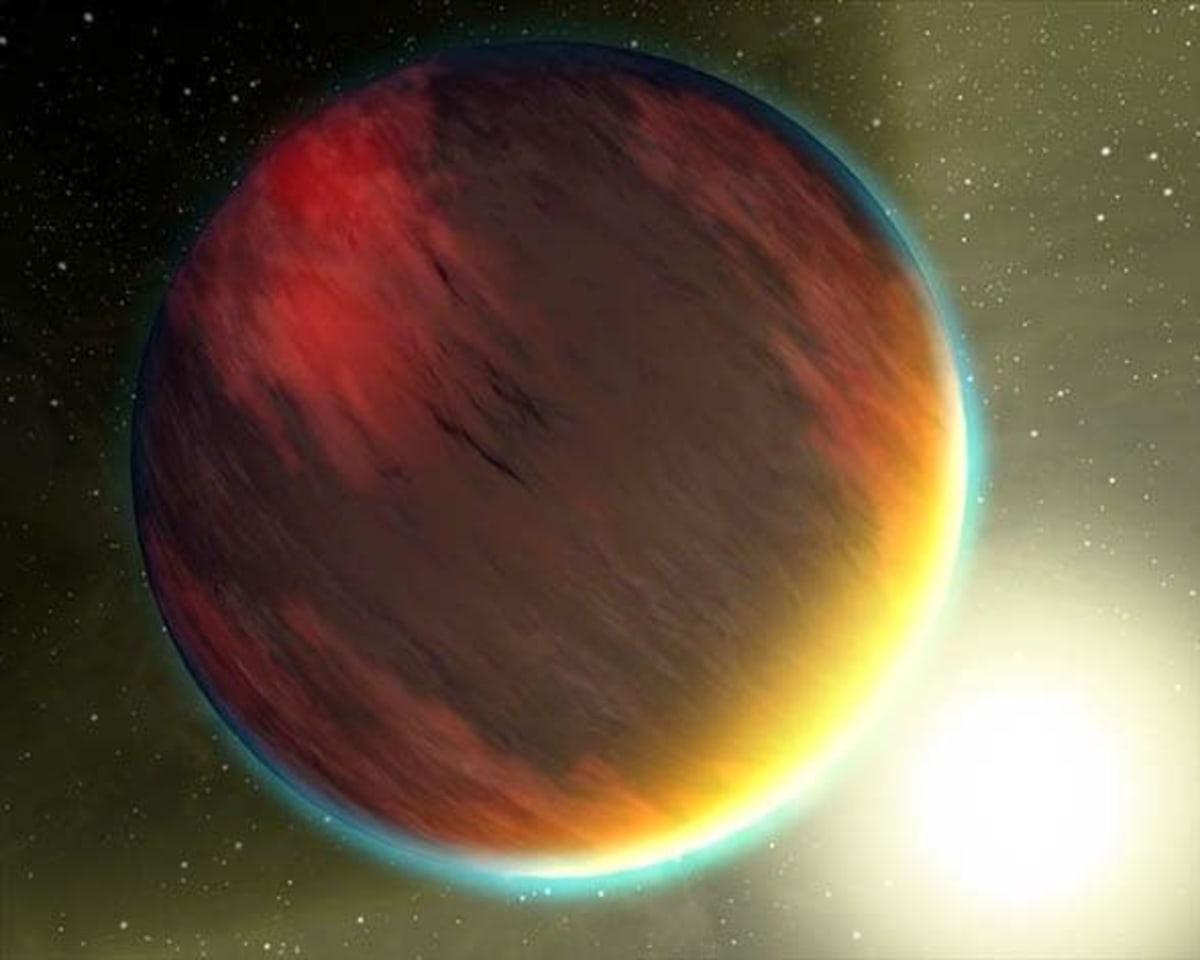
The planet, called LHS 1140b, sits about 50 light-years from Earth and orbits a small red dwarf star. It's roughly five and a half times Earth's mass and gets less sunlight than we do, putting it in the zone where liquid water could exist on its surface.
Researchers using a telescope in Chile's Atacama Desert spotted something remarkable. They detected helium streaming off the planet in two long tails, one ahead of it and one behind, like cosmic ribbons flowing through space.
The planet is losing about 100,000 kilograms of helium every second. That sounds catastrophic, but it's actually good news.
Here's why this matters. When planets first form, they typically have atmospheres made of hydrogen and helium. Over billions of years, stars blast these light gases into space with radiation. Venus, Earth, and Mars all lost their original atmospheres this way.
The helium escaping from LHS 1140b tells scientists that most of the hydrogen is already gone. But the math reveals something exciting: heavier elements like oxygen and nitrogen are too heavy to escape at this rate, meaning they're staying put.
The planet has had at least 3 billion years to lose its atmosphere to its star's energetic outbursts. Red dwarf stars are especially active, shooting out bursts of high-energy radiation that strip gases from nearby planets. Yet LHS 1140b appears to still be holding onto something substantial.
The detection wasn't consistent, though. When researchers looked again a year later, the helium signal had dropped below detection limits. This variability suggests the atmosphere loss fluctuates, which might explain why there's still an atmosphere left after all this time.
Why This Inspires
This discovery gives us a new way to peek at distant worlds we can't visit. By watching what's leaving a planet's atmosphere, scientists can figure out what's staying behind. It's like reading a recipe by looking at the scraps in the trash.
The techniques used here work especially well on planets around red dwarf stars, which are the most common type of star in our galaxy. That means thousands of potentially habitable worlds just became easier to study.
Every piece of data brings us closer to answering one of humanity's biggest questions: are we alone? Finding a planet that could retain oxygen and nitrogen for billions of years is a step toward finding worlds that might support life as we know it.
A rocky planet 50 light-years away is teaching us that atmospheres can survive against incredible odds.
More Images



Based on reporting by Ars Technica Science
This story was written by BrightWire based on verified news reports.
Spread the positivity!
Share this good news with someone who needs it