Scientists Control Electrons Without Magnets Using Quartz
Researchers just unlocked a breakthrough that could transform computing by using atomic vibrations in quartz to move electrons, no magnets or batteries required. This discovery opens an entirely new field called orbitronics that could make future devices cheaper, lighter, and more efficient.
Imagine if the next generation of computers could process information without magnets, batteries, or even traditional electricity. Scientists just made that possible using one of Earth's most abundant materials: quartz.
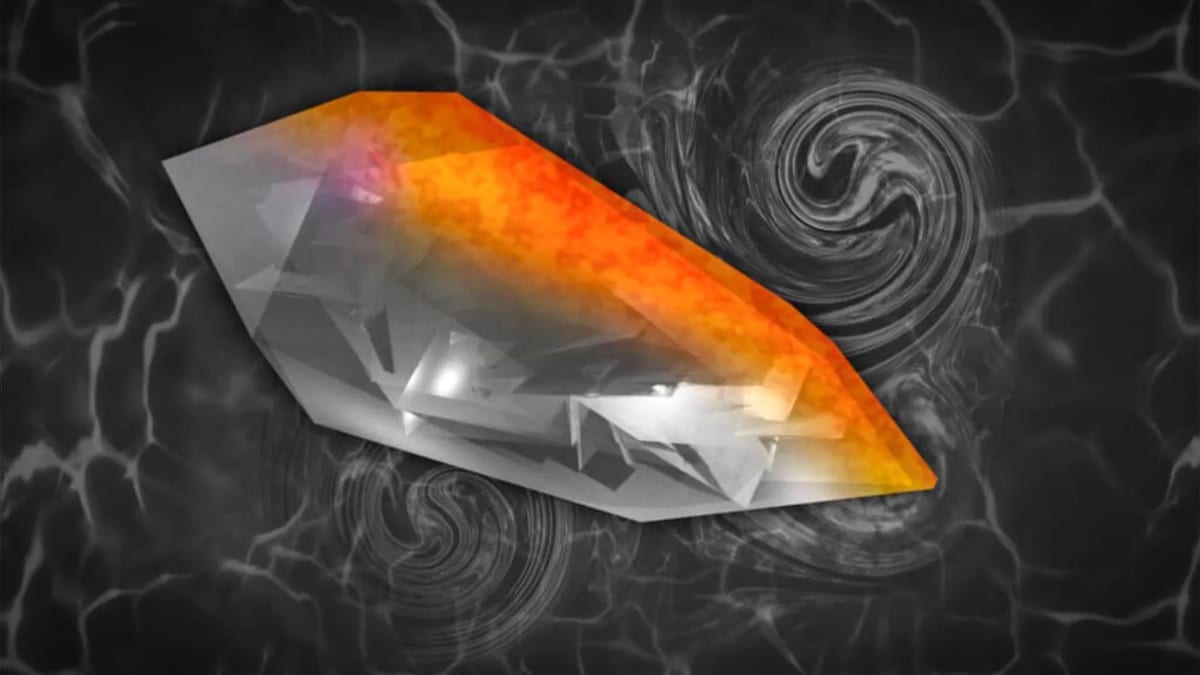
Researchers at North Carolina State University and the University of Utah discovered that tiny spiral vibrations in quartz crystals can directly control how electrons move. These vibrations, called chiral phonons, transfer their circular motion to electrons, giving them the momentum needed to carry information.
The breakthrough solves a major problem in computing. As devices grow more powerful, they need smarter ways to process massive amounts of data. One promising solution is orbitronics, a field that uses the orbital motion of electrons around atoms to store and move information more efficiently than current methods.
Until now, controlling that orbital motion required magnetic materials like iron. These metals are heavy, expensive, and increasingly scarce. Many are now classified as critical materials due to supply concerns.
"We don't need a magnet. We don't need a battery. We don't need to use voltage," said Valy Vardeny, physics professor at the University of Utah. "We just need a material with chiral phonons."
The secret lies in how atoms are arranged in quartz. Unlike symmetrical metals where atoms vibrate side to side, quartz has a spiral structure like the threads of a screw. This twist causes atoms to move in circular patterns, creating waves of motion that spread through the material like a ripple through a crowd.
The research team proved this works by applying a magnetic field to align the phonons in quartz, then removing the field. Even without external magnets, the circular motion continued, transferring to electrons and creating a steady flow of orbital momentum.
The Ripple Effect spreads far beyond the lab. Quartz is lightweight, inexpensive, and abundant. Replacing rare magnetic metals with quartz could make future electronics cheaper to manufacture and easier to scale. Devices could become smaller and more energy efficient, processing information in ways that current technology cannot match.
Doctoral candidate Rikard Bodin compared the discovery to adding new tools to an inventor's toolkit. "When we talk about discovering things, I can't tell you that your TV is going to run on it, but it's creating more levers that we can pull on to do new things," he said. "Now that it's here, someone else can push it forward and before you know it, it's ubiquitous."
The team published their findings in Nature Physics, marking the first time anyone has directly measured the magnetic effects of chiral phonons in a non-magnetic material. They used specialized equipment at the National High Magnetic Field Lab in Florida to confirm that these spiral vibrations generate their own internal magnetic fields, even though quartz itself isn't magnetic.
This opens doors that scientists thought were closed, creating pathways to computing technologies we haven't yet imagined.
Based on reporting by Science Daily
This story was written by BrightWire based on verified news reports.
Spread the positivity!
Share this good news with someone who needs it
%2Ffile%2Fattachments%2F2997%2FGettyImages-2211967510_856600.jpg)