Scientists Crack Code for Faster Asteroid Missions
Researchers just solved a 300-year-old math puzzle that could make spacecraft missions 20% more efficient. The breakthrough helps space agencies plan better routes when visiting multiple moving asteroids.
Planning a road trip to several cities is simple when those cities stay put, but what if your destinations kept moving through space at thousands of miles per hour?
That's the challenge facing scientists who plan spacecraft missions to multiple asteroids. Now, two researchers have cracked the code with a brilliant mathematical solution.
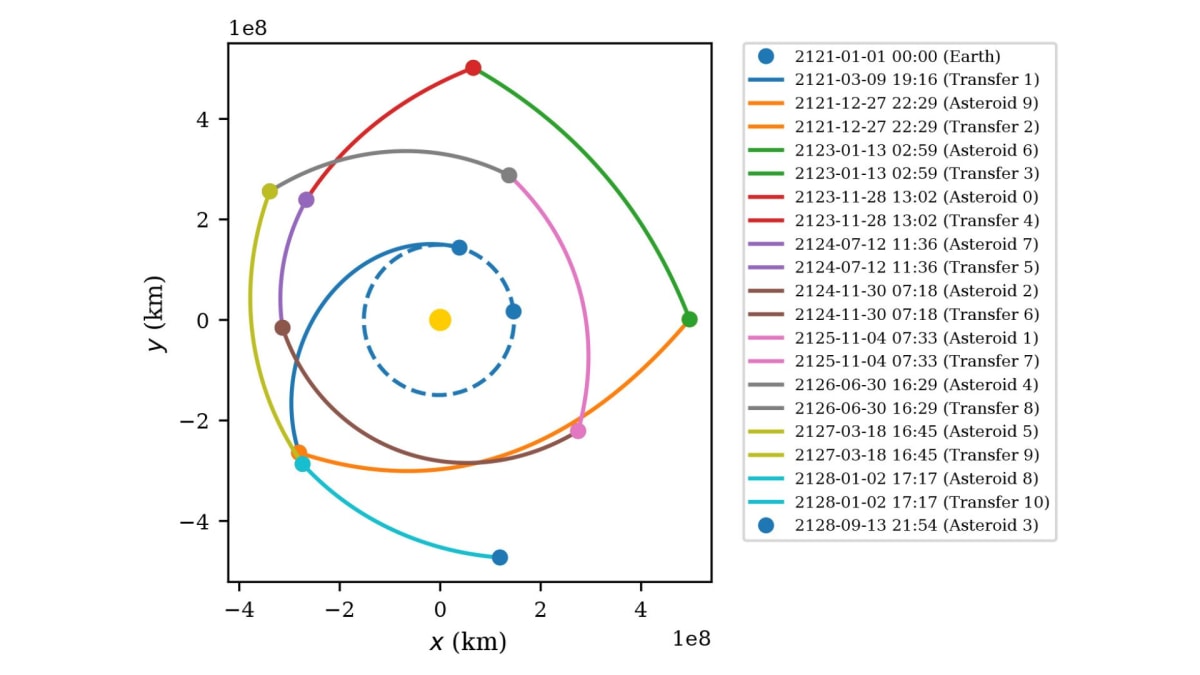
Isaac Rudich from Polytechnique Montréal and Michael Römer from Universität Bielefeld took on what they call the "Asteroid Routing Problem." The question sounds simple: What order should a spacecraft visit asteroids to use the least fuel and time? The answer is anything but.
The problem builds on a puzzle first posed in the 1700s by Swiss mathematician Johann Heinrich Lambert. He wondered how to find the best path between two moving objects in space. While that puzzle was solved centuries ago, calculating routes between many moving objects remained impossibly complex.
Every possible route between every pair of asteroids requires its own calculation. With multiple asteroids, the math quickly becomes overwhelming even for powerful computers.
The team's clever solution uses something called Decision Diagrams. Think of it like a family tree that groups similar choices together, dramatically reducing the number of calculations needed while still finding the optimal route.
The Ripple Effect
The results speak for themselves. The new approach finds routes about 20% better than standard methods, combining improvements in both travel time and fuel consumption. That means future missions could visit more asteroids with the same resources, or complete existing mission plans faster and cheaper.
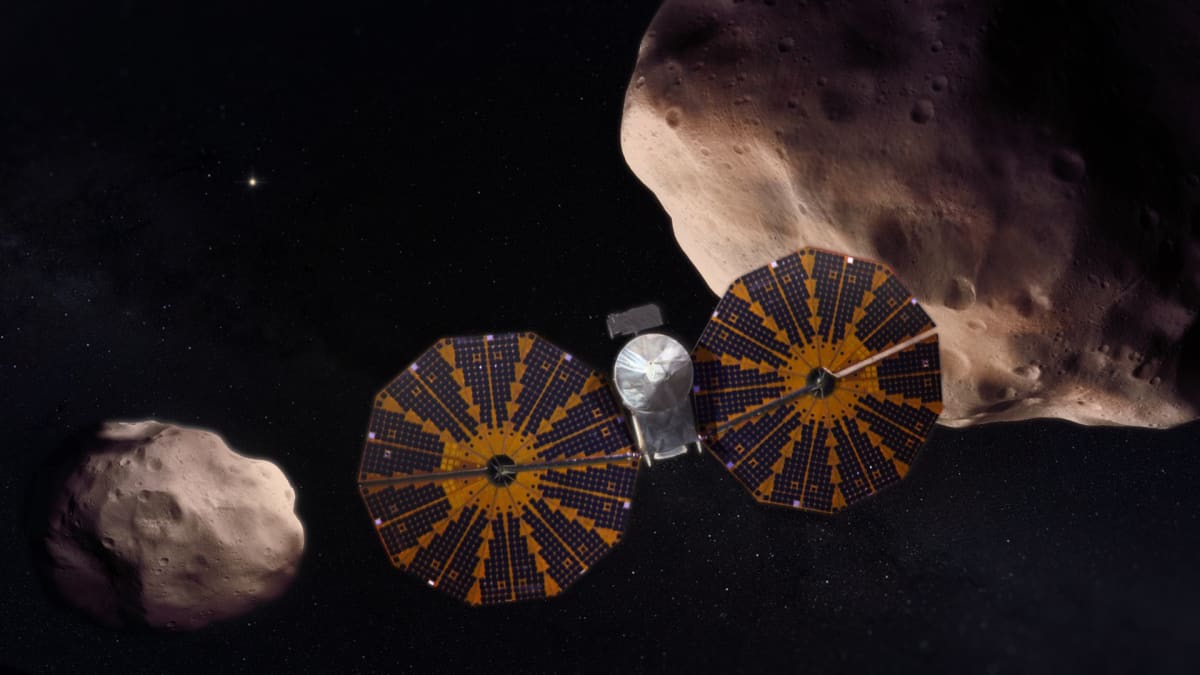
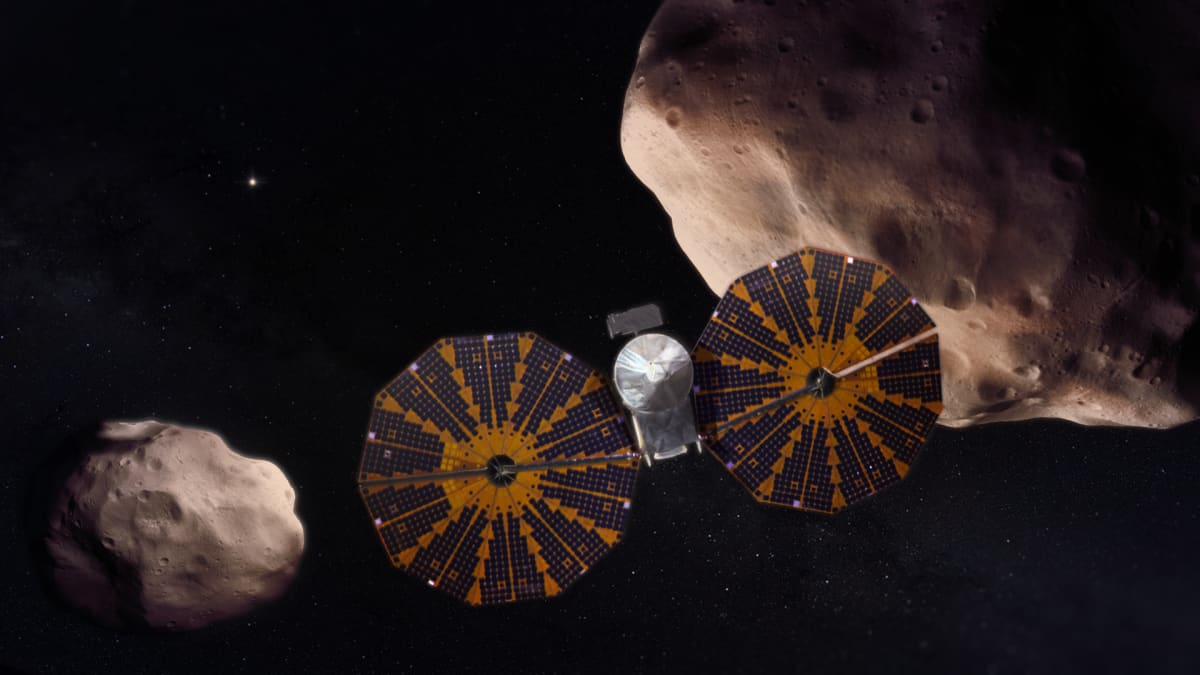
NASA's Lucy mission is currently traveling to Jupiter to explore Trojan asteroids, having already passed several rocks in the asteroid belt. While Lucy's route was planned using older methods, future missions could benefit enormously from this breakthrough.
The math doesn't just work in space. The same approach could optimize bus routes, shipping schedules, and supply chains here on Earth, where traffic and weather create constantly changing conditions similar to moving asteroids.
Even a 1% improvement in mission planning represents substantial savings in time, money, and fuel for space agencies. The research, published in the INFORMS Journal on Computing, gives mission planners powerful new tools to explore our solar system more efficiently.
The universe just got a little more accessible thanks to some creative thinking about an old problem.
More Images

Based on reporting by Space.com
This story was written by BrightWire based on verified news reports.
Spread the positivity!
Share this good news with someone who needs it