Scientists Crack Code to Stop Battery-Killing Dendrites
Researchers have discovered why tiny "thorns" inside lithium batteries turn deadly, opening the door to batteries that last longer and stay safer. The breakthrough could finally solve one of the biggest obstacles to better battery technology.
Your phone battery dying too soon might finally become a thing of the past, thanks to scientists who just solved a puzzle that's stumped researchers for decades.
A team from universities across the US and Singapore has figured out exactly why microscopic needle-like structures called dendrites destroy lithium batteries from the inside out. These tiny troublemakers, about 100 times thinner than a human hair, form during charging and can cause batteries to lose power over time or even catch fire.
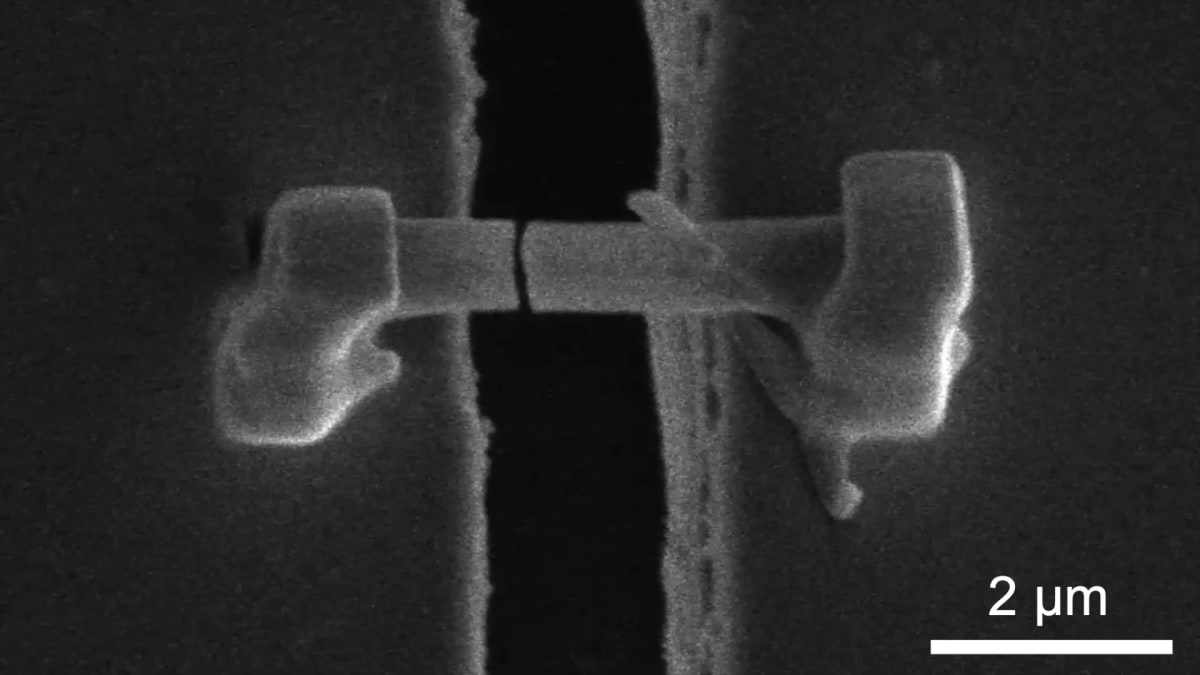
The discovery came as a complete surprise. Scientists always thought dendrites would be soft and squishy like bulk lithium, which bends easily. Instead, they behave more like dry spaghetti, snapping under pressure into sharp, brittle spikes.
"Lithium dendrites have long been assumed to be soft and ductile, like Play-Doh," said Xing Liu, assistant professor at the New Jersey Institute of Technology. "But our observations suggest that they may instead be strong and brittle."
Here's what makes them so dangerous. When dendrites form, they grow out from the battery's negative terminal like tiny thorns. A coating called solid electrolyte interphase forms around them, turning them rigid and sharp enough to pierce through the thin separator between the battery's positive and negative sides. When that happens, the battery short circuits.
The team had to build special air-tight chambers just to study these structures because lithium reacts instantly with oxygen. Using high-resolution electron microscopy, they carefully harvested dendrites from working batteries and tested their mechanical strength for the first time ever.
The worst part about dendrites isn't just the fire risk. When these spikes break off under stress, they become "dead lithium," useless fragments floating in the battery that can never store energy again. That's why your phone battery holds less charge over time.
The Bright Side
Now that scientists understand how dendrites transform from soft to spiky, they can work on stopping that transformation. Liu's team is already exploring solutions like using lithium alloy anodes that make dendrites less prone to breaking. Other researchers are looking at ways to block the coating that hardens these structures in the first place.
This breakthrough matters beyond just phones. Electric cars, renewable energy storage, and countless devices depend on lithium batteries. Solving the dendrite problem could mean electric vehicles that hold their charge for years, solar power systems that store energy more reliably, and electronics that last far longer.
The research represents decades of work finally paying off, bringing us closer to batteries that are safer, longer-lasting, and more powerful than ever before.
More Images


Based on reporting by New Atlas
This story was written by BrightWire based on verified news reports.
Spread the positivity!
Share this good news with someone who needs it