Scientists Crack Mystery of Clockwork Underwater Quakes
After 30 years, researchers finally understand why certain ocean earthquakes happen like clockwork every five years. The discovery could help predict earthquakes in more dangerous zones around the world.
Scientists have solved a puzzle that's been stumping experts since the 1990s: why some underwater earthquakes arrive as predictably as your morning alarm.
For three decades, researchers watched the Gofar fault in the Pacific Ocean produce magnitude six earthquakes every five to six years, almost on schedule. Most earthquakes are wildly unpredictable, making this pattern seem impossible.
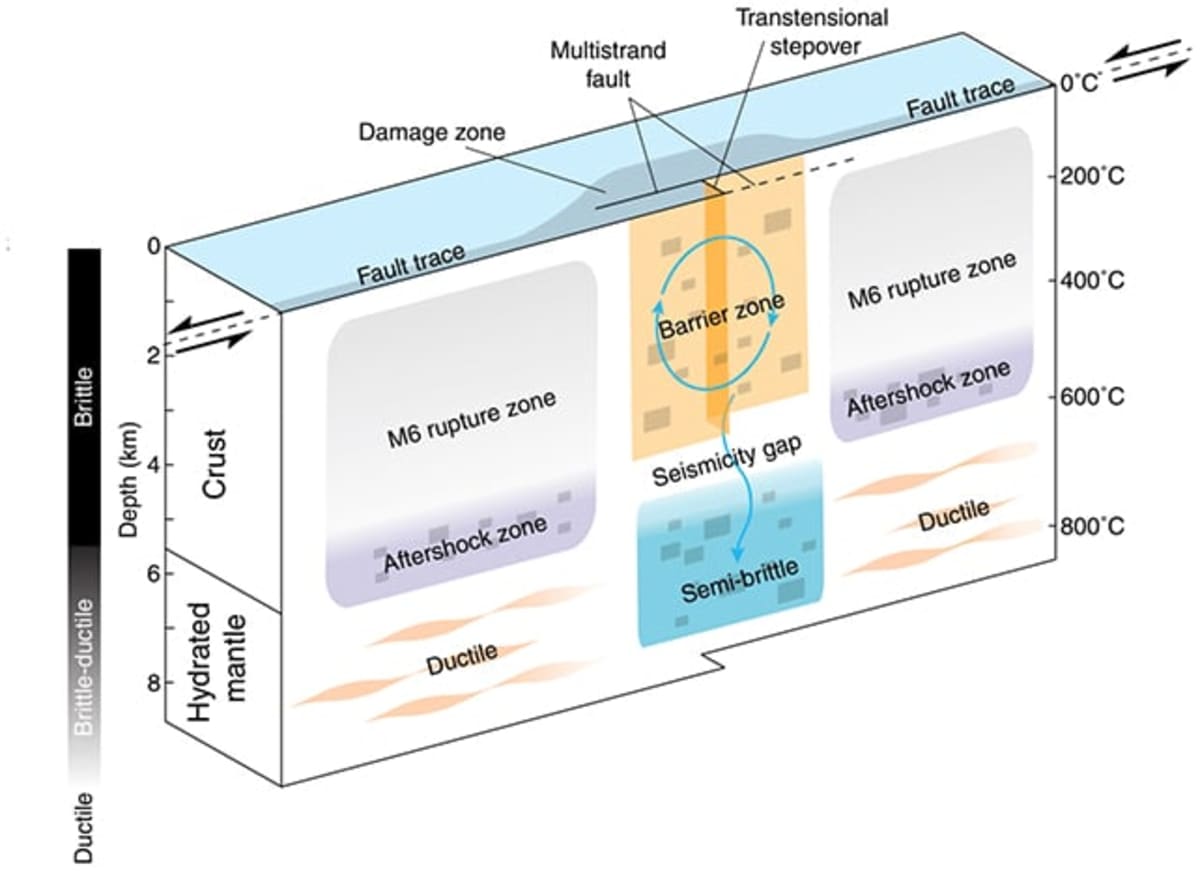
The answer lies in something called barrier zones, natural "brakes" built into the ocean floor. Scientists from universities across the US and Canada discovered these zones work like shock absorbers, preventing small tremors from becoming catastrophic quakes.
The Gofar fault sits deep underwater between Ecuador and the Pacific Ocean, where two massive tectonic plates scrape past each other at about 5.5 inches per year. Researchers placed special devices called ocean bottom seismometers directly on the seafloor during two separate experiments in 2008 and 2019.
These instruments captured tens of thousands of tiny earthquakes surrounding two major ones. The data revealed something remarkable: the barrier zones are actually complex networks of small faults that absorb minor shocks before big quakes hit.
Here's where it gets fascinating. When a main quake occurs, seawater rushes deep into the fractured rock around these barrier zones. The fluid causes the rock to expand and lock up, creating pressure changes that stop the earthquake from growing larger.
"These barriers are not just passive features of the landscape," says seismologist Jianhua Gong from Indiana University Bloomington. "They are active, dynamic parts of the fault system."
The Bright Side: While the Gofar fault itself poses no threat to people or cities, this discovery could revolutionize how we understand earthquake zones that do endanger lives. Scientists have noticed similar patterns at underwater faults worldwide, where earthquakes stay smaller than expected given the geological forces at play.
Each breakthrough in earthquake science brings us closer to predicting when and where the next big one will strike. Future research might use seafloor drilling to study whether other faults have similar protective barrier zones.
The researchers emphasize that multi-year monitoring projects like theirs are essential for capturing the full story of how earthquakes work. Their findings, published in the journal Science, provide real constraints that can improve computer models predicting earthquake behavior.
Understanding nature's built-in safety mechanisms might just help us build better ones of our own.
More Images


Based on reporting by Google News - Science
This story was written by BrightWire based on verified news reports.
Spread the positivity!
Share this good news with someone who needs it