Scientists Create New Leukemia Treatment From Survivors' Cells
Researchers at Memorial Sloan Kettering developed a groundbreaking CAR T cell therapy that targets leukemia while sparing healthy blood cells. The innovation came from studying patients whose cancer went into long-term remission.
Scientists just solved one of cancer treatment's toughest puzzles by learning from the patients who beat the odds.
Researchers at Memorial Sloan Kettering Cancer Center created a new type of CAR T cell therapy that attacks acute myeloid leukemia without harming healthy blood cells. This breakthrough tackles a problem that has stumped doctors for years.
The challenge with treating AML has always been collateral damage. Most proteins on leukemia cells also appear on healthy blood-forming cells, so targeting cancer risks destroying the body's ability to make new blood.
Dr. Anthony Daniyan and Dr. Omar Abdel-Wahab took a different approach. Instead of studying why treatment fails, they looked at what helped people survive.
Their team discovered that AML patients who achieved long-term remission after bone marrow transplants developed antibodies targeting a specific protein. This protein, called U5 snRNP200, normally stays inside cell nuclei but mysteriously appears on the surface of leukemia cells in about half of AML patients.
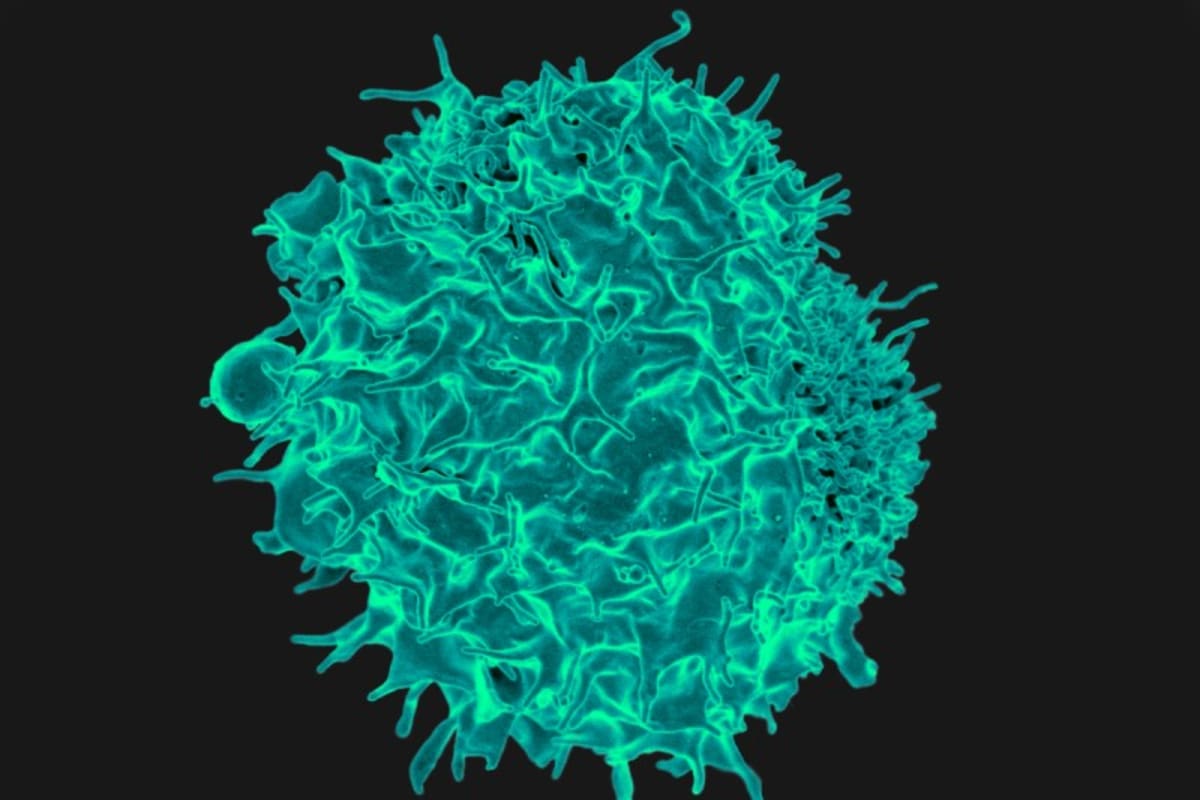
The researchers engineered CAR T cells to mimic these successful natural immune responses. They also "armored" the cells by adding a molecule called IL-18 that boosts immune responses and makes cancer cells easier to attack.
In animal studies, the results were remarkable. The treatment eliminated leukemia in models of both adult and pediatric forms of the disease. When treated mice were exposed to leukemia again nearly a year later, they remained cancer-free.
The therapy also showed promise against other leukemias, including B-cell acute lymphoblastic leukemia and childhood forms of the disease. These cancers differ significantly from adult AML, suggesting the approach could help many patients.
The Ripple Effect
This discovery could change outcomes for thousands of families facing devastating diagnoses. Currently, only three out of ten AML patients survive five years after diagnosis. For those whose cancer resists treatment or returns, survival drops to one in ten.
"That's right up there with the cancers we usually talk about as being the most deadly, like lung and pancreatic cancer," Dr. Abdel-Wahab says. Bone marrow transplants work for some patients, but many aren't healthy enough or can't find suitable donors.
The research builds on CAR T cell techniques pioneered at MSK in the early 2000s. By combining donor antibodies with engineered T cells, the team created what Dr. Daniyan calls "the best of both worlds."
The treatment spared healthy blood-forming cells in experiments, addressing the safety concerns that have limited other AML therapies. Further development is needed before human clinical trials can begin.
The findings were published April 30 in Cancer Discovery, offering new hope for one of medicine's toughest challenges.
Based on reporting by Google News - New Treatment
This story was written by BrightWire based on verified news reports.
Spread the positivity!
Share this good news with someone who needs it