Scientists Create Safer Batteries Using Water-Based Method
Three chemists are solving major challenges in energy storage and water purification with surprisingly simple innovations. Their breakthrough approaches could make solid-state batteries cheaper to produce and help millions access cleaner water.
Scientists in China just made solid-state batteries easier to produce, bringing us closer to safer, longer-lasting power for everything from phones to electric cars.
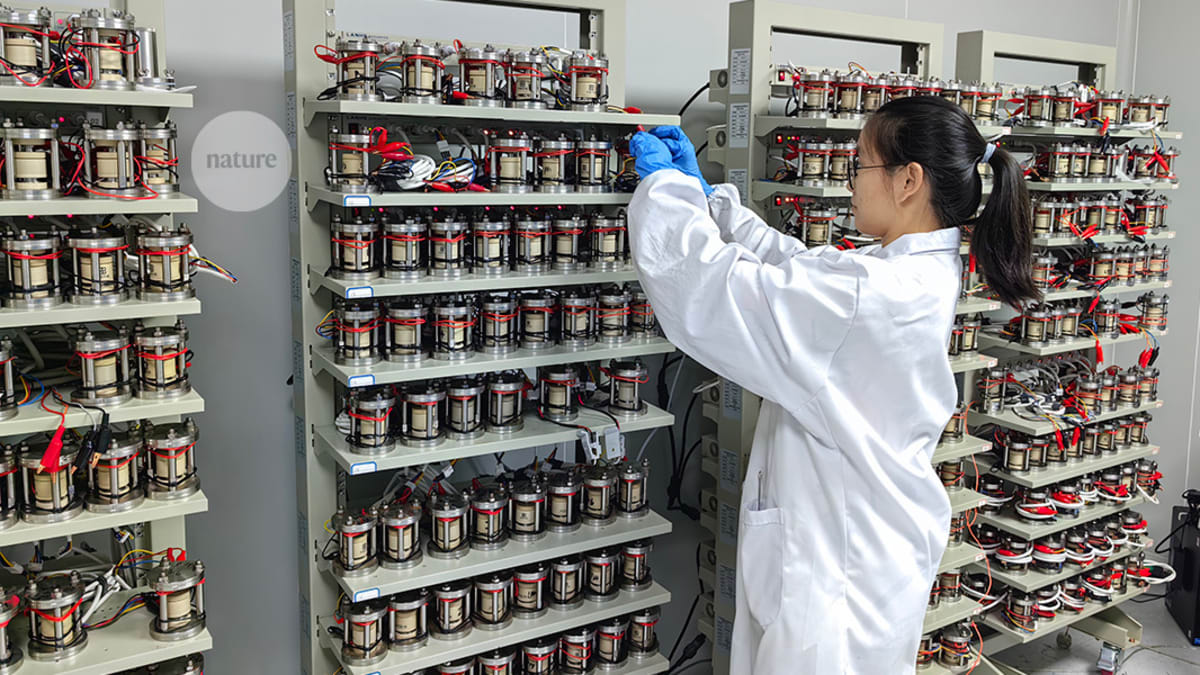
Xiaona Li at the Eastern Institute of Technology in Ningbo developed a water-based method to create the materials needed for solid-state batteries. These batteries are lighter and safer than the lithium-ion batteries we use today because they replace flammable liquid with stable solid materials.
The traditional manufacturing process required grinding materials into powder, then heating and cooling them in a process that's expensive and hard to scale up. Li's team simply dissolved the components in water instead, creating a material that conducts electricity just as well while using less energy and costing less to produce.
In a 2025 study published in Nature Energy, Li's team identified 73 different materials that could work with this approach. The result is a glass-like solid where ions move freely, conducting electricity efficiently while remaining completely safe.
Meanwhile in India, chemical engineer Ananth Govind Rajan is using nanomaterials to tackle water purification. At the Indian Institute of Science in Bengaluru, he's designing filtration membranes that work faster and last longer.
Govind Rajan wove graphene oxide into filtration membranes, making them more chemically reactive and easier to disperse in water. The modified membranes filter water faster and stay resilient longer, potentially helping communities maintain clean water systems more effectively.
The Ripple Effect
These innovations show how rethinking basic processes can unlock massive improvements. Li's water-based battery production method could make solid-state batteries affordable enough for widespread adoption, reducing fire risks in electronic devices while extending their battery life.
Govind Rajan's filtration work could transform water access in developing regions where maintaining expensive filtration systems has been a challenge. He's now using artificial intelligence to design even better nanopore structures, turning complex molecular arrangements into computer-readable text that speeds up the discovery process.
Both scientists grew up tinkering with how things work. Li focused on finding cheaper production methods, while Govind Rajan spent his childhood taking apart radios to understand their components.
Their practical approaches prove that solutions to global challenges don't always require completely new inventions. Sometimes the biggest breakthroughs come from asking a simple question: isn't there an easier way to do this?
These innovations could soon power our devices more safely and help millions access cleaner water.
More Images

Based on reporting by Nature News
This story was written by BrightWire based on verified news reports.
Spread the positivity!
Share this good news with someone who needs it