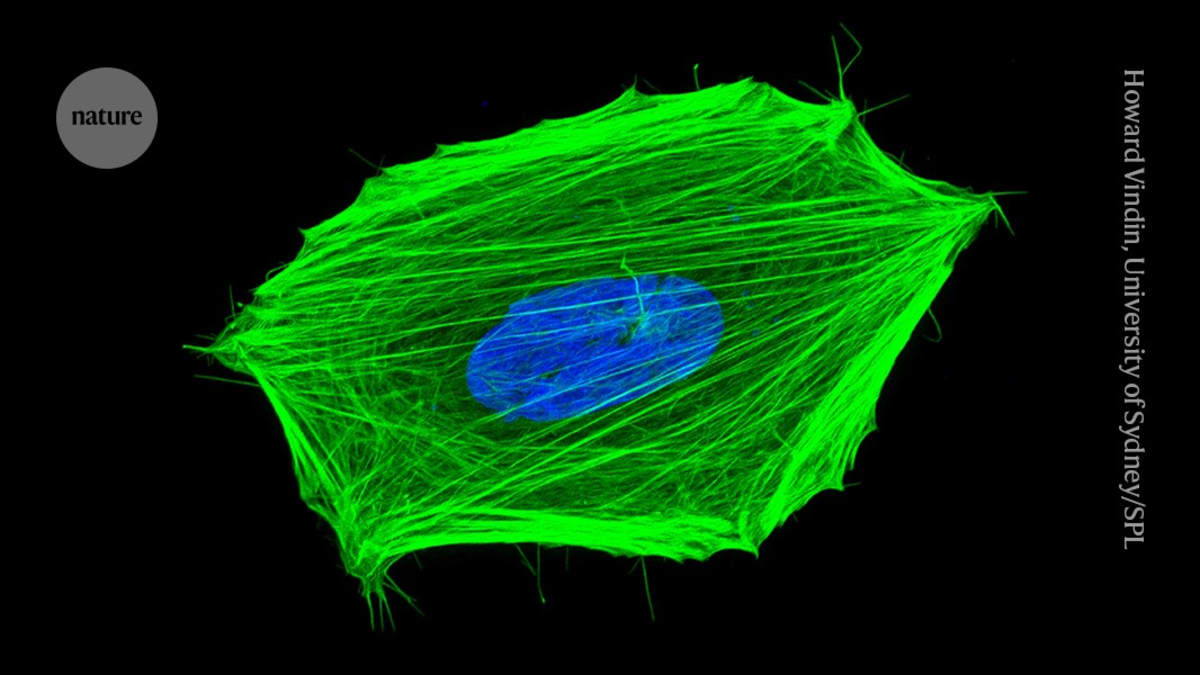
Scientists Create Tiny Thermometer for Inside Living Cells
Researchers have built a molecular thermometer small enough to measure temperature inside individual cancer cells and even their nuclei. This breakthrough could help scientists better understand how life works at its smallest scale.
Imagine taking a cell's temperature the same way a doctor checks yours, but thousands of times smaller.
Scientists have created a quantum nanosensor that can measure heat inside a single living cell. The tiny thermometer is so small that it can slip inside a cell's nucleus, opening new ways to study how our bodies work at the molecular level.
The research team embedded molecules of a compound called pentacene into crystals, then broke them into particles just 200 to 500 nanometers wide. That's a tiny fraction of a red blood cell's diameter. They coated the particles in a protective polymer to keep them safe for cells.
The sensors work through quantum mechanics. When scientists shine green lasers at them, they glow red. Adding microwaves at specific frequencies dims the glow slightly, and the temperature around the sensors affects which frequency causes the dimming.
To test their invention, the team either soaked cancer cells in solutions containing the sensors or injected them directly into cell nuclei. By measuring which microwave frequencies dimmed the sensors' glow, they could calculate the temperature inside different parts of the cells.
Previous cell thermometers used nanodiamonds, but each diamond behaved slightly differently, making consistent readings impossible. These new molecular sensors solved that problem by being uniform and reliable.
The Ripple Effect
This breakthrough matters beyond cancer research. Temperature affects every chemical reaction in our bodies, from digestion to brain function. Being able to measure heat at the cellular level means scientists can watch metabolism and other life processes in real time.
The technology could help researchers develop better treatments by showing exactly how cells respond to medications. It might reveal why some drugs work better than others or help doctors personalize treatments based on how individual cells behave.
Future versions of these sensors could monitor other cellular conditions too, not just temperature. The same quantum principles might detect pH levels, oxygen, or specific molecules inside living cells.
The team's method of coating the sensors in protective polymers also ensures they're safe for living tissue, bringing this technology closer to practical medical applications. With refinement, doctors might one day use similar tools to diagnose diseases or monitor treatment in real time, one cell at a time.
More Images


Based on reporting by Nature News
This story was written by BrightWire based on verified news reports.
Spread the positivity!
Share this good news with someone who needs it