Scientists Create Unsinkable Metal Tubes Inspired by Spiders
Engineers at the University of Rochester have developed aluminum tubes that can't sink, even when punctured with holes. The breakthrough, inspired by diving bell spiders, could revolutionize ship safety and offshore energy platforms.
📺 Watch the full story above
More than a century after the Titanic disaster, scientists have finally cracked the code for truly unsinkable materials.
Researchers at the University of Rochester's Institute of Optics created ordinary aluminum tubes that stay afloat no matter how damaged they get. The secret? They borrowed a trick from diving bell spiders, which trap air bubbles to breathe underwater.
The process is surprisingly simple. Engineers etch tiny patterns inside aluminum tubes, creating microscopic pits that repel water and trap air. When the tubes enter water, a stable air bubble forms inside, preventing them from getting waterlogged.
Lead researcher Chunlei Guo added a divider to the middle of each tube. This means even when pushed vertically into water, the air bubble stays trapped and the tube keeps floating.
The team put their design through brutal testing. They punched holes in the tubes, submerged them for weeks in rough conditions, and twisted them at extreme angles. Nothing could sink them.
This improves on earlier designs from 2019 that could tip over in turbulent water. The new tubes handle conditions like those found at sea without losing their floating ability.
The Ripple Effect
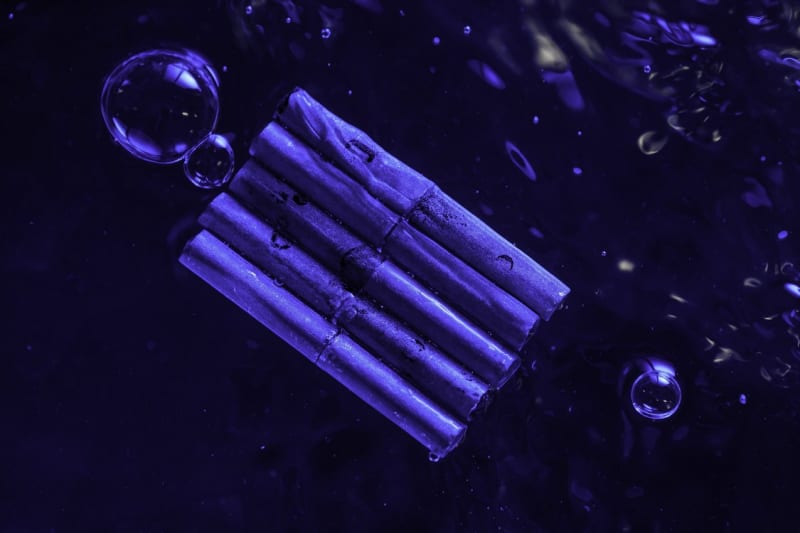
The applications extend far beyond safer ships. Multiple tubes can link together to create rafts, buoys, and floating platforms. The technology scales easily to larger sizes needed for offshore wind turbine moorings, supporting the growth of renewable energy.
Unlike previous attempts at unsinkable designs that relied on expensive materials or complicated systems, this solution uses cheap aluminum and a straightforward manufacturing process. That means it could be adopted quickly across maritime industries.
The team tested the tubes in challenging environments for weeks without seeing any decline in performance. The superhydrophobic surface held up against everything researchers threw at it.
Nature provided the blueprint for this innovation. Just as diving bell spiders survive underwater hunts by trapping air, and fire ants form floating rafts with their water-repelling bodies, these tubes harness the same principle at a human scale.
The technology could transform how we build ships, create floating platforms for ocean research, and anchor offshore renewable energy systems. What started as inspiration from a tiny spider might prevent the next maritime disaster and power our clean energy future.
More Images



Based on reporting by Good News Network
This story was written by BrightWire based on verified news reports.
Spread the positivity!
Share this good news with someone who needs it