Scientists Discover 'Chewbacca' Coral in Deep Pacific
Researchers have formally named a new deep-sea coral species after the Star Wars character, found thriving in complete darkness near Hawaii and the Mariana Trench. The playful discovery reveals the tropical western Pacific may be a hidden hotspot for rare deep-ocean life.
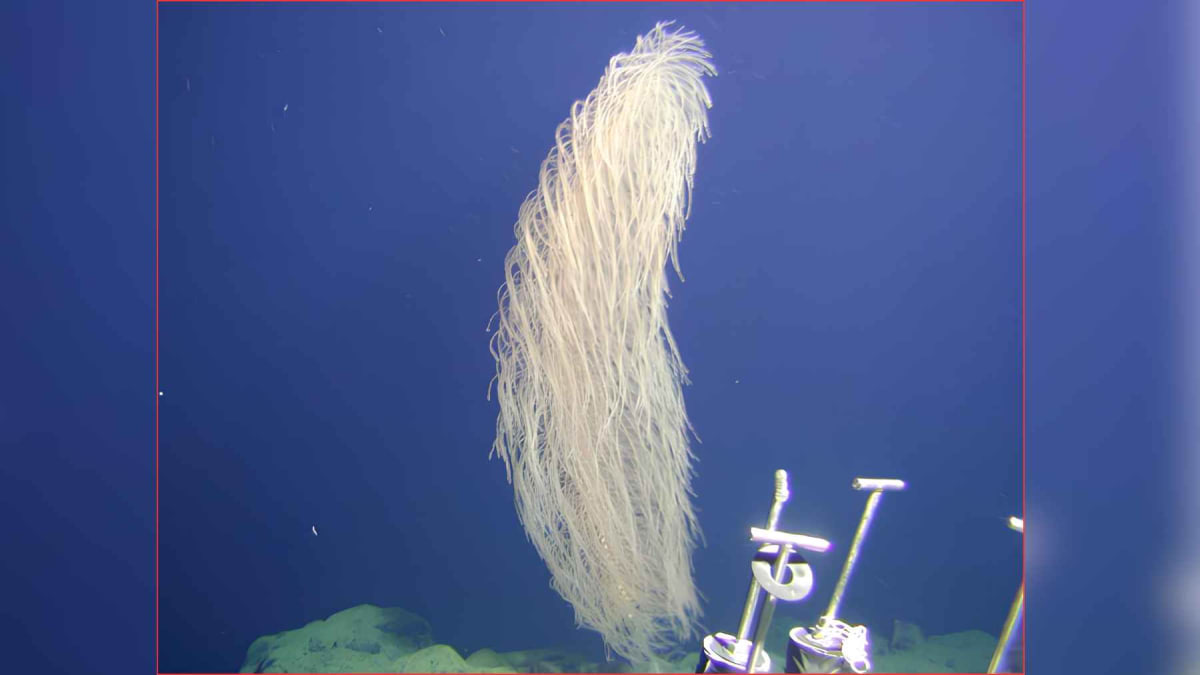
A fuzzy-looking coral discovered in the darkest depths of the Pacific Ocean now has a name that makes scientists smile: Iridogorgia chewbacca.
The coral was first spotted off Molokai, Hawaii in 2006, standing about four feet tall on the ocean floor where sunlight never reaches. When researcher Les Watling saw its long, flexible branches waving in the current, he immediately thought of the beloved Wookiee from Star Wars.
A decade later, another specimen turned up near the Mariana Trench during a 2016 deep-sea expedition. Robot submarines controlled from ships above captured footage of the smaller coral, about 20 inches tall, clinging to dark rock thousands of feet below the surface.
This isn't the colorful reef coral most people picture from tropical vacations. Think instead of a solitary underwater tree with a shiny central stem and loose, hairlike branches that drift with deep ocean currents.
Scientists from the Chinese Academy of Sciences and the University of Hawaii formally described the new species by comparing its physical structure with known corals and analyzing its DNA. They examined the branches, stem, and tiny hard pieces called sclerites embedded in the tissue to confirm they had found something genuinely new.
Deep-sea corals are animals, not plants. They're colonies made of thousands of tiny creatures called polyps that feed on drifting bits of food carried by ocean currents, surviving in complete darkness where most life can't exist.
The Ripple Effect
The funny name serves a serious purpose. Before scientists can protect a species, they need to know it exists and where it lives.
The study found that ten of the fourteen known Iridogorgia species have been recorded in the tropical western Pacific. That concentration suggests this region isn't just home to one odd coral, it may be a genuine diversity hotspot for deep-sea life that science is only beginning to map.
Less than one-twentieth of one percent of the ocean floor has been mapped, according to federal guidance on deep-sea habitats. These corals provide shelter for fish, shrimp, crabs, and countless other creatures living in the permanent dark.
The 2016 expedition alone mapped about 10,700 square miles of seafloor and completed 22 dives between 820 and 19,700 feet deep. Each dive revealed underwater mountains, ridges, and slopes that act like scattered islands for animals needing firm places to attach.
Memorable names matter beyond the science lab. Iridogorgia chewbacca is easier for students, museum visitors, and ocean managers to remember than a specimen code in a drawer.
Future surveys will help determine whether this coral lives across wide stretches of the Pacific or only in a few isolated pockets. Better cameras, careful sampling, and DNA analysis will fill in the map piece by piece, giving ocean policy makers the information they need to protect habitats most people will never see.
Even in the deepest darkness, life finds a way to thrive.
More Images


Based on reporting by Google News - Scientists Discover
This story was written by BrightWire based on verified news reports.
Spread the positivity!
Share this good news with someone who needs it