Scientists Explore Deep Sea in Submersibles Off Indonesia
Scientists aboard OceanX's research vessel are diving nearly 1,000 meters deep off Indonesia to discover new species and compounds that could become future medicines. The mission combines cutting-edge technology with compelling storytelling to make ocean research accessible to everyone.
Imagine descending into total darkness nearly 1,000 meters below the ocean surface, watching glowing jellyfish drift past your window as you search for species no human has ever seen.
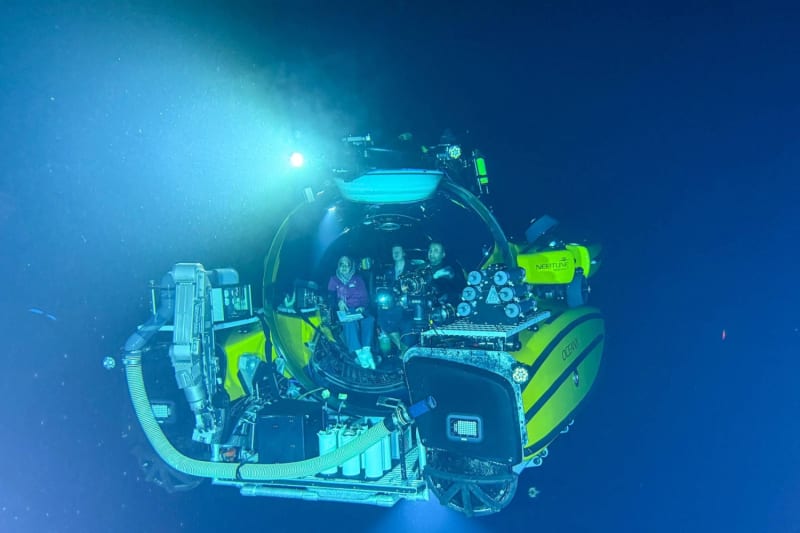
That's exactly what Indonesian scientists are doing aboard OceanXplorer, a research ship equipped with submersibles, labs, and cameras capturing life in one of Earth's most mysterious environments. The vessel, operated by nonprofit OceanX and backed by billionaire Ray Dalio, recently brought researchers to a seamount chain off Indonesia's Sulawesi island.
For Husna Nugrahapraja, an assistant professor making his first submersible dive, the experience started with nerves. "It is a very lonely environment at first," he said as the sub dropped below 200 meters and light disappeared completely.
But what he found below made the anxiety worthwhile. Delicate comb jellies pulsed with fairy-light glow along their sides. Translucent siphonophores drifted past in fanciful shapes. Below 900 meters, the seafloor revealed unique organisms from delicate sea stars to fronded soft corals.
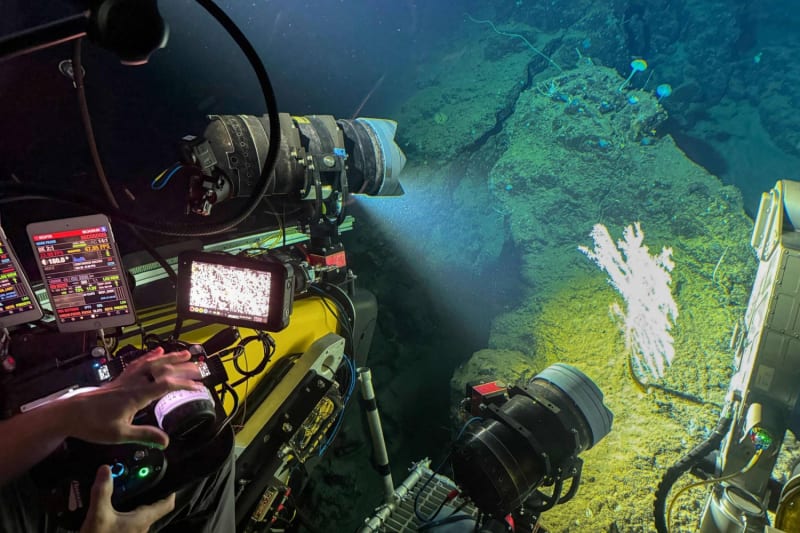
The submersibles offer scientists something remote vehicles can't: a nearly 360-degree view of the deep ocean environment. Dave Pollock, who heads OceanX's submersible team, says skeptical scientists almost always change their minds after a dive. "It's quite different when you see it yourself," Husna confirmed.
The team has already found promising specimens, including a bone-white lobster and a deep-sea hermit crab living inside a sea star. Crustacean specialist Pipit Pitriana discovered pearl-sized barnacles she believes may be new to science.
For deeper exploration beyond the submersibles' range, scientists operate a remotely operated vehicle from a mission control room that resembles a space station. Crew members use joysticks to control hydraulic arms thousands of meters below, collecting seawater, sediment, and creatures for study.
The Ripple Effect
OceanX's mission goes beyond pure research. The organization believes compelling images and accessible storytelling can make ocean science impactful for everyone. Their Nadir submersible features high-end cameras specifically for creating media content that brings the deep sea to the public.
The research could lead to practical breakthroughs too. Scientists are searching for plastic-eating microbes and compounds that could become medicines, turning discoveries from the ocean depths into solutions for problems on land.
One of the most magical moments comes when submersible lights are switched off completely. The sub flashes its beams while occupants close their eyes, then opens them to see a galaxy of stars: bluish-white bioluminescent flashes from plankton, jellyfish, shrimp, and fish responding to the lights.
These expeditions are helping fill enormous gaps in ocean knowledge, with large parts of the deep sea remaining unexplored and unmapped.
More Images

Based on reporting by Japan Times
This story was written by BrightWire based on verified news reports.
Spread the positivity!
Share this good news with someone who needs it