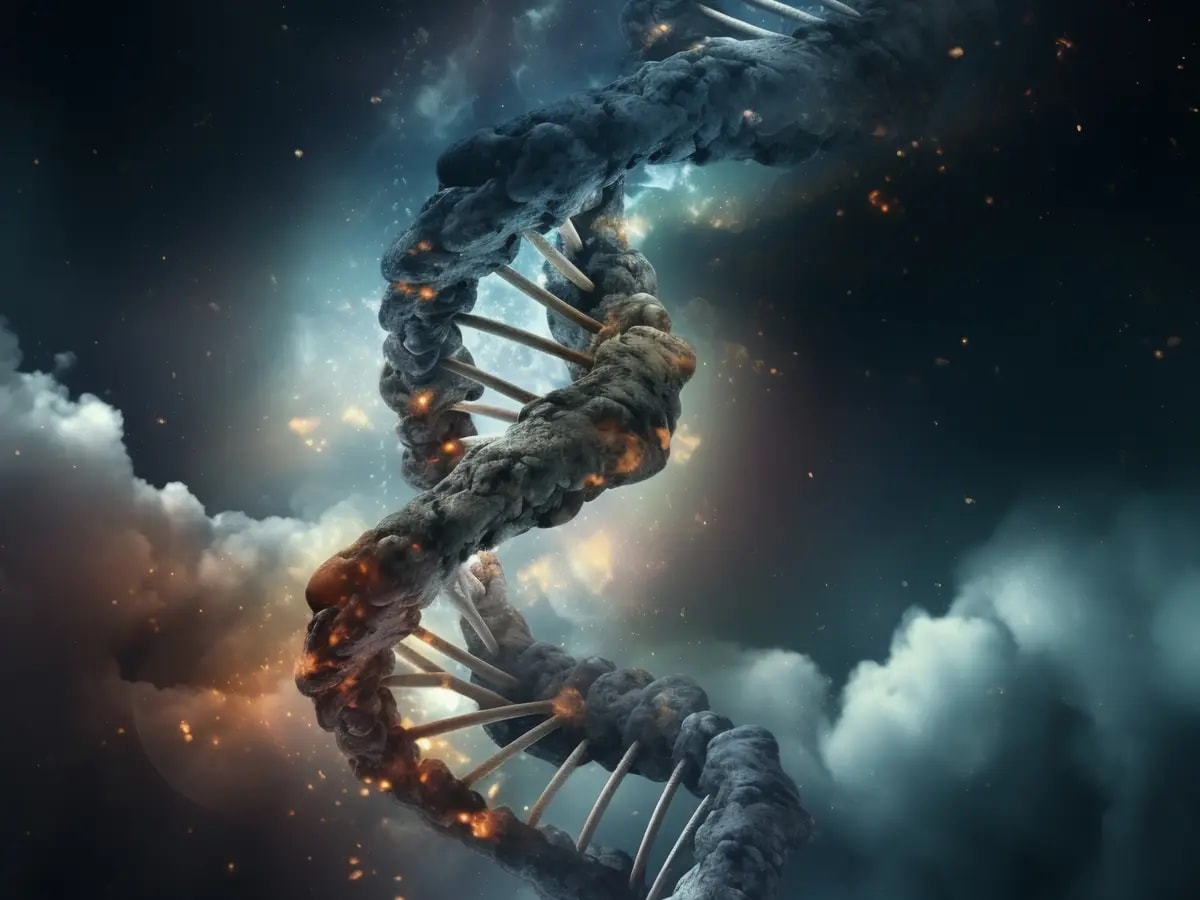
Scientists Find 2 Million Year Old Ancestors in Our DNA
Researchers discovered traces of two extinct human populations hidden in modern genomes, including a "super-archaic" lineage dating back nearly 2 million years. One ghost ancestor left DNA in all people alive today.
Your DNA is carrying ancient secrets from relatives who lived nearly 2 million years ago.
Scientists at UC Berkeley just uncovered evidence of two "ghost lineages" hiding in modern human genomes. These are extinct human populations that mated with our Homo sapiens ancestors but left no fossils, only genetic breadcrumbs we're just now learning to read.
The first ghost ancestor left its mark in everyone alive today. The second, called a "super-archaic" lineage, represents the oldest human relative ever detected through DNA alone, pushing back nearly 2 million years into our family tree.
"These extinct populations may have lived hundreds of thousands, or even more than a million, years ago, yet traces of their genetic legacy remain preserved in our genomes today," said study co-author Priya Moorjani, a human evolutionary geneticist at UC Berkeley. The findings appeared in the journal Science last week.
Scientists have known for over a decade that modern humans interbred with Neanderthals and Denisovans. Most people outside sub-Saharan Africa carry 1 to 2.4% Neanderthal ancestry, while Asians and Pacific Islanders harbor up to 6% Denisovan DNA.
But researchers suspected more players existed in our ancestral story. The challenge was finding them without actual bones or ancient DNA samples, which only survive in cold, dry environments.
Why This Inspires
This discovery rewrites what we thought was possible in understanding our origins. Much of human evolution happened in Africa and tropical regions where DNA doesn't survive, leaving huge gaps in our story.
Now scientists can read these invisible chapters by analyzing the genomes of living people. They're finding patterns and variations that can only be explained by encounters with populations we never knew existed.
The technique opens doors to exploring our deep history in places where traditional archaeology hits dead ends. Every person walking Earth today carries evidence of ancient meetings, long-ago love stories, and survival against odds we're only beginning to understand.
This isn't just about looking backward. Understanding our complete genetic heritage helps scientists trace disease resistance, adaptation patterns, and the incredible journey that led to the diversity of humanity today. We're all connected to a family tree far more complex and beautiful than we imagined.
Based on reporting by Google News - Scientists Discover
This story was written by BrightWire based on verified news reports.
Spread the positivity!
Share this good news with someone who needs it