Scientists Find Cleaner Way to Purify Rare Earth Metals
Researchers discovered a breakthrough method to separate rare earth elements using water instead of toxic chemicals. The new technique could transform how we process materials essential for electric cars, LED lights, and medical equipment.
The metals powering your electric car and lighting your home just got a whole lot cleaner to produce.
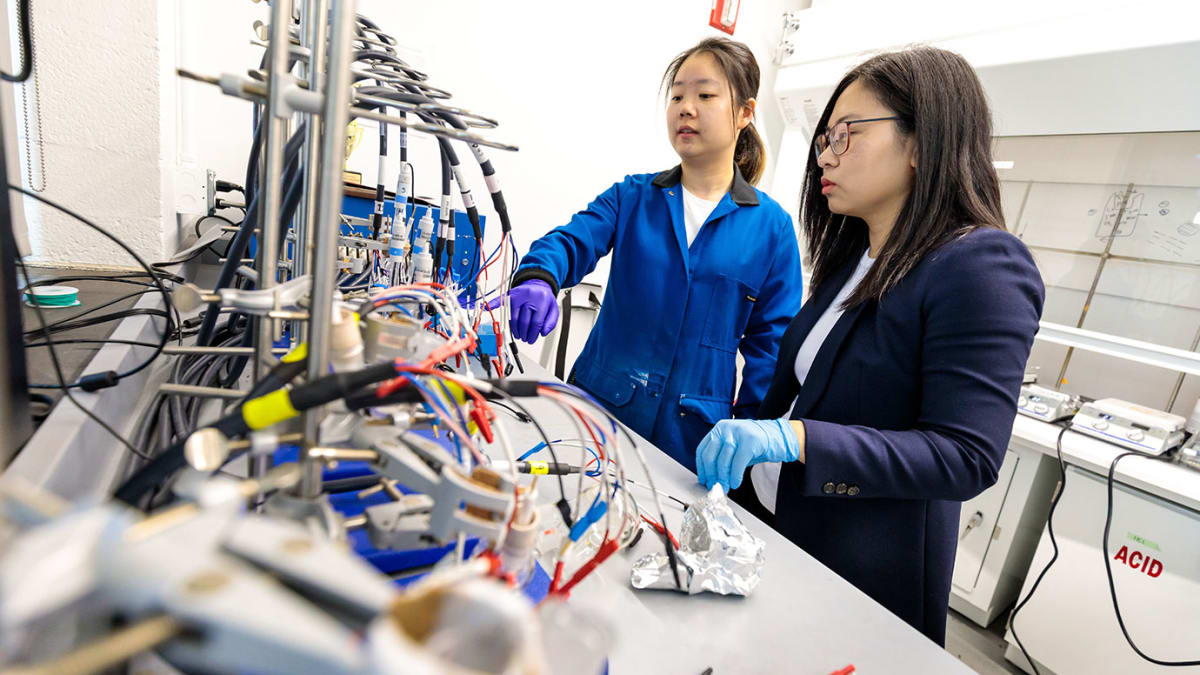
Scientists at the University of Chicago, working with Northwestern University and Argonne National Laboratory, discovered a new way to separate rare earth elements without the massive amounts of toxic chemicals the industry currently uses. Instead, they're using a specially designed mineral material and plain water.
Rare earth elements like neodymium, lanthanum, and dysprosium are essential for modern technology. They're in everything from electric vehicle motors to MRI machines. But getting them from mines to factories has always been messy, expensive, and environmentally damaging.
The problem is that these 17 elements almost always occur together in nature, and they're chemically nearly identical. Traditional separation requires custom-built molecules and huge quantities of acid, which strips each element off those molecules one by one.
The research team found a smarter solution. They engineered layers of manganese oxide with gaps just a few water molecules wide. When rare earth elements dissolve in water, each one surrounds itself with a slightly different sized shell of water molecules. Heavier elements like dysprosium have smaller shells, while lighter ones like lanthanum have larger shells.
By squeezing the rare earth mixture through these precisely spaced channels, the team separated them into groups. The smaller elements fit more tightly, while larger ones pushed the layers apart.
To fine-tune the process even further, they added magnesium ions and an electric current. The magnesium acted like scaffolding, locking the channels at the perfect spacing. This forced even nearly identical elements to show distinct binding behaviors.
The results were dramatic. With magnesium pinning, the enrichment of neodymium over lanthanum jumped from 1.6 times to 5.4 times. After just two purification cycles, researchers achieved 97% pure neodymium.
"This is the first time that people have used electrochemical intercalation and harnessed the structural characteristics to separate similar lanthanides, which are intrinsically very hard to separate," said Associate Professor Chong Liu, who led the study published in Nature Chemical Engineering.
The Ripple Effect
The breakthrough means rare earth processing could happen closer to where the materials are used, not just in regions willing to handle toxic chemical waste. Manufacturing at scale using water instead of organic solvents could dramatically reduce the environmental footprint of technologies we're counting on for a cleaner energy future.
As demand for electric vehicles and renewable energy technology skyrockets, this discovery arrives at exactly the right moment to help build a genuinely sustainable future.
Based on reporting by Google News - Scientists Discover
This story was written by BrightWire based on verified news reports.
Spread the positivity!
Share this good news with someone who needs it