Solar 'Sunscreen' Boosts Panel Output 4.8% Over 25 Years
Chinese researchers developed a simple zinc oxide coating that protects solar panels from UV damage like sunscreen protects skin. The breakthrough could make clean energy cheaper and more reliable for decades.
Solar panels are getting their own sunscreen, and it could make renewable energy more affordable for millions of people.
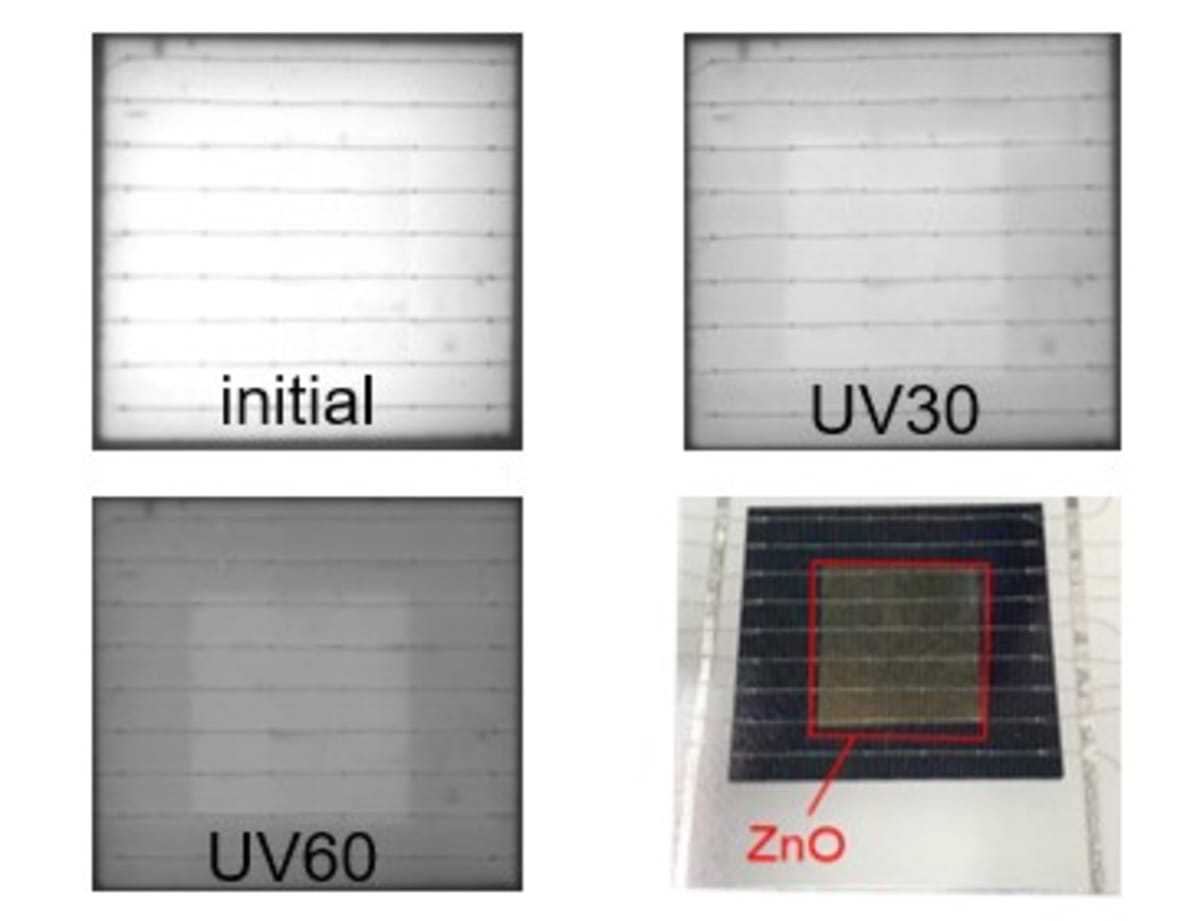
Scientists at Southwest Petroleum University in China discovered that coating solar panels with a thin layer of zinc oxide works like sunscreen for human skin. The protective film blocks harmful UV rays that slowly damage panels over time, while still letting visible light through to generate electricity.
The results are impressive. Over a projected 25-year lifespan, protected panels produced 4.8% more total power than uncoated ones. They also showed dramatically less damage after exposure to intense UV radiation equivalent to years of sunlight.
Lead researcher Jian Yu explained the innovation simply: "By efficiently absorbing and blocking high-energy UV photons, a physical protective barrier analogous to a 'sunscreen' is formed on the cell surface." The coating absorbs UV light in the 300 to 400 nanometer range while maintaining over 90% transparency to visible light.
The team tested two application methods. When applied directly to solar cells, the zinc oxide reduced performance loss from 5.74% to just 3.49% after heavy UV exposure. When coated on the protective glass covering entire modules, results were even better, with efficiency dropping only 2.31% compared to 4.72% without protection.
There's a small tradeoff. The coating initially causes a slight performance dip because it absorbs some visible light. But over the long run, the UV protection more than makes up for it.
The Ripple Effect
This discovery could accelerate the global transition to clean energy. Lower degradation means solar panels stay efficient longer, reducing the cost of solar electricity. The researchers calculated panels with zinc oxide coating would generate power at $0.0262 per kilowatt-hour, making solar even more competitive with fossil fuels.
The technology isn't limited to one type of panel either. Yu believes the approach could work with newer solar technologies like perovskite cells and tandem designs that promise even higher efficiencies. The coating could help these advanced panels survive harsh outdoor conditions and reach their full potential.
Better still, the solution uses zinc oxide, an inexpensive and widely available material already used in everything from cosmetics to paints. Scaling up production should be straightforward for manufacturers.
The findings were published in Current Applied Physics, giving solar companies worldwide access to implement the technology. As climate change makes renewable energy more urgent, innovations that squeeze extra performance from solar panels bring clean power within reach for more communities.
Sometimes the best solutions are the simplest: just like we protect our skin from the sun, now we can protect the panels that harness its power.
More Images


Based on reporting by PV Magazine
This story was written by BrightWire based on verified news reports.
Spread the positivity!
Share this good news with someone who needs it