Scientists Find Coral Reef Bigger Than Vatican City Off Argentina
An ocean expedition off Argentina's coast discovered the world's largest known reef of a rare deep-sea coral, spanning nearly the size of Vatican City. The team also found 28 suspected new species and ecosystems teeming with life in waters once thought to be less diverse. ##
Deep beneath the waves off Argentina's coast, scientists just discovered an underwater world far richer than anyone imagined.
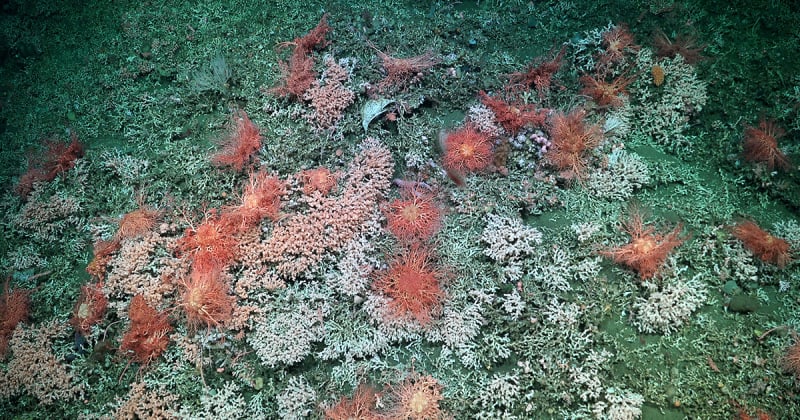
A team led by Dr. María Emilia Bravo from the University of Buenos Aires aboard the research vessel Falkor explored the entire Argentinian coastline, from Buenos Aires south to Tierra del Fuego. What they found took their breath away: the largest known reef of Bathelia candida coral ever documented in the global ocean, covering at least 0.4 square kilometers.
The stony cold-water coral reef provides home to countless fish, crustaceans, and octopuses. Scientists had seen this coral species before in the Southwestern Atlantic, but they had no idea it existed on this scale or stretched this far south.
"We were not expecting to see this level of biodiversity in the Argentine deep sea, and are so excited to see it teeming with life," said Dr. Bravo. The team also identified 28 suspected new species, including worms, corals, sea urchins, sea snails, and sea anemones.
The expedition revealed other remarkable finds too. At nearly 4,000 meters deep, the team documented Argentina's first known deep-water whale fall, where a deceased whale's body creates a temporary ecosystem that feeds octopuses, sharks, crabs, and countless other creatures for decades. They also filmed a rare giant phantom jellyfish, a deep-sea creature that can grow as long as a school bus.
Near Tierra del Fuego, scientists observed ancient Bubblegum coral gardens nestled among large sponges in the 3,000-meter-deep Malvinas Trough. They discovered the Bathelia reefs extended 600 kilometers further south than scientists previously knew.
The team also located cold seeps, extreme deep-sea environments where methane and chemicals from the seafloor fuel entire ecosystems. One active seep measured twice the size of the coral reef they found, hosting large patches of chemosynthetic clams that create energy from chemicals rather than sunlight.
The Ripple Effect
Dr. Melisa Fernández Severini of Instituto Argentino de Oceanografía explained that the expedition collected an unprecedented number of samples. These specimens will help scientists understand connections in Argentine waters for years to come and reveal just how vulnerable these extraordinary ecosystems might be.
The discovery extends the known range of these coral reefs and opens new questions about how cold seeps and deep-sea coral reefs interact with each other. This kind of scientific understanding is still developing, Dr. Bravo noted, but each expedition brings researchers closer to protecting these fragile underwater worlds.
These discoveries remind us that our planet still holds countless secrets waiting to be found, and each one deepens our connection to the living ocean.
##
Based on reporting by Google News - Researchers Find
This story was written by BrightWire based on verified news reports.
Spread the positivity!
Share this good news with someone who needs it