Scientists Find Earth's Icy Twin Orbiting a Distant Star
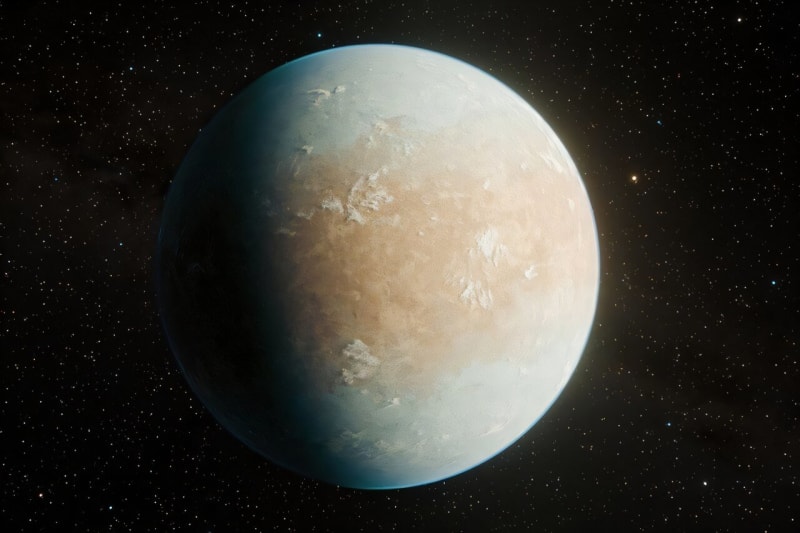
A newly detailed exoplanet 146 million light-years away could transform our search for life beyond Earth. HD 137010 b matches Earth's size and orbit but sits in a frozen world that still falls within the habitable zone.
Scientists just discovered Earth's distant cousin, and it's giving researchers hope that finding alien life might be closer than we think.
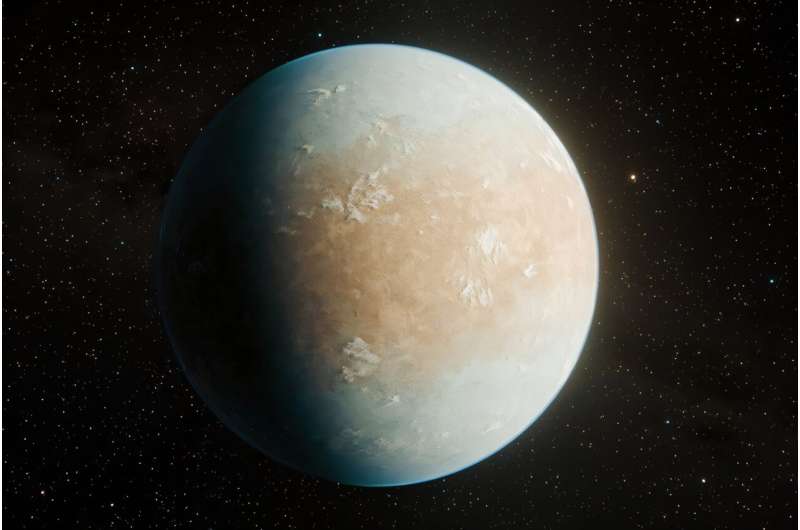
HD 137010 b, first spotted in 2017 by NASA's Kepler Space Telescope, is making headlines again with newly released details that set it apart from the thousands of exoplanets we've found. This planet is nearly identical to Earth in size and takes about one year to orbit its star, just like our home planet.
The catch? It's freezing cold at minus 90 degrees Fahrenheit, compared to Earth's cozy average of 60 degrees. But here's why that doesn't matter as much as you'd think.
HD 137010 b sits just within the edge of its star's habitable zone, the special area where liquid water and potentially life could exist. Its star is simply cooler and dimmer than our sun, which explains the chilly temperatures. This makes it potentially the first Earth-like planet orbiting a sun-like star ever discovered.
"Knowing that there is life not just on other planets here but also around other stars, that would be very, very important," says Jonathan Blazek, an assistant professor of physics at Northeastern University. "We want to understand where we came from and whether we're alone."
Scientists have discovered 6,107 exoplanets so far, but most are what researchers call "hot Jupiters," massive gas giants scorching close to their stars. These planets are easier to spot because they block more light when passing in front of their stars, but they're not consistent with life as we know it.
HD 137010 b changes the game. At 146 million light-years away, it's relatively close in cosmic terms. Blazek puts it perfectly: "We're in the same town even if we're not on the same block."
Why This Inspires
Finding Earth-like planets does more than fuel our imagination about little green aliens. Blazek explains that scientists are more likely to discover "biomarkers," signs of basic life forms like algae in a planet's atmosphere, than advanced civilizations. Each discovery helps us understand how our own solar system formed and how life began on Earth.
The real breakthrough? Advancements in telescopic technology and data analytics mean HD 137010 b probably won't be the last of its kind. "I would expect this is not the last planet that is Earth-similar that we're going to find soon," Blazek says.
After studying just our solar system for so long, scientists couldn't determine if Earth was special, lucky, or typical. Now, with thousands of exoplanets mapped across our galaxy, we're finally getting answers. Each new discovery brings us closer to understanding our place in the universe and whether life exists beyond our blue marble.
The hunt for our cosmic neighbors just got a whole lot more exciting.
More Images

Based on reporting by Phys.org
This story was written by BrightWire based on verified news reports.
Spread the positivity!
Share this good news with someone who needs it