Scientists Find Largest Sulfur Molecule Ever Seen in Space
Researchers discovered a 13-atom molecule containing sulfur in interstellar space, filling a critical gap in our understanding of how life's building blocks formed in the cosmos. The finding suggests many more complex molecules essential to life may be waiting to be found among the stars.
Scientists just spotted the largest sulfur-containing molecule ever found in space, and it's bringing us closer to understanding where the ingredients for life came from.
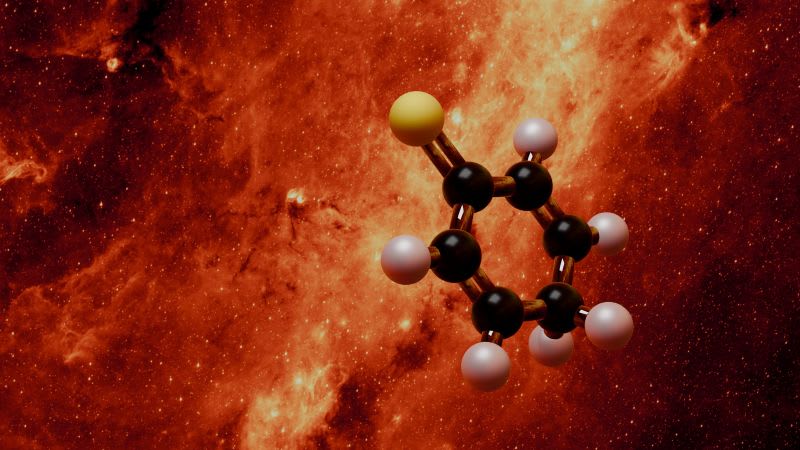
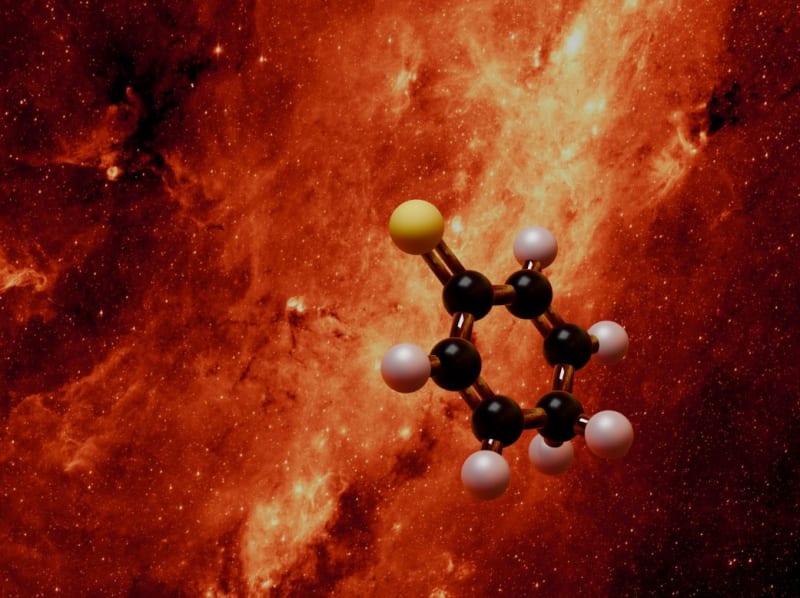
The molecule, made of 13 atoms including sulfur, carbon and hydrogen, was discovered in a molecular cloud about 27,000 light years from Earth. Researchers at the Max Planck Institute for Extraterrestrial Physics call it a "missing link" in the cosmic origins of life's chemistry.
Sulfur is the 10th most abundant element in the universe and a critical ingredient in proteins and enzymes on Earth. But scientists have struggled to find large sulfur molecules in space, even though they show up in meteorites and comets that have crashed into our planet.
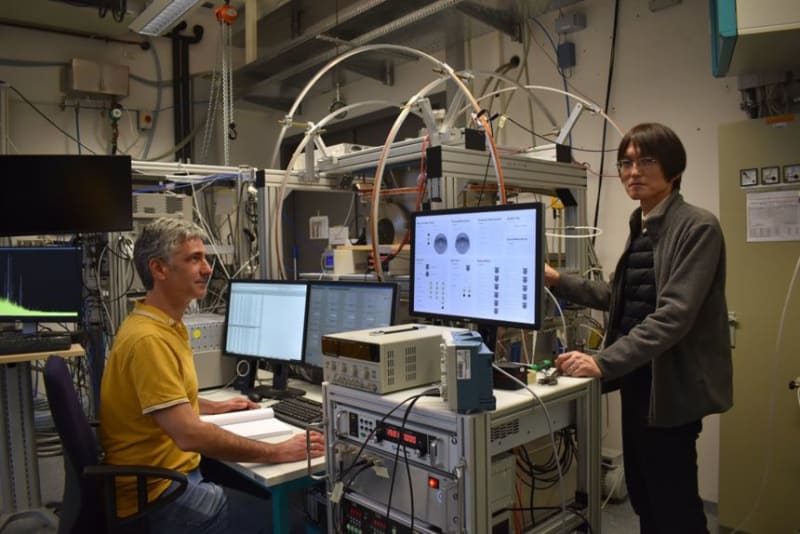
"Sulfur came to Earth from space long, long ago," said lead researcher Mitsunori Araki. "However, we have only found a very limited amount of sulfur-bearing molecules in space, which is strange."
The discovery helps solve that puzzle. Before this finding, the largest sulfur molecule detected in space had only nine atoms, and most contained just three to five atoms.
The team found the molecule in a molecular cloud near the center of our galaxy. These clouds are stellar nurseries where gravity pulls dust and gas together to form baby stars and eventually planetary systems like ours.
"The ingredients that are embedded in the molecular cloud will be transferred to the planets," said coauthor Valerio Lattanzi. The molecules in these clouds become part of the planets that form around new stars.
The researchers first created the molecule in their lab by applying an electric discharge to a smelly liquid called thiophenol. They then compared its unique radio fingerprint with telescope data from observations in Spain.
Why This Inspires
Kate Freeman, a geosciences professor at Penn State University, called the study "an exciting detective story made possible by powerful radio telescopes." The finding suggests that complex organic compounds may have traveled from distant corners of our galaxy to help seed life on Earth through meteorite impacts billions of years ago.
Sara Russell, a planetary sciences professor at the Natural History Museum in London, noted that sulfur may have been crucial fuel for the earliest microbes on Earth. "The presence of complex organic molecules in the centre of our Milky Way implies that biologically important materials may be everywhere in space," she said.
The discovery adds to a growing catalog of over 300 molecules observed in space and suggests many more complex sulfur compounds are out there waiting to be found. Each new molecule helps connect the dots between simple space chemistry and the complex building blocks that eventually formed life as we know it.
More Images
Based on reporting by Google News - Scientists Discover
This story was written by BrightWire based on verified news reports.
Spread the positivity!
Share this good news with someone who needs it