Scientists Find "Overflow Valve" Linked to Parkinson's
Researchers have discovered how a tiny cellular protein acts like a safety valve, preventing toxic buildup that contributes to Parkinson's disease. This breakthrough could lead to new treatments for millions living with neurodegenerative conditions.
A team of European scientists has unlocked a cellular mystery that could change how we treat Parkinson's disease and other brain disorders.
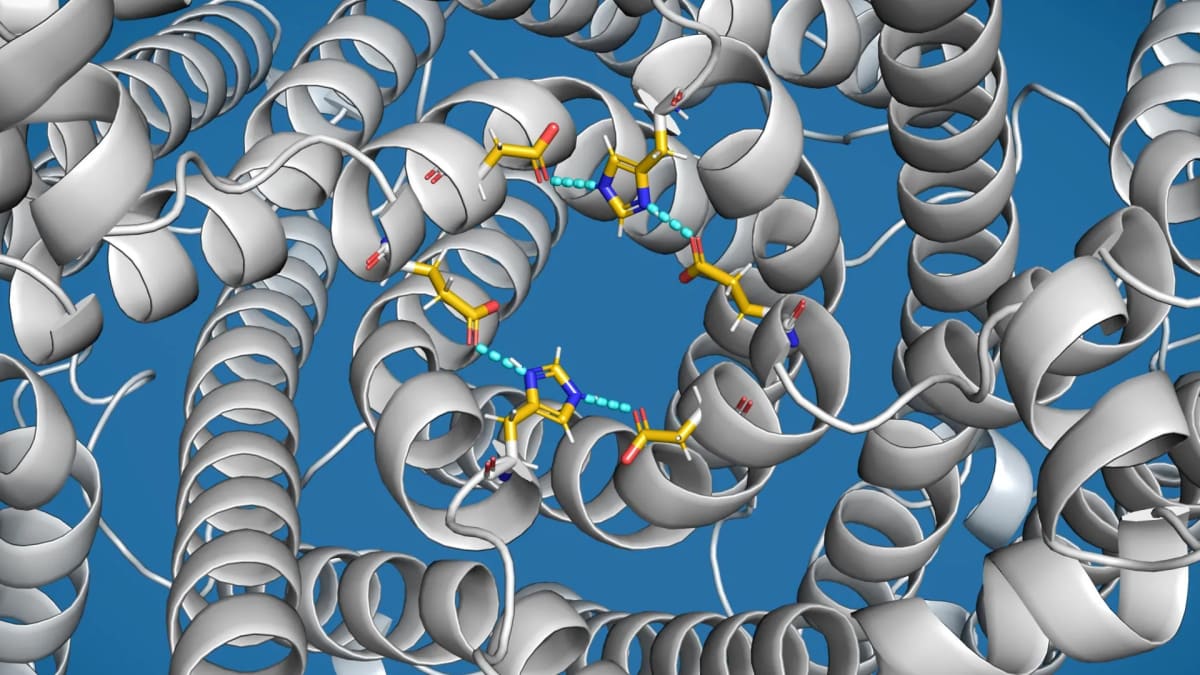
Researchers from universities in Germany discovered that a protein called TMEM175 works like an overflow drain in your bathtub, preventing cells from becoming dangerously acidic. When this safety system fails, toxic waste accumulates and nerve cells die.
The breakthrough centers on lysosomes, tiny compartments inside cells that break down waste and recycle it into useful materials. These cellular recycling centers need to stay acidic to work properly, but too much acid causes problems.
Professor Christian Grimm from LMU Munich and Dr. Oliver Rauh from Bonn-Rhein-Sieg University spent six years studying TMEM175. At first, scientists thought it was just a simple channel for potassium ions, but the team discovered it does something far more important.
TMEM175 actually detects when acid levels get too high and releases both potassium and protons to restore balance. Think of it as a pressure release valve that keeps your cells running smoothly.
"TMEM175 is by far the strangest ion channel I've worked on," says Dr. Rauh. "We've now been able to demonstrate that it not only conducts potassium ions, but also protons, and is thus directly involved in regulating pH inside lysosomes."
When genetic mutations damage TMEM175, proteins don't break down properly. This malfunction has been linked to aging and neurodegenerative diseases, particularly Parkinson's, which affects nearly 10 million people worldwide.
The research team used a technique called patch clamping to watch the channel work in real time. They saw how TMEM175 senses dangerous acid levels and adjusts automatically to protect the cell.
Why This Inspires
This discovery matters because it gives scientists a specific target for developing new drugs. Instead of just treating Parkinson's symptoms, future medications could prevent the cellular damage that causes the disease in the first place.
The research also solves a puzzle that has frustrated scientists for years. TMEM175 was named "transmembrane protein 175" simply because researchers didn't know what else to call it. Now we understand its crucial role in keeping our brain cells healthy.
What makes this finding especially hopeful is its potential reach beyond Parkinson's. Since lysosomal problems contribute to many age-related diseases, treatments targeting TMEM175 could help with multiple conditions.
The study appears in the Proceedings of the National Academy of Sciences, one of the world's most respected scientific journals. The collaborative effort included scientists from four different institutions working together toward a common goal.
This research transforms TMEM175 from a medical mystery into a beacon of hope for millions.
Based on reporting by Science Daily
This story was written by BrightWire based on verified news reports.
Spread the positivity!
Share this good news with someone who needs it