Scientists Find Remoras Hiding Inside Manta Rays
Marine researchers discovered hitchhiking remora fish diving into the cloacas and gills of manta rays, revealing a relationship that may be more invasive than scientists previously thought. The findings challenge decades of assumptions about ocean symbiosis.
Marine scientists just uncovered one of the ocean's strangest hiding spots, and it's making waves in how we understand underwater relationships.
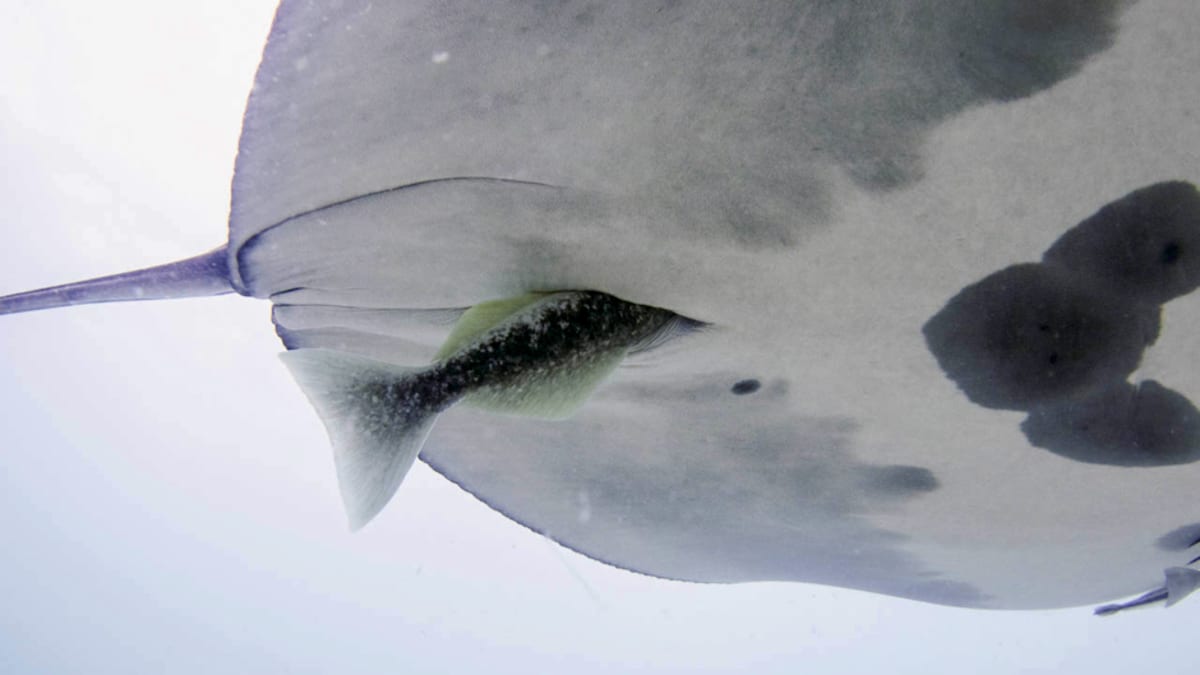
Researchers from the University of Miami's Rosenstiel School discovered remora fish hiding inside the cloacas and gill cavities of manta rays. The team documented seven observations over 15 years across Florida, Mozambique, and the Maldives, capturing the first clear photographic evidence of this unusual behavior.
In one remarkable case, a diver startled a remora that quickly dove into a manta ray's cloaca, the opening used for reproduction and excretion. Other observations showed remora tails protruding from these openings and one fish wedged inside a gill slit.
"This is one of those discoveries that reminds us how little is known about the interactions and behavior of marine wildlife," said Emily Yeager, the study's lead author and Ph.D. candidate. For decades, scientists believed remoras and manta rays enjoyed a mostly beneficial partnership, with the hitchhiking fish cleaning parasites off their giant hosts.
The new findings suggest the relationship exists on a spectrum. While remoras typically help by eating parasites and leftover food, diving into sensitive body cavities could potentially harm their hosts. Scientists observed injuries on some manta rays consistent with remora intrusion.
Why This Inspires
These weird ocean discoveries open doors to understanding marine life in ways we never imagined. The research team believes remoras might be seeking shelter from predators, accessing better feeding opportunities, or reducing drag while swimming.
Catherine Macdonald, senior author and director of the Shark Research and Conservation Program, emphasized the importance of watching and learning. "These weird interactions only underscore how much we don't yet know about how different species interact with each other in the ocean," she said.
The study highlights how patient observation reveals nature's hidden secrets. By collecting opportunistic sightings from multiple locations over many years, researchers pieced together a behavior nobody expected to find.
While scientists still need to determine whether this behavior seriously impacts manta rays' health, the discovery itself represents scientific progress. Every new piece of information helps conservationists better protect these gentle ocean giants.
The ocean continues surprising us with its complexity, reminding us that wonder and discovery await just beneath the waves.
Based on reporting by Google News - Scientists Discover
This story was written by BrightWire based on verified news reports.
Spread the positivity!
Share this good news with someone who needs it