Scientists Launch $5M Hunt for 'Dark Oxygen' on Ocean Floor
Researchers are heading back to the deep Pacific Ocean to solve one of the sea's most intriguing mysteries: oxygen appearing 4,000 meters down where sunlight can't reach. Armed with $5.2 million in funding and custom-built equipment, they're determined to discover what's creating this unexpected source of life-giving gas.
Four thousand meters below the Pacific's surface, scientists discovered something that shouldn't exist: oxygen bubbling up in total darkness.
Now, the team behind this puzzling 2024 discovery is returning to the deep sea with specially designed robots and probes to figure out what's happening. The Nippon Foundation awarded them $5.2 million to investigate what they're calling "dark oxygen."
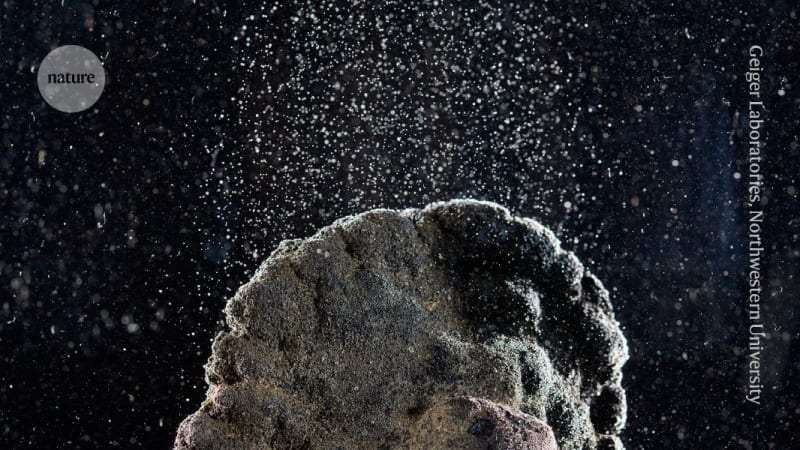
The mystery centers on the Clarion-Clipperton Zone, a vast region between Hawaii and Mexico. There, ancient metal-rich rocks called polymetallic nodules dot the ocean floor like scattered black truffles. These rocks, formed over millions of years from manganese and cobalt, might be acting like natural batteries that split water molecules and release oxygen.
"Our primary culprits are electrochemistry and biology," explained team member Jeff Marlow, a geobiologist at Boston University. The rocks could be creating oxygen through chemical reactions, or tiny microbes might be involved, or both forces could be working together.
By May, project leader Andrew Sweetman and his crew will board the research vessel Nautilus with two specially built seafloor probes. Unlike the original equipment, these new landers can measure pH levels in seawater, which would show whether water molecules are actually splitting apart to create oxygen.
Chemist Franz Geiger from Northwestern University plans to recreate deep-sea conditions in pressure chambers back on land. His experiments will subject retrieved nodules to 400 atmospheres of pressure while electron microscopes map chemical reactions happening on their surfaces in real time.
Why This Inspires
This discovery could reshape how we understand life on Earth and beyond. If rocks can naturally produce oxygen without sunlight, similar processes might support life in the darkest corners of our oceans or even on other planets. The research also matters for more immediate reasons: these metal nodules are being considered for deep-sea mining, and we need to understand their role in ocean ecosystems before disturbing them.
The team's custom electrode arrays will measure voltage differences across hundreds of points on each nodule. If the rocks are generating enough electricity to split water, it would confirm one of the most surprising natural phenomena discovered in recent years.
What started as an unexpected finding has become a full-scale mission to understand how our planet creates the oxygen we breathe in places we never thought possible.
More Images



Based on reporting by Nature News
This story was written by BrightWire based on verified news reports.
Spread the positivity!
Share this good news with someone who needs it