Scientists Map 47 Million Galaxies in Cosmic Breakthrough
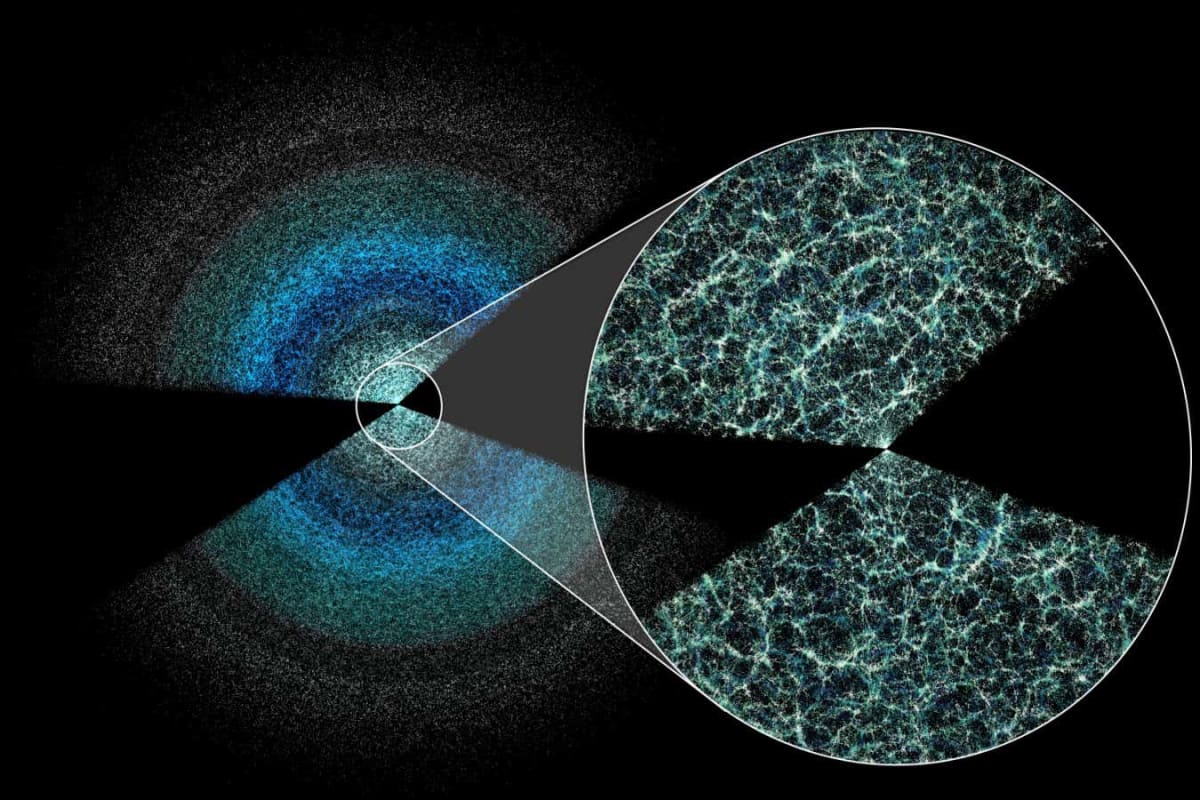
Astronomers just completed the largest map of the universe ever made, capturing 47 million galaxies and quasars. The breakthrough could solve mysteries about dark energy and reshape our understanding of the cosmos.
Scientists have just finished mapping 47 million galaxies and quasars, creating the most detailed picture of our universe ever captured.
The Dark Energy Spectroscopic Instrument (DESI) at Kitt Peak National Observatory in Arizona has been scanning the night sky since 2021. Researchers originally hoped to map 34 million cosmic objects, but the instrument surprised everyone with its incredible efficiency.
To put this achievement in perspective, all previous maps of the cosmos combined showed only 5 million galaxies. This new map increases our knowledge of the universe by nearly 10 times in a single leap.
David Schlegel at the Lawrence Berkeley National Laboratory says we've been doubling our cosmic knowledge every decade. If this pace continues, we could map every observable galaxy within 10 billion light years by 2061.
The telescope captured some galaxies so distant and faint that only 100 to 200 photons reached Earth. These tiny particles of light traveled billions of years across space to tell us their stories.
The Ripple Effect
This massive dataset will help scientists investigate one of the biggest mysteries in physics: dark energy. This invisible force makes up about 70 percent of our universe and causes it to expand.
Earlier DESI data suggested something unexpected. Dark energy might be weakening over time instead of staying constant. If confirmed, this finding would shake the foundations of how we understand the cosmos.
The complete dataset will take another year to analyze before scientists worldwide can access it. DESI will continue collecting data for at least another two and a half years, with hopes of running into the 2030s.
Ofer Lahav at University College London remembers when having thousands of galaxies seemed like a treasure trove. Now his students face the opposite challenge: sorting through oceans of cosmic data to find breakthrough discoveries.
The map currently covers 14,000 square degrees of sky, with plans to expand to 17,000. Much of the remaining sky is hidden behind bright objects like our own Milky Way galaxy.
With this flood of information, scientists expect not just answers about dark energy but discoveries of rare cosmic events we've never seen before.
We're living in an age where mapping the entire observable universe isn't science fiction anymore but a reality within reach.
More Images

Based on reporting by New Scientist
This story was written by BrightWire based on verified news reports.
Spread the positivity!
Share this good news with someone who needs it