Scientists Merge Two Quantum Forces for New Tech
Physicists discovered a new quantum state combining two powerful forces that could revolutionize computing and sensing technology. The breakthrough unites quantum criticality and topology in ways scientists once thought impossible.
Scientists just unlocked a quantum state that merges two forces previously thought to operate separately, opening doors to breakthrough technologies in computing and sensing.
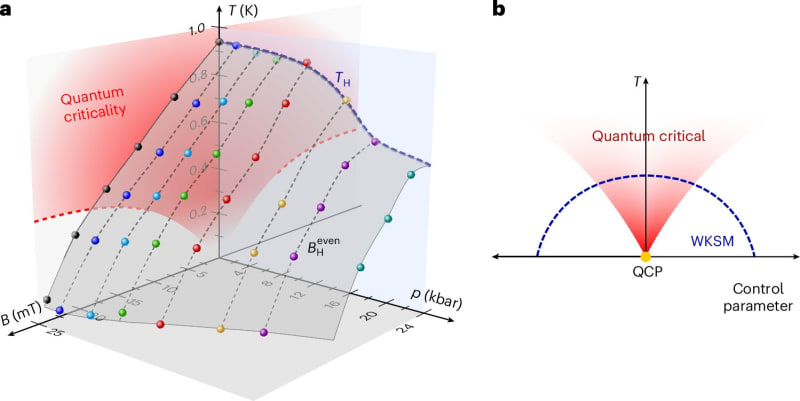
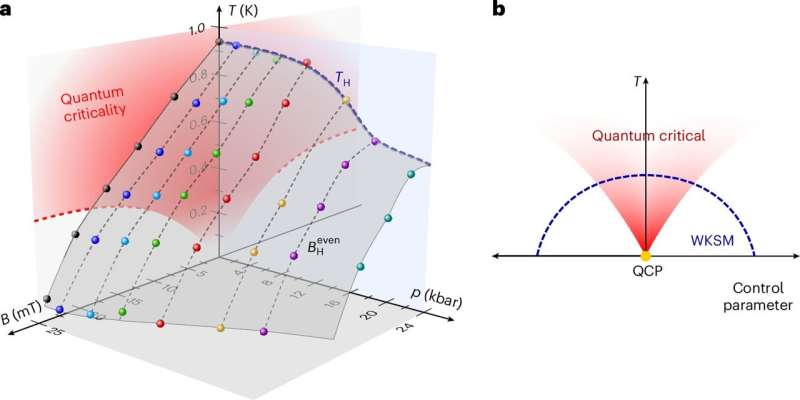
Researchers at Rice University and Vienna University of Technology discovered that electrons can simultaneously fluctuate between different phases while maintaining stable quantum patterns. This new state combines quantum criticality with electronic topology, two areas of physics that traditionally stayed in separate lanes.
The team predicted this behavior through theoretical models and then proved it worked in real materials. They tested a special "heavy fermion" material where electrons behave as though they're much heavier due to intense interactions, and the results matched their predictions perfectly.
Think of quantum criticality like water at the exact moment it's about to freeze or boil, with electrons flickering between different states. Topology describes stable twists in the wave patterns of electrons that persist even when the material changes. Until now, scientists found topology only in materials with weak electron interactions.
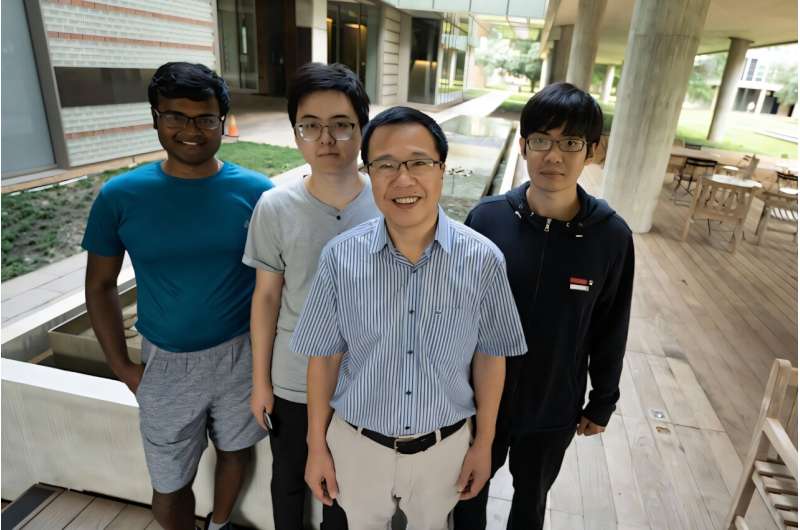
"We were surprised to find that the quantum criticality itself could generate topological behavior, especially in a setting with strong interactions," said Lei Chen, a graduate student at Rice who co-authored the study published in Nature Physics.
The Ripple Effect
This discovery gives scientists a roadmap for designing materials with remarkable properties. Devices built from this quantum state could be both incredibly durable and highly sensitive, perfect for quantum computers that need to resist disruption while maintaining precise control.
The combination enhances quantum entanglement while remaining resistant to interference, two qualities that seemed mutually exclusive until now. Both effects link to superconductivity and extreme sensitivity to external signals, making this hybrid state especially valuable for low-power electronics and advanced sensors.
The breakthrough bridges a major gap in physics by proving strong electron interactions can create topological states rather than destroy them. This challenges decades of assumptions about how quantum materials work and what's possible when designing new ones.
Scientists now know exactly what to look for when searching for or engineering materials with these combined properties. They're hunting for materials sitting at quantum critical points that also show potential for topological structures.
The team is already exploring deeper into this new territory, expecting to find even more unusual quantum behaviors as they map this uncharted state of matter.
More Images

Based on reporting by Phys.org - Technology
This story was written by BrightWire based on verified news reports.
Spread the positivity!
Share this good news with someone who needs it