Scientists Recover 95% of Lithium Using New Green Method
Researchers at Monash University developed a breakthrough technique that recovers 95% of lithium from mining waste while slashing water use. The innovation could help meet soaring electric vehicle demand without draining precious freshwater supplies.
Scientists just found a way to extract nearly all the lithium we need for electric vehicles while using a fraction of the water.
Researchers at Monash University in Melbourne, Australia, developed a technique that recovers 95% of lithium from brine deposits, compared to just 50% from traditional methods. Even better, the process dramatically reduces freshwater use in regions where water is already scarce.
Here's why this matters: electric vehicles made up more than a quarter of global car sales last year. By 2035, the world will need around 665 kilotonnes of lithium for EV batteries alone. Current mining projects can only produce about 450 kilotonnes, leaving a massive gap.
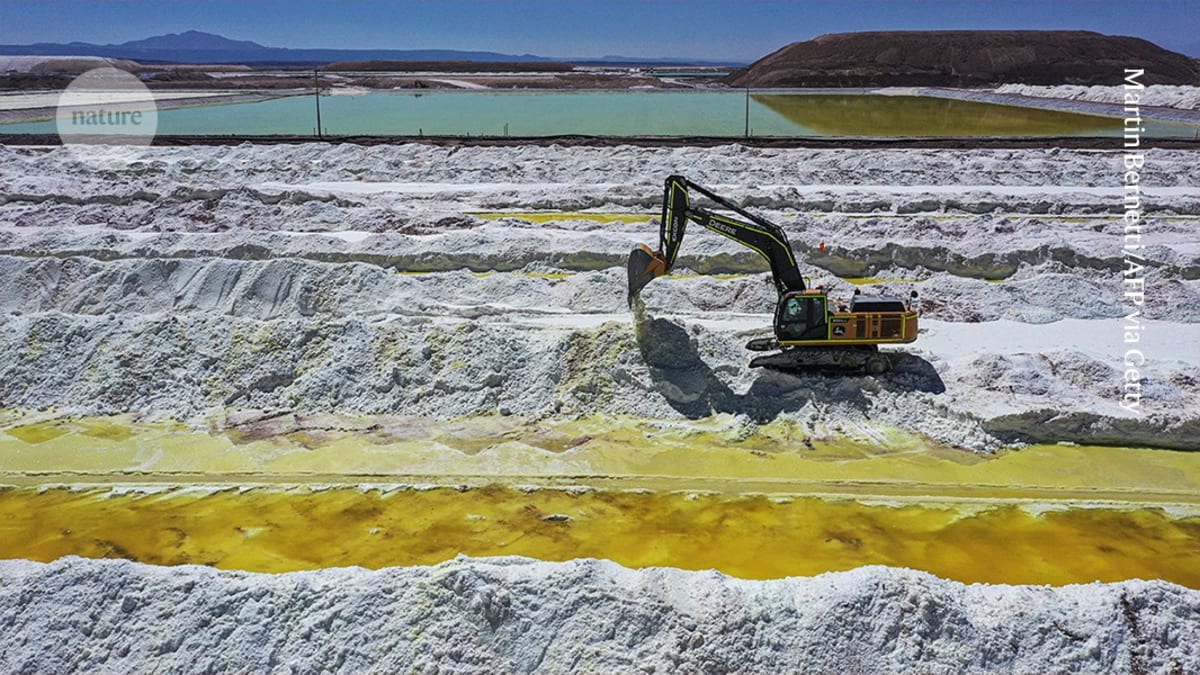
Traditional lithium extraction pumps brine from underground into giant evaporation ponds that sit for months or even years. The process wastes up to half the lithium and requires enormous amounts of freshwater to purify what remains. In arid places like Chile and Argentina, where 25% of the world's lithium comes from, that water scarcity impacts Indigenous communities and fragile wetland ecosystems.
Chemical and biological engineer Zhikao Li and his team took a different approach. They evaporate the brine into solid salt, then use acetone and ethanol to selectively dissolve only the lithium while leaving other minerals behind. The solvents can be recovered and reused repeatedly.
The technique could even work with solar panels that capture and recycle the evaporated water instead of losing it to the atmosphere. That means less waste at every step.
The Ripple Effect
Peter Sherrell, a materials scientist at RMIT University, points out that recovering and reusing the solvents makes this approach particularly promising. The real game changer, though, is what comes next.
The Monash team says their method could eventually extract lithium from industrial waste streams and old mining residues that currently get thrown away. That means cities and factories sitting on untapped lithium supplies could become new sources without any additional environmental damage.
Huanting Wang, who leads the research team, believes the technology addresses the key limitations plaguing current extraction: speed and water consumption. Direct lithium extraction methods like this one are faster, cleaner, and more efficient than waiting for the sun to do the work.
The question now is whether mining companies will invest in scaling up the technology for real world use. But with demand for electric vehicles climbing and water becoming more precious, the incentive to adopt greener extraction methods has never been stronger.
A future where we power clean transportation without sacrificing freshwater supplies just moved one major step closer.
More Images



Based on reporting by Nature News
This story was written by BrightWire based on verified news reports.
Spread the positivity!
Share this good news with someone who needs it