Scientists Solve 20-Year Diamond Mystery Under Extreme Heat
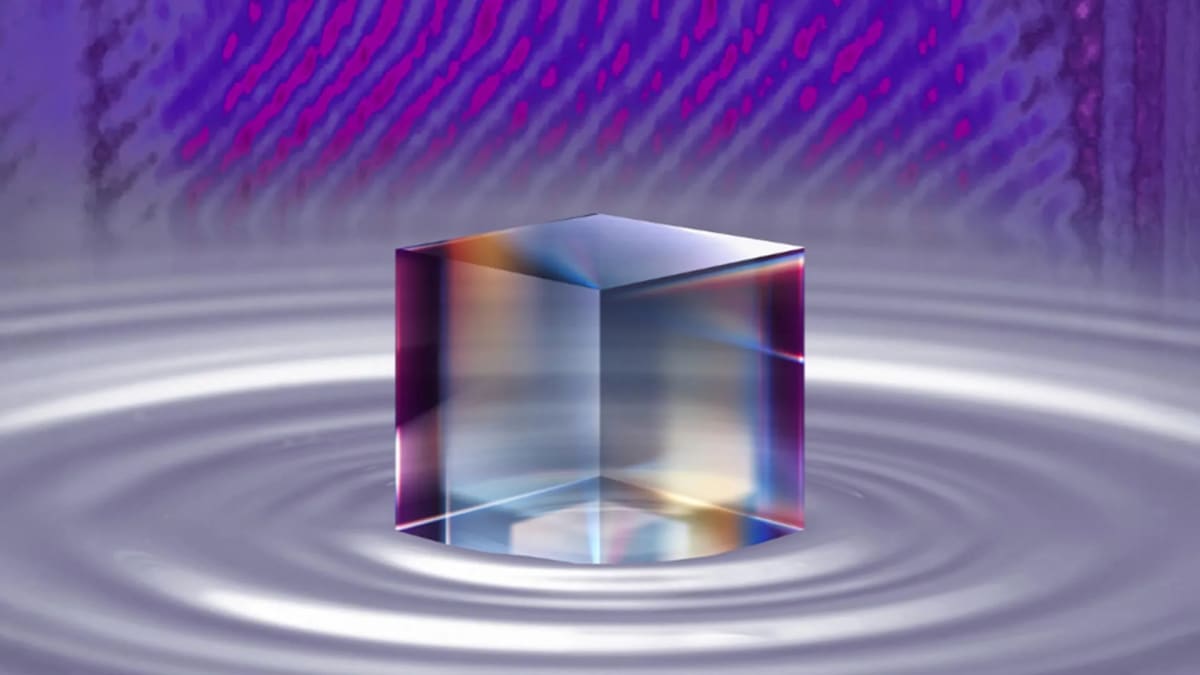
Researchers crushed diamonds at pressures three times greater than Earth's core, finally matching lab results with computer predictions. The breakthrough could triple fusion energy output and reveal secrets about diamond rain inside Neptune and Uranus.
Scientists just solved a puzzle that's stumped researchers for two decades by crushing diamonds under some of the most extreme conditions ever created in a laboratory.
Researchers at Lawrence Livermore National Laboratory squeezed tiny diamond samples to pressures three times greater than those at Earth's core and temperatures hotter than the sun's surface. The groundbreaking experiments finally brought lab measurements into perfect agreement with computer simulations, ending years of frustrating conflict between theory and observation.
The mystery began 20 years ago when scientists discovered something strange about melting diamonds. Laboratory measurements showed diamond melting at temperatures roughly 20% different from what computer models predicted. No matter how advanced the simulations became, theorists couldn't reproduce what researchers observed in real experiments.
"While it was frustrating to discover that our original temperature measurements were off by more than 1,000 degrees, it is exciting to see such a dramatic improvement in data quality," said LLNL scientist Jon Eggert.
The team used intense laser energy at the University of Rochester's Omega Laser Facility to create the extreme conditions. They vaporized the outer layer of diamond samples, launching powerful shockwaves through the material. The entire process lasted about one billionth of a second.
During that impossibly brief moment, researchers captured X-ray diffraction measurements revealing the atomic structure of compressed diamond. This marked the first time scientists had ever probed shock-compressed diamond with X-rays all the way up to its melting point.
The experiments confirmed something delightful: diamond floats in liquid carbon at high pressure, just like ice cubes float in water. When diamond melts under extreme pressure, it actually becomes less dense than its liquid form.
Why This Inspires
This breakthrough shows how persistence pays off in science. Two decades of uncertainty didn't stop researchers from pursuing better tools and more precise measurements until they found answers.
The practical applications could transform our world. Applying these findings to fusion energy experiments might allow scientists to triple energy output from the tiny capsules that hold fusion fuel. Diamond is already used to make these capsules, and understanding exactly how it behaves under pressure could unlock major efficiency gains.
The research also helps us understand the universe beyond Earth. Scientists believe diamonds form and fall like rain deep inside ice giant planets such as Neptune and Uranus. Better models of diamond's behavior at extreme pressure mean better understanding of what's happening inside these distant worlds.
The study proves that even when experiments and theory disagree for decades, breakthrough technology can bridge the gap. Sometimes solving old mysteries just requires building better tools and looking more carefully at what's really happening.
Science moves forward one precise measurement at a time, bringing us closer to clean fusion energy and deeper knowledge of our solar system.
Based on reporting by Science Daily
This story was written by BrightWire based on verified news reports.
Spread the positivity!
Share this good news with someone who needs it