
Scientists Solve Bird Navigation Mystery Using Liver Cells
German researchers discovered that pigeons use iron-rich immune cells in their livers to sense Earth's magnetic field, finally solving a decades-old puzzle about how birds navigate thousands of miles with pinpoint accuracy.
Scientists just cracked one of nature's most fascinating mysteries, and the answer was hiding in a place nobody expected: the liver.
A team from Germany's University of Bonn and Max Planck Institute of Animal Behaviour discovered that pigeons navigate using special immune cells in their liver that act like tiny compasses. The groundbreaking study, published in the journal Science, explains how birds can fly thousands of miles and still find their way home.
For decades, scientists knew that migratory birds relied on Earth's magnetic field for navigation, just like sailors use a compass. But nobody could figure out exactly how birds sensed that magnetic pull. Researchers had looked everywhere, from eyes to beaks to inner ears, with little agreement on what actually worked.
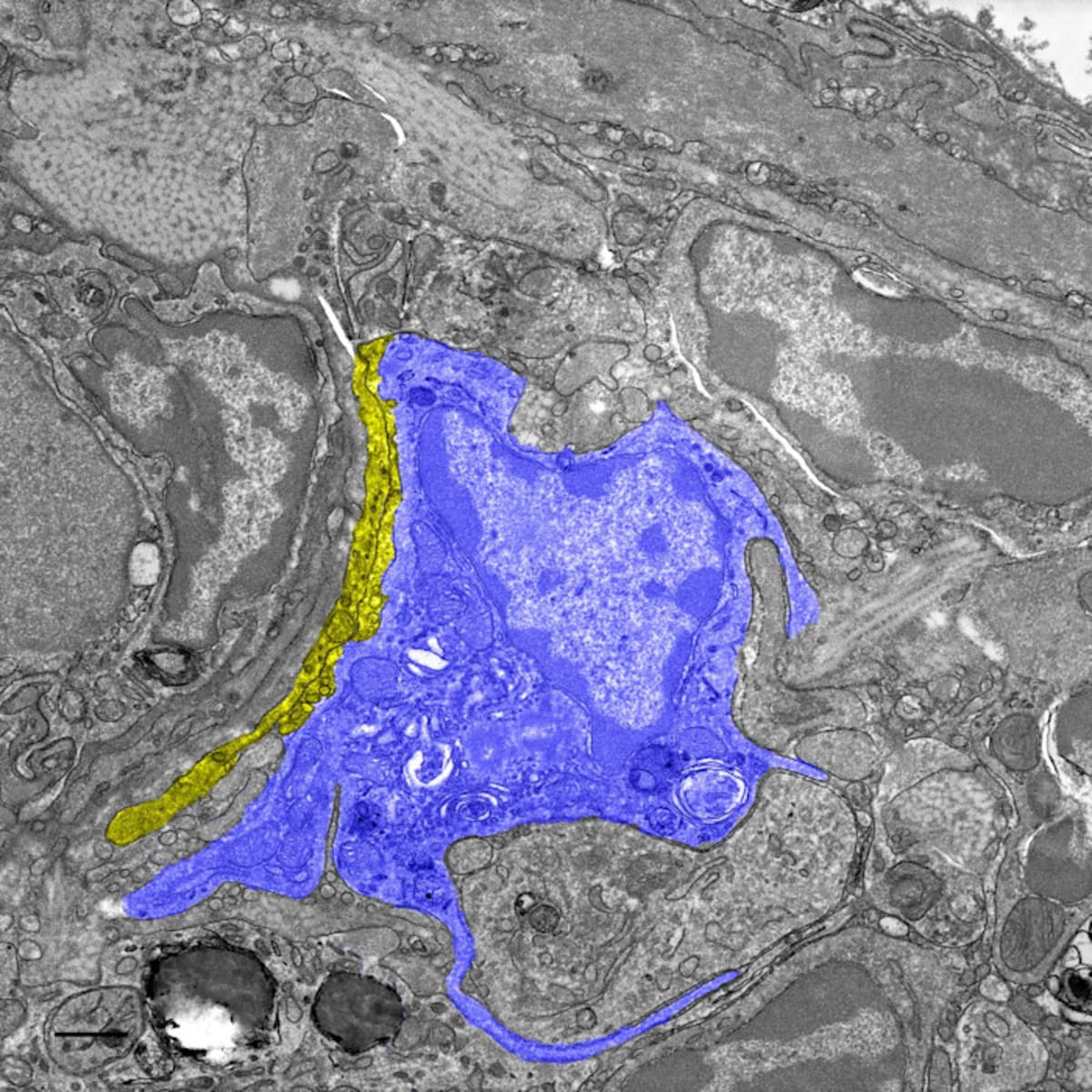
The answer turned out to be macrophages, immune cells that naturally accumulate iron as they break down old red blood cells. These cells contain an iron-rich protein called ferritin that functions as an incredibly sensitive nano-magnet, responding to even tiny changes in Earth's magnetic field.
The team screened pigeons' entire bodies to find which organs showed the strongest magnetic response. The liver won by a landslide. They then used electron microscopy to spot nerve fibers running right past these magnetic cells, creating a direct highway for magnetic signals to reach the brain.
To prove their discovery, researchers gave homing pigeons a drug that temporarily removed these macrophages from their livers. The results were dramatic: the birds flew in completely random directions on cloudy days, totally lost. On sunny days, they navigated just fine using the sun as backup.
"It is really exciting that we have found a physical basis for what looks like a 'gut feeling' in bird navigation," said Martin Wikelski, director at the Max Planck Institute of Animal Behaviour. The term fits perfectly since the liver sits right near the digestive system.
Why This Inspires
This discovery represents years of patient scientific detective work finally paying off. Lead researcher Clivia Lisowski noted that these findings provide "the first concrete evidence of how the Earth's magnetic field can be perceived within the body and passed on to the brain to guide movement."
The research doesn't close the book entirely. Other scientists, including a team at Oxford University studying light-sensitive proteins in bird eyes, suggest multiple navigation systems might work together. Perhaps birds use their liver compass for long-distance travel and switch to eye-based navigation for pinpointing exact destinations.
What makes this discovery especially exciting is how it reveals nature's elegant solutions to complex problems. Birds carry a biological GPS system that humans could only dream of replicating, powered by nothing more than specialized immune cells and iron from their diet.
The finding could inspire new navigation technologies and deepen our understanding of animal migration patterns, helping conservation efforts protect the incredible journeys these creatures make across our planet.
More Images



Based on reporting by Google News - Science
This story was written by BrightWire based on verified news reports.
Spread the positivity!
Share this good news with someone who needs it