Scientists Trap Cancer in Evolutionary Double-Bind
Researchers have discovered how to turn cancer's greatest survival skill against itself. When tumors evolve to resist radiation, they unknowingly become vulnerable to immune attack.
Scientists just cracked one of cancer's most frustrating puzzles: how to stop it from outsmarting treatment. A breakthrough study from Trinity College Dublin and Moffitt Cancer Center shows that when cancer cells adapt to survive radiation therapy, they accidentally expose themselves to a devastating immune system attack.
For decades, doctors have watched cancer cells evolve resistance to treatments that initially worked perfectly. These adaptations have been the leading cause of death in many cancer patients, as tumors find ways to survive even our most powerful therapies.
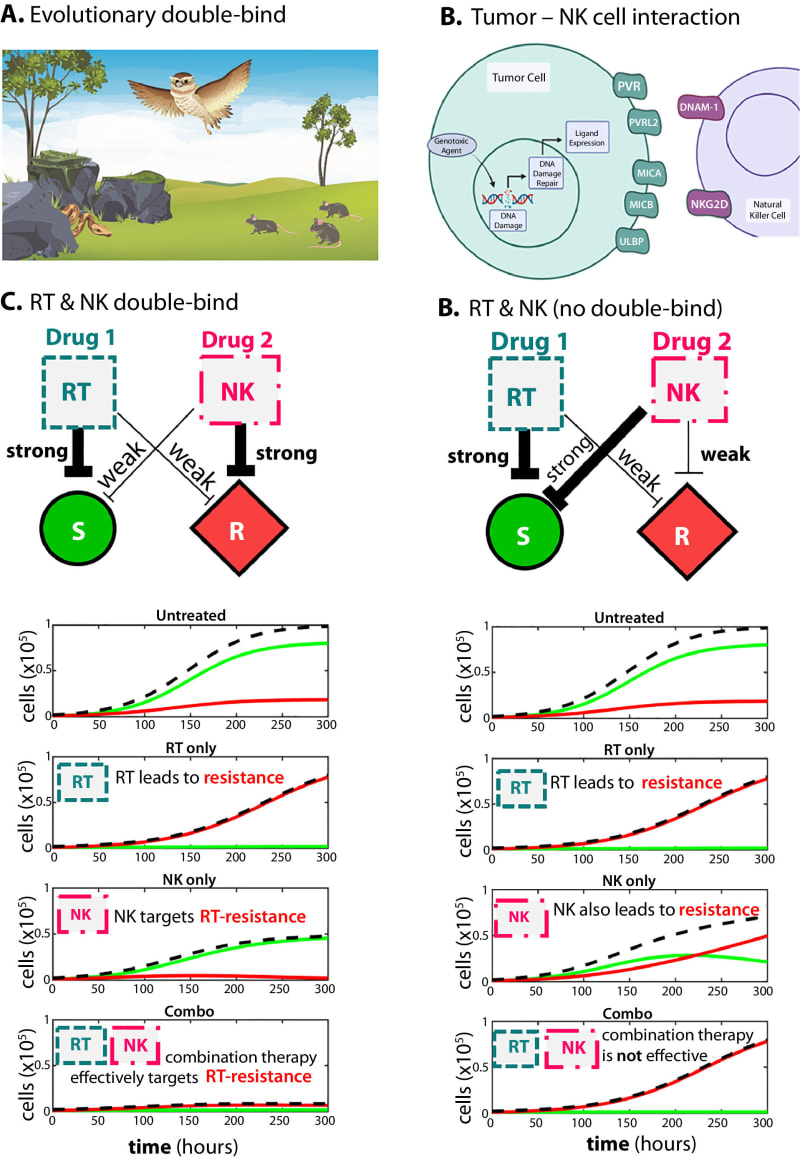
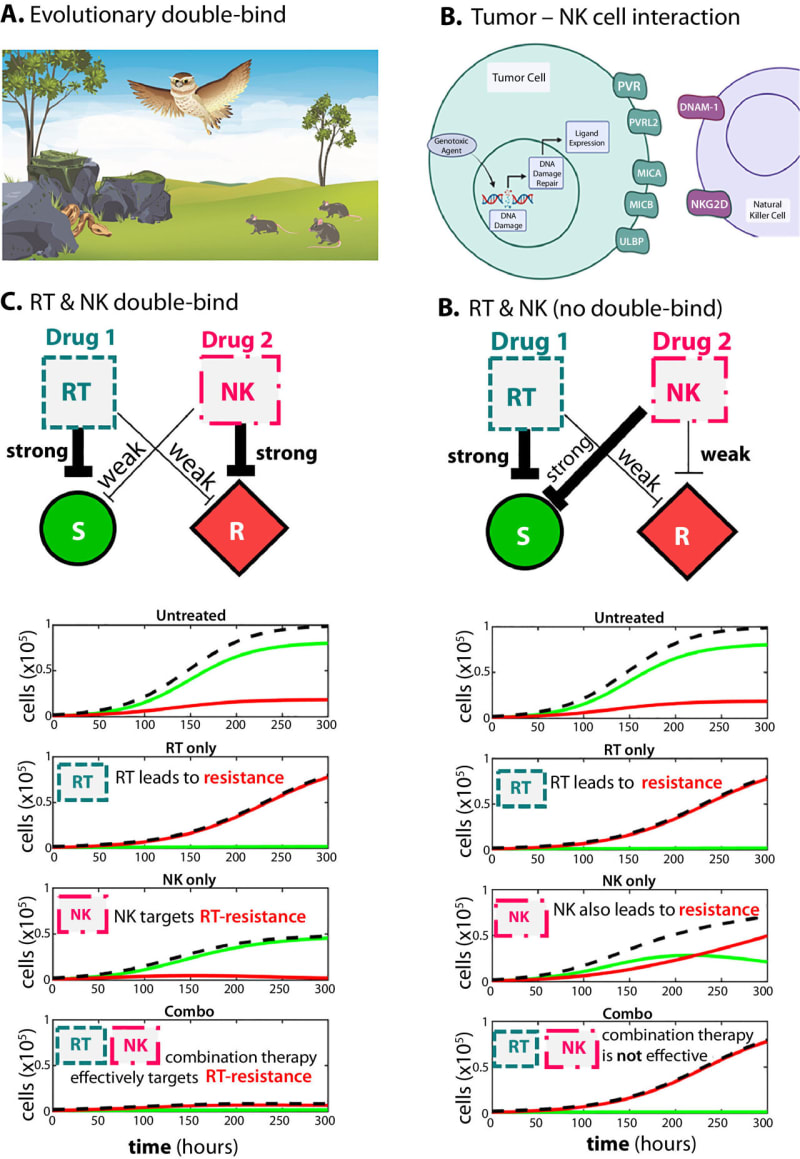
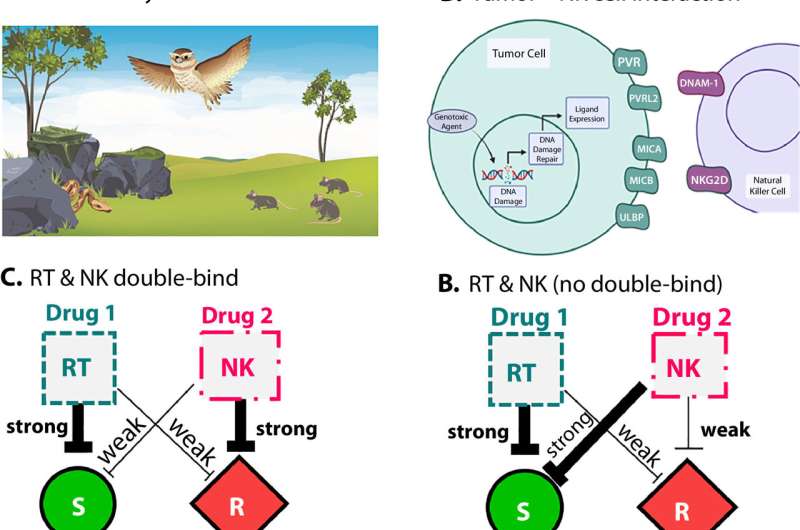
The new research reveals something remarkable. When prostate cancer cells develop resistance to radiation by ramping up their DNA repair systems, they simultaneously increase proteins on their surface that act like bright targets for natural killer cells, the immune system's cancer fighters.
Think of it like a pest control strategy. If rodents hide under bushes to escape owls, you introduce snakes that hunt in the bushes. Suddenly, the rodents' survival strategy becomes their downfall. Cancer cells face the same impossible choice: resist radiation and become vulnerable to immune attack, or avoid immune detection and remain susceptible to radiation.
The team tested this approach across multiple human prostate cancer cell lines. Radiation-resistant cells proved twice as sensitive to natural killer cell attacks compared to their non-resistant counterparts. When researchers combined radiation therapy with immune therapy, the one-two punch suppressed both types of cancer cells far better than either treatment alone.
What makes this study groundbreaking is that it's the first to mathematically prove and experimentally validate how to exploit cancer evolution. The researchers developed equations predicting exactly when to switch between therapies, then confirmed those predictions in the lab.
The strategy works on other cancer types too, suggesting a universal blueprint for outsmarting tumor evolution. Even when resistant cells grow faster than sensitive ones, the double-bind approach still wins because it specifically targets the resistance mechanism itself.
The Bright Side
This discovery flips cancer treatment on its head. Instead of reacting to resistance after it appears, doctors could now steer tumor evolution intentionally, guiding cancer cells into a trap of their own making.
Dr. Kimberly Luddy, who led much of the research, emphasizes the approach applies far beyond prostate cancer. Any treatment causing predictable adaptations in cancer cells could potentially be paired with a second therapy to create an evolutionary trap.
The framework opens doors to personalized treatment plans that anticipate exactly how individual tumors will evolve, then deploy the perfect countermeasure at precisely the right moment.
After years of cancer outsmarting medicine, scientists have finally learned to play chess while the disease plays checkers.
More Images

Based on reporting by Medical Xpress
This story was written by BrightWire based on verified news reports.
Spread the positivity!
Share this good news with someone who needs it