Scientists Turn CO2 Into Fuel With Single-Atom Catalyst
Researchers at ETH Zurich created a breakthrough catalyst that transforms carbon dioxide into methanol more efficiently than ever before. By using single atoms instead of metal clumps, they've opened a pathway to climate-neutral fuel production.
Scientists just figured out how to turn pollution into fuel, and the secret was thinking smaller than ever before.
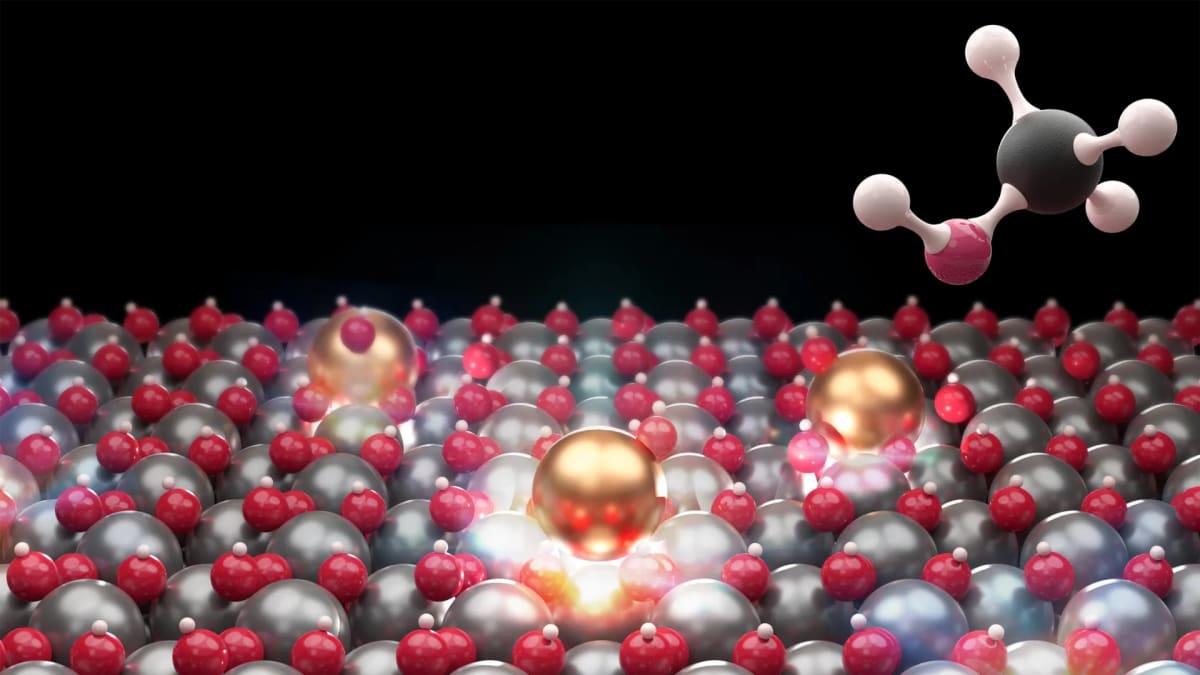
Researchers at ETH Zurich have developed a catalyst that converts carbon dioxide into methanol with unprecedented efficiency. The breakthrough relies on using individual indium atoms rather than traditional metal particles, dramatically reducing the energy needed for the chemical reaction.
Think of methanol as chemistry's Swiss Army knife. This simple alcohol serves as the building block for countless everyday materials, from plastics to fuels, making it essential for modern life.
Professor Javier Pérez-Ramírez, who leads the catalysis engineering team, has been chasing this goal since 2010. His team's innovation places each indium atom precisely on a hafnium oxide surface, where every single atom actively drives the reaction instead of sitting idle inside a particle.
The difference is striking. Traditional catalysts contain thousands of metal atoms clustered together, but most never touch the actual reaction. That wastes expensive materials and requires more energy to make things work.
Creating these atomic-scale catalysts required extreme precision. The team developed new methods that involve burning starting materials in flames reaching 3,000°C, then rapidly cooling them to lock individual atoms in place.
The resulting catalyst proves remarkably tough. It withstands the harsh conditions needed for industrial methanol production, including temperatures up to 300°C and pressures 50 times greater than normal atmospheric levels.
The Ripple Effect
This advance extends far beyond one chemical reaction. When powered by renewable energy and green hydrogen, the process becomes completely climate neutral, transforming CO2 from a greenhouse gas into a valuable resource.
Industries could capture carbon emissions and convert them into useful materials rather than releasing them into the atmosphere. That flips our relationship with CO2 from a disposal problem into a manufacturing opportunity.
The single-atom design also gives scientists clearer insights into how catalysts actually work. Previous methods generated confusing signals from atoms buried inside particles, making improvements largely guesswork. Now researchers can observe reactions with precision, accelerating the development of even better catalysts.
This precision matters for cost too. Single-atom catalysts maximize the use of rare, expensive metals, potentially making industrial applications of precious metals economically viable for the first time.
The breakthrough emerged from collaboration across Switzerland's research community, combining expertise in materials science, nanotechnology, and industrial chemistry. Pérez-Ramírez holds several patents in CO2-based methanol production and works closely with industry partners to bring laboratory discoveries into real-world applications.
As renewable energy becomes cheaper and more abundant, technologies like this catalyst offer a practical path to decarbonize chemical manufacturing while creating value from waste carbon. The future might run on sunshine and captured pollution.
Based on reporting by Google News - Renewable Energy Breakthrough
This story was written by BrightWire based on verified news reports.
Spread the positivity!
Share this good news with someone who needs it