Scientists Turn Jellyfish Proteins Into Quantum Sensors
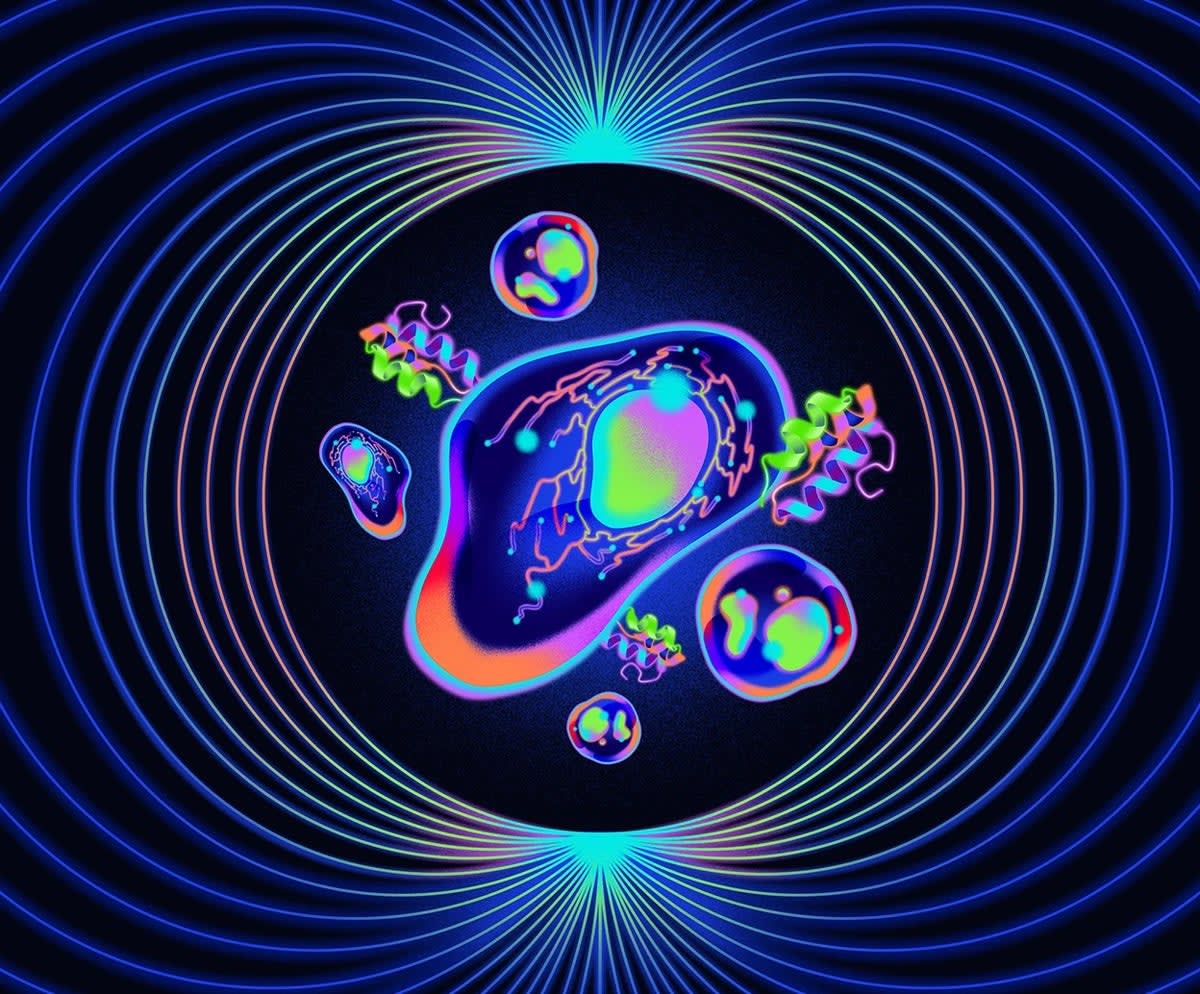
The glowing green protein that lights up biology labs is getting a quantum upgrade. Scientists are transforming these common research tools into ultra-sensitive sensors that could detect early signs of cancer and revolutionize how we see inside living cells.
For decades, a protein borrowed from glowing jellyfish has helped scientists peek inside cells, lighting up the invisible workings of life itself. Now researchers are giving these trusted tools a powerful upgrade by harnessing their quantum properties.
Scientists at the University of Chicago and other institutions have discovered that fluorescent proteins can work like the building blocks of quantum computers. These "quantum proteins" could sense things regular fluorescent labels simply can't detect.
The quantum versions are exquisitely sensitive to magnetic fields, meaning they might pick up the tiny electrical signals from firing neurons or catch the earliest whispers of cancer in a cell. They could detect minuscule amounts of free radicals that signal cellular stress before it becomes dangerous.
Peter Maurer, a quantum engineer at the University of Chicago, admits the idea "sounds very science fiction." But the physics behind it is solid, and early experiments show it works.
Fluorescent protein labels are already among the most important tools in biology labs worldwide. They track where proteins go, monitor whether experimental drugs hit their targets, and reveal conditions inside cells. Adding quantum sensing could multiply their powers exponentially.
Jin Zhang, who develops biosensors at UC San Diego, says protein labels keep surprising researchers with new capabilities. She's especially excited about solving the sensitivity problems that limit current fluorescent labels. "I'm still trying to envision the new applications these might bring," she says.
The Ripple Effect
The timing couldn't be better. Quantum sensing for biology is rapidly maturing from a futuristic dream into practical reality. The UK launched a dedicated Quantum Biomedical Sensing Research Hub in December 2024, and the US National Science Foundation boosted funding in 2023.
Researchers have already used quantum sensors to create HIV tests that are 100,000 times more sensitive than standard diagnostics. Similar diamond-based quantum sensors are mapping semiconductor performance and tracking magnetic tracers during surgery.
What makes quantum protein sensors particularly promising is their accessibility. Many of the proteins that could work this way are already sitting on lab shelves. The equipment needed to manipulate them is standard in research facilities.
Ania Jayich, a physicist at UC Santa Barbara who works on quantum sensors, notes the field has crossed a threshold. "In the past, it might have seemed like, 'ah, that's likely never going to work.' That's not true anymore," she says.
The sensors can even be turned on and off remotely, opening doors for new imaging technologies and therapies that weren't possible before.
Biology's borrowed light from jellyfish is about to shine brighter than anyone imagined.
More Images



Based on reporting by Scientific American
This story was written by BrightWire based on verified news reports.
Spread the positivity!
Share this good news with someone who needs it