Scientists Unlock Secret of Elephant Trunk Dexterity
Researchers discovered that elephant whiskers have a unique structure that explains how these giants can uproot trees and delicately pick up tiny objects. The breakthrough could revolutionize robotics and help us understand how animals experience the world.
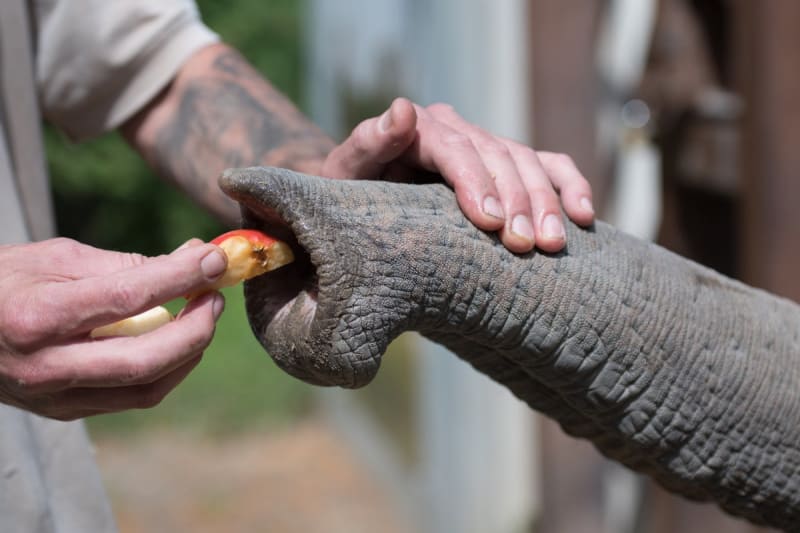
Watch an elephant use its trunk, and you'll witness one of nature's greatest puzzles: how does the same appendage that can topple a tree gently pluck individual berries moments later?
Scientists at the Max Planck Institute for Intelligent Systems finally cracked the code, and the answer lies in something surprisingly small. The secret is in the whiskers lining elephant trunks.
Using specialized CT scanners, researchers discovered that elephant whiskers are completely different from those of any other mammal. The base near the skin is stiff and porous, while the tip is flexible and dense.
This unique gradient structure acts like a built-in sensitivity gauge for elephants. When their whisker tips brush against something, they can instantly tell whether they need to apply gentle pressure or full strength.
Lead researcher Andrew Schulz got so excited by the findings that his team 3D-printed a giant version of an elephant whisker to test themselves. Walking down the hallway tapping objects, senior author Katherine Kuchenbecker had her eureka moment: the different hardness levels let you sense an object's shape and texture without your skin ever touching it.
Baby elephants spend nearly a year learning to master their trunks, which contain more than 40,000 muscles. Now we know their whiskers are the unsung heroes making that mastery possible.
Elephants rely on their trunks for breathing, smelling, grabbing, communicating, and even perceiving things they can't see. Their specially adapted whiskers guide every single one of these experiences, creating what scientists call their "umwelt," their unique sensory experience of the world.
Why This Inspires
This discovery shows how much we still have to learn from the natural world around us. The researchers made their findings freely available, hoping engineers will use elephant whisker designs to solve one of robotics' biggest challenges: building machines strong enough to lift heavy objects but soft enough not to damage delicate materials.
Professor John Hutchinson from the Royal Veterinary College called it "a fabulous example of interdisciplinary science" that bridges neuroscience, anatomy, and mechanics. Nearly every mammal has whiskers adapted to how that species uses touch, suggesting countless more discoveries waiting to be made.
From the smallest whisker to the mightiest trunk, elephants continue teaching us that nature's best innovations often hide in the details we overlook.
More Images
Based on reporting by Scientific American
This story was written by BrightWire based on verified news reports.
Spread the positivity!
Share this good news with someone who needs it