Scientists Unlock Secret of Pigeons' Magnetic Navigation
Scientists discovered that pigeons use iron-rich immune cells in their livers to navigate home across hundreds of miles, even when clouds hide the sun. This breakthrough solves a century-old mystery about how these remarkable birds find their way.
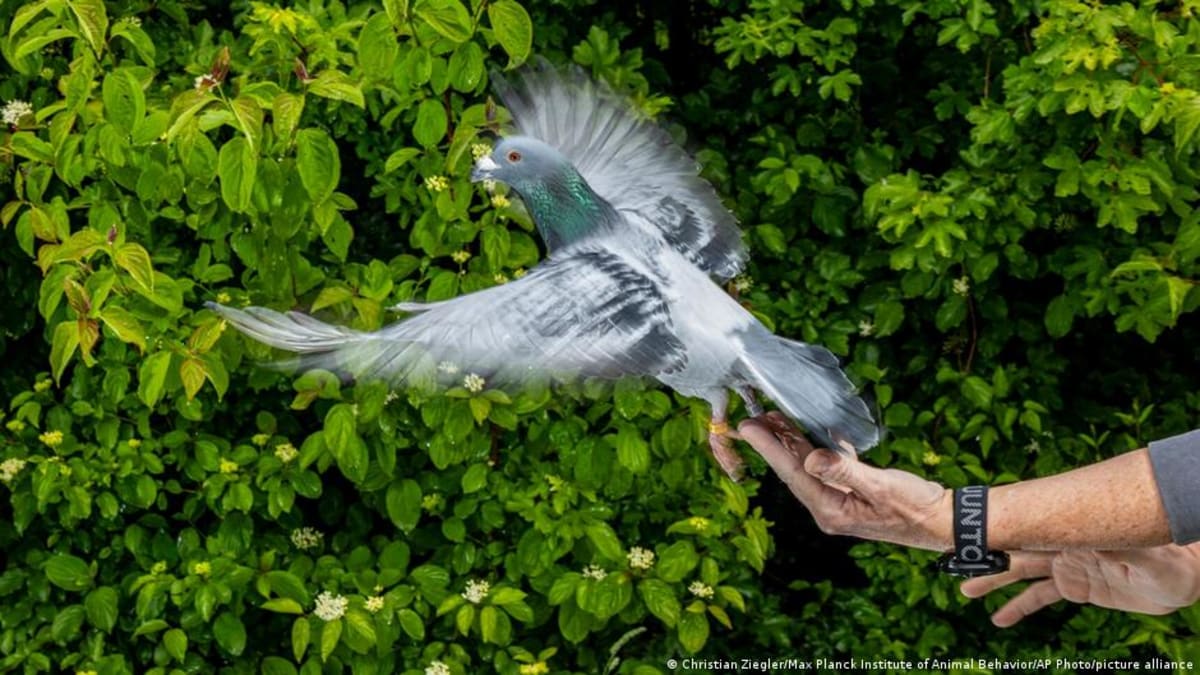
For nearly a century, scientists have puzzled over how pigeons can fly home from 600 miles away, rain or shine, day or night. Now researchers from the University of Bonn and the Max Planck Institute have cracked the code, and the answer lies in an unexpected place: the birds' livers.
The team published their findings in the journal Science this week. They discovered that special immune cells called macrophages, packed with iron from breaking down old blood cells, act like tiny magnetic compasses inside pigeons' livers.
When researchers removed these iron-rich cells from pigeons and released them under cloudy skies, the birds couldn't navigate home. But on sunny days, the same pigeons found their way just fine using visual cues from the sun.
"What looks like a 'gut feeling' in bird navigation may actually have a physical basis," said Martin Wikelski, Director at the Max Planck Institute of Animal Behavior. The magnetic cells sit near nerve cells in the liver, likely transmitting directional data straight to the birds' brains.
The discovery surprised even the researchers themselves. "We didn't expect immune cells to act like sensors for magnetic fields at all," said Christian Kurts, who led the study at the University Hospital Bonn.
First author Clivia Lisowski explained they had hunted for magnetic properties in iron-storing organs like the liver and spleen. The hunch paid off, revealing a biological GPS system more sophisticated than anyone imagined.
Why This Inspires
This breakthrough shows nature's genius for solving complex problems with elegant solutions. While scientists spent decades searching for magnetic sensors in beaks, eyes, and brains, pigeons were quietly using their entire bodies as navigation systems.
The discovery also celebrates humanity's ancient partnership with these remarkable birds. For thousands of years, from Greek Olympic messengers to World War II intelligence operations, pigeons delivered critical information before technology could. Julius Reuter even launched his news empire in 1850 using pigeons to carry stock prices between Belgium and Germany because they remained the fastest option.
Understanding how pigeons navigate could inspire new technologies for navigation systems that work when GPS fails. It might also help scientists understand how other animals, from sea turtles to monarch butterflies, find their way across vast distances.
Nature continues teaching us that the most profound answers often hide in the most surprising places.
Based on reporting by DW News
This story was written by BrightWire based on verified news reports.
Spread the positivity!
Share this good news with someone who needs it