Scientists Watch Magnetar Birth in Space for First Time
Astronomers just witnessed something no one has ever seen before: the birth of a magnetar, one of the universe's most extreme objects. The discovery proves Einstein was right about space-time and reveals how the brightest explosions in the cosmos actually work.
For the first time in history, scientists have watched a magnetar being born, a cosmic event so rare and powerful it's rewriting what we know about the universe's most extreme objects.
A magnetar is hard to imagine. It packs the mass of 500,000 Earths into a sphere just 12 miles wide, spins faster than you can blink, and has a magnetic field trillions of times stronger than our planet's. A single teaspoon of its material would weigh billions of tons.
The discovery happened when researchers tracked a dying star a billion light years away for over 200 days. They watched as the star's core collapsed and exploded in a supernova that shone ten times brighter than normal. What made this observation special was what happened next.
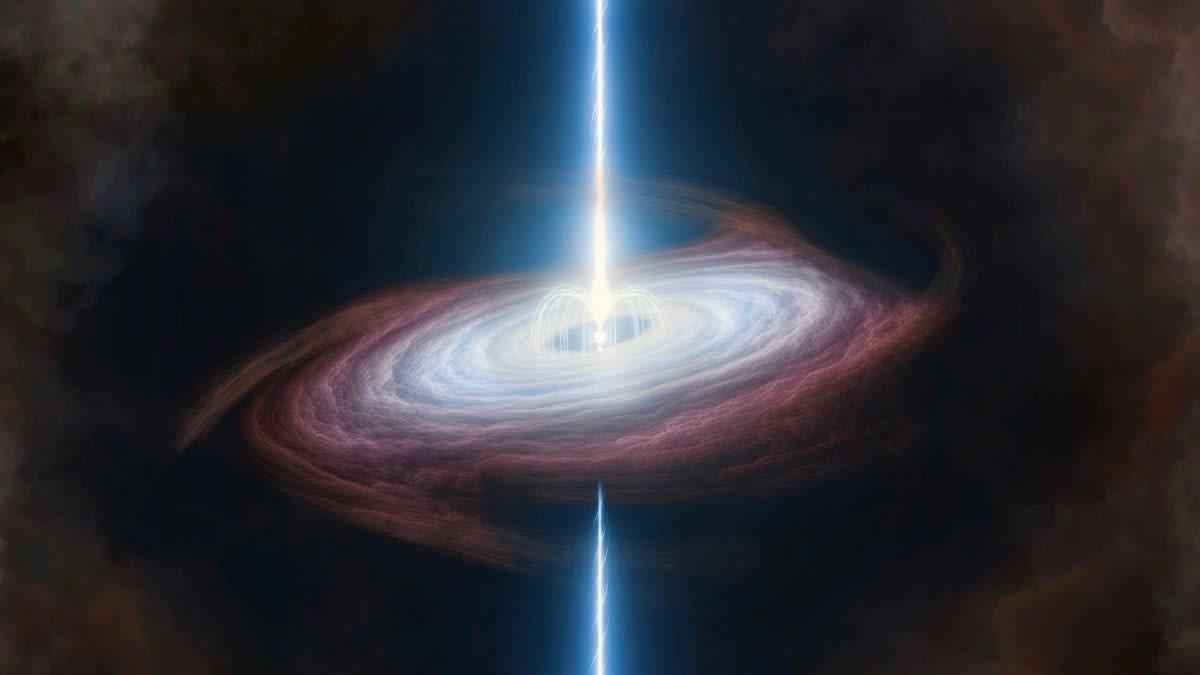
Instead of fading smoothly like most supernovas, the light from this explosion flickered with strange pulses. Scientists realized they were watching debris fall back onto the newborn magnetar, forming a swirling disc of gas around it. The magnetar was pumping so much energy into the explosion that it kept the whole thing glowing.
Even more exciting, the team caught the magnetar literally dragging space and time around with it as it spun. This effect, predicted by Einstein over a century ago, had never been seen in a supernova before. The tilted rotation of the debris disc proved a massive spinning object was warping the fabric of reality itself.
"This is definitive evidence for a magnetar forming as the result of a superluminous supernova core collapse," said Alex Filippenko, a professor of astronomy at UC Berkeley who worked on the study published in Nature.
Why This Inspires
This breakthrough represents years of patient observation paying off in spectacular fashion. The team didn't just confirm a theory, they watched the universe perform one of its rarest tricks in real time.
Joseph Farah of UC Santa Barbara captured the feeling perfectly: "This is the most exciting thing I have ever had the privilege to be a part of. This is the science I dreamed of as a kid."
The discovery opens new doors too. As better telescopes come online, scientists expect to spot more of these cosmic births, each one teaching us something new about how the universe works at its most extreme.
We're living in a golden age of astronomy, where the impossible becomes visible and childhood dreams of understanding the cosmos are coming true.
More Images


Based on reporting by Google News - Science
This story was written by BrightWire based on verified news reports.
Spread the positivity!
Share this good news with someone who needs it