Scientists Watch Planets Change Orbits in Real Time
Astronomers just discovered something they've never seen before: a planetary system 370 light-years away where orbits are shifting so fast they can watch it happen. What usually takes millions of years is unfolding before our eyes.
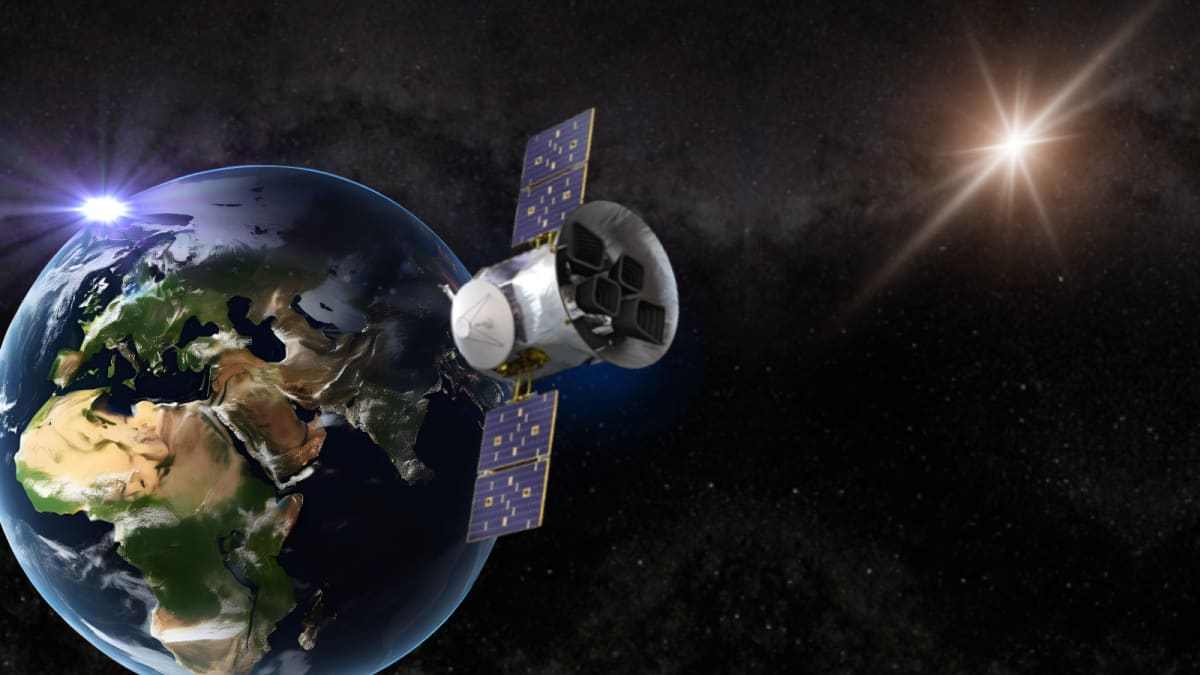
Imagine watching planets dance around their star, changing their paths dramatically enough to notice within a human lifetime. That's exactly what scientists discovered using NASA's TESS spacecraft and a telescope in Antarctica.
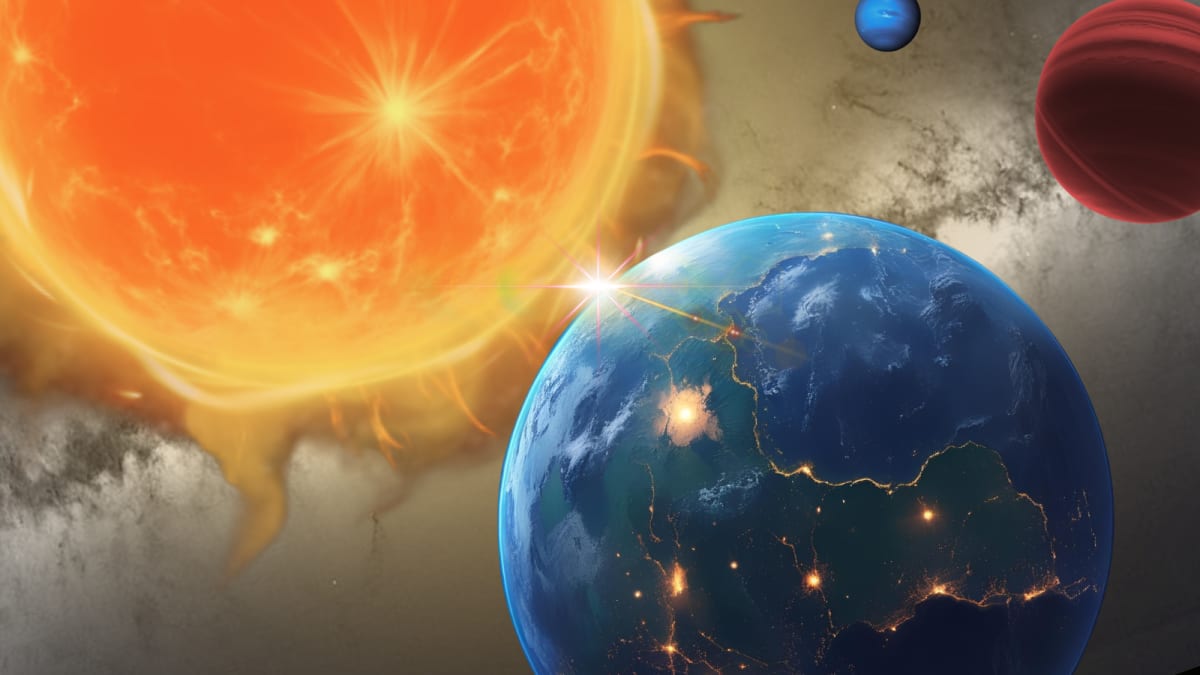
The star system TOI-201, located 370 light-years from Earth, is doing something astronomers have never witnessed before. Three wildly different planets orbit their sun-like star, and their paths are changing so rapidly that researchers can measure the shifts in real time.
The planetary family is unlike anything in our solar system. A rocky super-Earth six times Earth's mass whips around its star every 5.8 days. A gas giant half Jupiter's size completes an orbit every 53 days. And a massive planet 16 times Jupiter's mass takes nearly eight years to circle once.
Here's where it gets fascinating. The outer giant planet has such a tilted, stretched-out orbit that its gravity yanks on the inner worlds. This causes the planets to shift position so dramatically that one planet started crossing in front of its star half an hour late, completely surprising the research team.
"Usually, planets are like metronomes with each transit happening exactly one orbital period after another," said astronomer Amaury Triaud from the University of Birmingham. "However, we were following TOI-201b, and suddenly the planet started transiting about half an hour late."
The discovery required teamwork across the globe, including observations from one of Earth's most extreme locations. The ASTEP telescope sits atop a two-mile-deep glacier at Antarctica's Concordia Station, taking advantage of long polar nights to capture these rare cosmic events.
Why This Inspires
Most planetary changes happen so slowly that millions of years pass before any difference appears. TOI-201 gives scientists a front-row seat to planetary evolution happening at human-observable speeds.
The system offers a glimpse into what happens shortly after planets form, showing how gravity sculpts solar systems over time. In about 200 years, these planets will shift so much they won't even line up in front of their star anymore.
This discovery reminds us that the universe is far from static. Even in the vast darkness of space, dramatic transformations are unfolding right now, and we're finally learning how to watch them happen.
More Images

Based on reporting by Space.com
This story was written by BrightWire based on verified news reports.
Spread the positivity!
Share this good news with someone who needs it