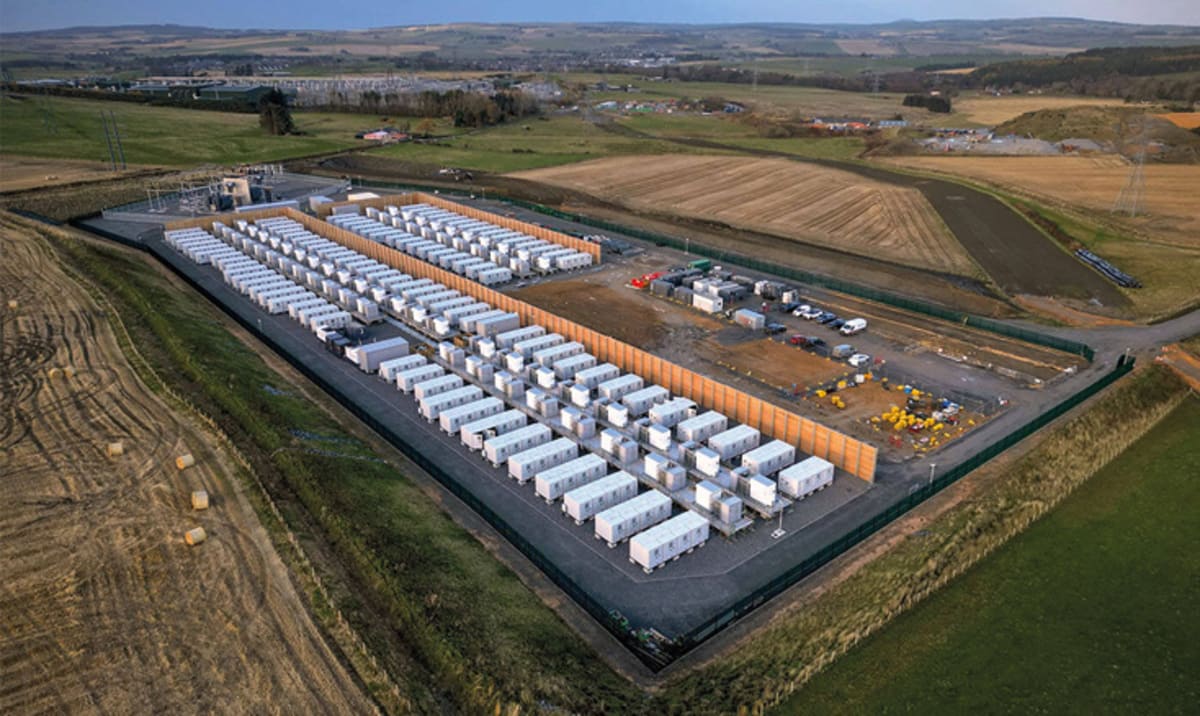
Scotland Battery Powers Grid Without Spinning Turbines
A groundbreaking battery system in Scotland is now stabilizing Britain's electricity grid using "synthetic inertia," proving renewable energy can reliably replace coal and gas power plants. This technology solves one of the biggest obstacles to a clean energy future.
A massive battery in northeast Scotland just proved that renewable energy can power our lives without the spinning turbines that have kept the lights on for over a century.
The Blackhillock battery storage system, located 70 kilometers northwest of Aberdeen, became the world's first battery to provide full grid stability services to a national power system in early 2025. It's a milestone that energy experts have been racing toward for years.
Here's the challenge the project solved. Traditional power plants use massive spinning turbines that naturally stabilize electricity grids through physical inertia. When you replace coal with solar panels and wind farms, that stabilizing force disappears. Studies showed that if more than 65% of Britain's power came from renewables, the grid could fail during certain faults.
The Blackhillock solution uses smart technology called grid-forming inverters. Unlike standard inverters that simply follow the grid's rhythm, these create their own stable voltage by digitally mimicking spinning generators. The result is "synthetic inertia" with no moving parts required.
The 200-megawatt system uses 62 advanced inverters from German manufacturer SMA. These inverters can instantly respond to voltage dips and frequency changes, keeping electricity flowing smoothly even when wind and solar power fluctuates wildly.
Getting here wasn't simple. Aaron Gerdemann from SMA explained that grid-forming technology requires extensive modeling and many more design parameters than typical battery installations. The real test comes when simulation meets reality and the system connects to the actual grid.
Blackhillock passed that test. It now gets paid by Britain's National Energy System Operator to provide stability services, having cleared rigorous technical requirements.
Why This Inspires
This breakthrough removes a major roadblock on the path to clean energy. For years, engineers worried that grids couldn't handle high percentages of renewable power without backup from fossil fuel plants.
Blackhillock proves that concern wrong. The technology works, it's deployable now, and it's already earning revenue by keeping the grid stable in an area rich with wind farms.
Other countries are paying attention. Germany started buying synthetic inertia services in January 2026. Even the Philippines announced plans to develop similar guidelines in February. Markets worldwide are writing new rules to encourage this technology.
The timing matters enormously. As nations race to replace fossil fuels with clean energy, they need solutions that work today, not tomorrow. Grid-forming batteries deliver that solution.
What makes this especially promising is the location. Northeast Scotland hosts abundant wind power, exactly the kind of renewable energy that needs stabilization support. The battery proves the technology works where it's needed most.
The path forward is clearing as more grid operators recognize that synthetic inertia can replace spinning metal, opening the door to grids powered entirely by sunshine and wind.
More Images

Based on reporting by PV Magazine
This story was written by BrightWire based on verified news reports.
Spread the positivity!
Share this good news with someone who needs it