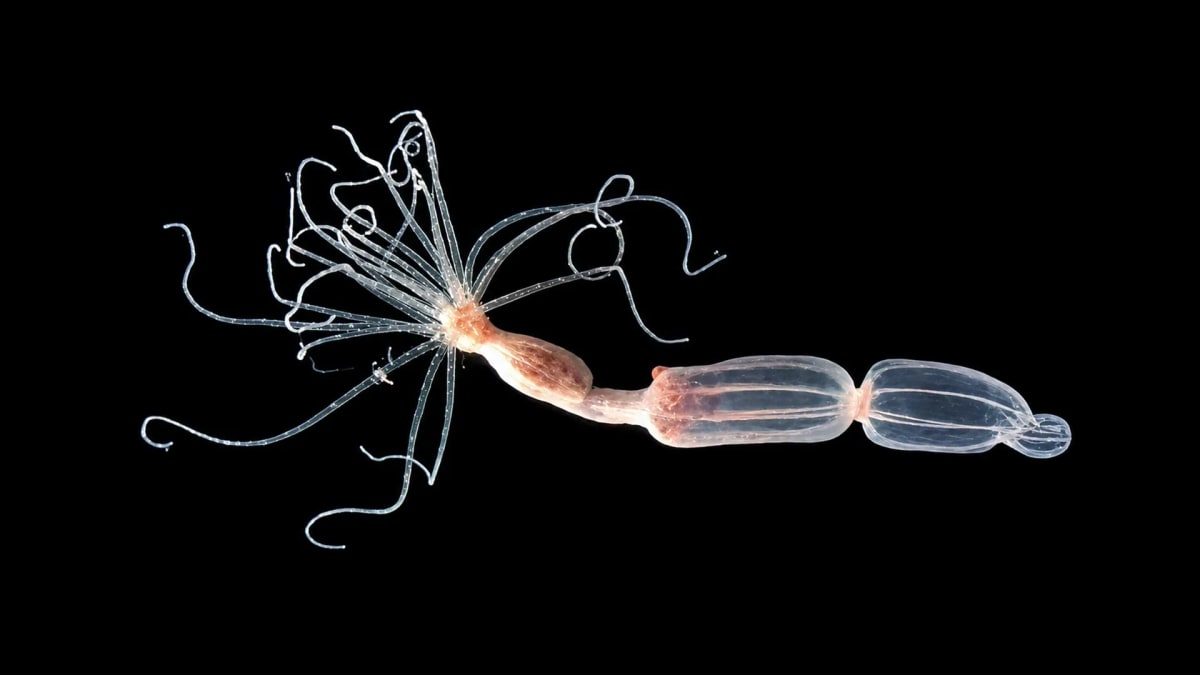
Sea Anemones Fight Viruses in a Completely New Way
Scientists discovered that sea anemones use an immune system that works opposite to ours, yet still protects them from viruses. The finding reveals evolution created multiple successful strategies for fighting infections across the animal kingdom.
Evolution just surprised scientists with proof that nature solved the same problem in completely different ways.
Researchers at the Hebrew University of Jerusalem discovered that sea anemones defend themselves against viruses using a system that works backwards from ours, yet still keeps them healthy. The breakthrough challenges everything scientists thought they knew about how animal immune systems developed over millions of years.
In humans, a protein called MAVS acts like an alarm bell when viruses attack. It triggers our immune system to fight back fast. Scientists studying sea anemones expected to find something similar, since fighting viruses is essential for every animal's survival.
Instead, PhD candidate Ton Sharoni and Professor Yehu Moran found a protein they named CARDIB that does the exact opposite. Rather than activating antiviral defenses, CARDIB normally suppresses them, acting like a brake on the immune system.
The discovery seemed puzzling at first. Why would an animal deliberately slow down its own defenses?
The researchers used gene editing to remove CARDIB from sea anemones, then exposed them to viruses. The results shocked the team. Without CARDIB, the sea anemones became much more vulnerable to infection, and viruses multiplied rapidly inside them.
"Although CARDIB acts as a brake on the immune system under normal conditions, that brake turns out to be essential for mounting an effective antiviral response," Sharoni explained. The immune system needs careful control, not just raw power.
To confirm their lab findings mattered in the real world, the team moved genetically modified sea anemones into outdoor marine environments in South Carolina. These animals faced the full variety of viruses and microorganisms found in nature.
The difference became obvious within days. Sea anemones lacking the newly discovered immune pathway accumulated far more viruses than normal animals. The defense system wasn't just a laboratory curiosity but a crucial survival tool shaped by 600 million years of evolution.
Why This Inspires
This discovery proves that life finds remarkably different solutions to the same fundamental challenges. Humans and sea anemones both need protection from viruses, but evolution didn't settle on just one way to achieve that goal.
The research also highlights why studying ancient organisms matters. Sea anemones split from our evolutionary line more than 600 million years ago, yet they still have valuable lessons to teach about biology and survival.
By looking beyond traditional laboratory animals like mice, scientists are uncovering evolutionary innovations that remained hidden for centuries. Each discovery reveals that nature is far more creative and diverse than we imagined, offering hope for new approaches to fighting diseases that affect humans today.
Nature's creativity in solving life's biggest problems continues to amaze us.
Based on reporting by Google News - Scientists Discover
This story was written by BrightWire based on verified news reports.
Spread the positivity!
Share this good news with someone who needs it